
A Reader's Seoul
Yangjae Citizen's Forest: Gangnam's Best-Kept Green Secret
An unhurried walk through southern Gangnam's quietest park — metasequoias, gentle paths, and a cadence the avenue does not allow.
Yangjae Citizen's Forest does not announce itself the way Hong Kong Park announces itself in Admiralty — there is no skyscraper backdrop, no signposted entrance from a major avenue, and the better-known Seoul guidebooks tend to skip it altogether. Which is, on a quiet recovery afternoon, the most useful thing about it. The park sits on the southern fringe of Gangnam, a fifteen-minute taxi from Apgujeong, and reads — once one is inside — as the city's most discreet large green space. A quiet kilometre of metasequoias runs along its western edge. The benches are well-spaced, the gradients negligible, and the paths flat enough for a measured cadence. One arrives, finds a bench, and is, almost at once, somewhere else.
Why Yangjae Citizen's Forest, and not the better-known Seoul parks
Yangjae Citizen's Forest is a 0.26 square-kilometre park in Seocho-gu, on Gangnam's southern edge — opened in 1986 to commemorate the city's expansion and named, plainly, for its citizens. What recommends it over the larger and more photographed Seoul parks is the combination of low foot traffic and considered geography. The avenues are wide; the trees are fully mature, having had four decades to fill out; the paths are flat; and the southern boundary, against the slow Yangjae stream, holds a stretch of metasequoia that I would set against any urban tree-lined avenue in northeast Asia. The park is, in scale, one-fifth the size of Olympic Park to the east — and that is the point. One can complete the perimeter in fifty minutes at a measured pace, fewer than one would walk in either of the more famous parks for an equivalent loop. The crowd, on weekday mornings, is sparse: local residents from the surrounding apartments, a small population of senior walkers, the occasional photographer with a serious camera. 呢條路真係靚, my cousin in Tai Koo Shing said when I sent her a photograph of the metasequoia avenue. She was not wrong. From a Gangnam hotel the taxi runs twelve to eighteen minutes, depending on traffic on the Gangnam-daero.
The metasequoia avenue: the single feature worth the visit by itself
The park's western edge holds a stretch of approximately 800 metres of metasequoia trees — planted in the 1980s, fully mature now, and arranged in the kind of double-row colonnade one usually associates with European parks rather than Korean ones. What recommends the avenue is not its photogenic quality, although that is real, but its scale. One walks under the canopy at a steady pace and the ambient temperature drops perceptibly; the light filters in long vertical slats; the foot traffic, even on a Saturday, remains thin enough that one is not negotiating other walkers. In late October the metasequoias turn a russet-bronze that holds for about three weeks; in early summer they are fully green; in winter the bare verticals have their own quiet appeal. I would visit the avenue at any season except mid-July and August, when the humidity makes the longer walks tiring. The avenue can be done as an out-and-back of fifteen minutes — entrance from the western gate, walk to the bend, return — or extended into the broader perimeter loop. On a recovery afternoon, fifteen minutes plus a bench pause is enough. The avenue is the reason to come; one need not earn it with the rest of the park.

The shaded loop: forty minutes of unhurried walking, properly paced
Beyond the metasequoia avenue, the broader perimeter loop runs through the park's central woodland — fully shaded, paved throughout, and structured around a series of small clearings that hold benches, a few exercise stations, and the occasional sculptural piece. The loop is approximately 1.8 kilometres at its full extent and can be done comfortably in forty minutes at a measured pace, with five or six bench pauses along the way. The shade is generous; the trees are old enough that the canopy closes overhead through most of the route; the surrounding apartment blocks are far enough back that the park reads, internally, as woodland rather than as urban green. There are no commercial concessions inside the perimeter, no cafes, no kiosks beyond a single drinks vending machine near the southern gate — and that absence is the cadence-setter. One walks unimpeded by small decisions. The recovery walking I would do in Yangjae is the metasequoia avenue plus half the perimeter loop, returning to a bench in the central clearing for twenty minutes before walking out via the same gate. The body sets the pace, not the route.

Five small destinations along the way, none of them busy
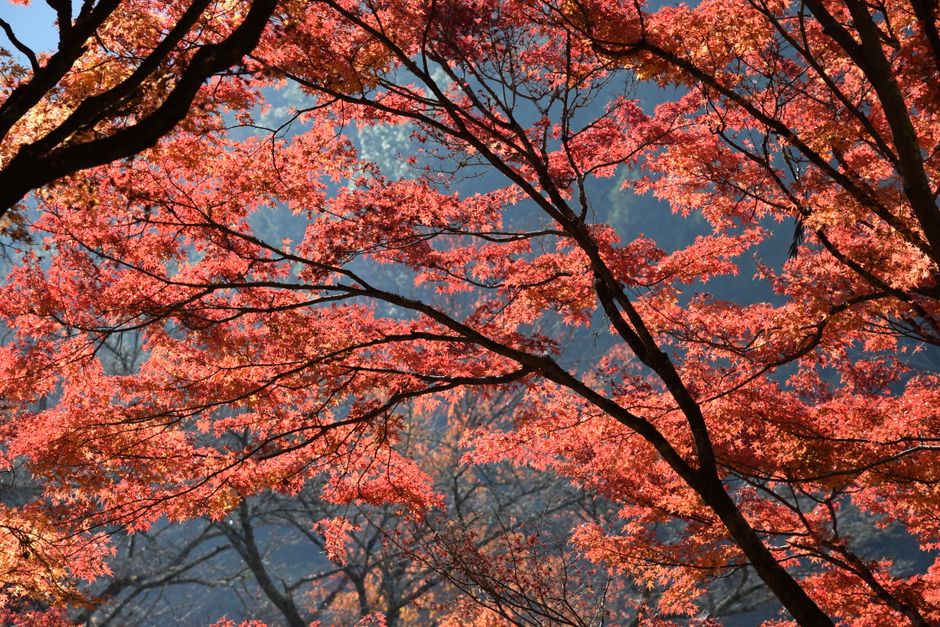
Within the park sit five small features that anchor the walk. The Yun Bong-Gil memorial — a small monument to a Korean independence patriot — sits at the eastern edge and rewards a quiet ten-minute pause; the surrounding plaza is one of the park's better-shaded sitting areas. A small wooden footbridge crosses the Yangjae stream at the southern boundary and is the photograph the local Instagram accounts return to in autumn. A pavilion in traditional Korean style sits at the centre of the woodland loop and shelters one of the most considered bench arrangements in the park. The southern entrance plaza holds a row of larger maples that turn vivid in October. And along the eastern path runs a short sculpture trail — modest, well-maintained, free, and skippable if one is keeping the walk short. None of these features is mandatory; one can walk Yangjae and notice none of them. They are, however, the structural pauses that turn a walk into an afternoon. 慢慢行 applies — and the park is built for it.
Practical notes: timing, weather, accessibility, return logistics
The park opens twenty-four hours, but the recovery-friendly windows run nine to eleven on a weekday or three to five in the afternoon — outside those hours the heat in summer or the chill in winter compromise the unhurried pace. Tuesday through Thursday mornings are the quietest. Weekend afternoons fill modestly along the metasequoia avenue but never approach the density one finds in Seoul Forest or Olympic Park. The pavement is even throughout the recommended loop, with no stairs and only the gentlest gradients; wheelchairs and strollers move through the park without difficulty. Public restrooms sit at the southern and eastern entrances, both accessible. There are no concessions inside the perimeter — bring water, perhaps a thin scarf for the sun. The nearest subway is Yangjae Citizen's Forest Station on the Shinbundang Line (Exit 4 or 5), a six-minute walk to the western gate; from a Gangnam hotel, a taxi runs twelve to eighteen minutes and is the more comfortable option on a recovery afternoon. Returning, taxis can be hailed at the southern entrance or summoned by app within two minutes.
What I would skip, and what to save for a return visit
Two parts of the wider Yangjae green corridor I would set aside for a return trip rather than attempt on a recovery afternoon. The first is the connecting path that runs east towards Yangjae Citizen's Forest's larger neighbour, Maeheon Citizen's Forest — the route is pleasant but adds a kilometre of less-shaded walking and is best on a separate visit, with fresh legs and an appetite for distance. The second is the cycle path along the Yangjae stream, which pairs naturally with the park but extends the morning into something more ambitious than a recovery walk. Both deserve a future afternoon; neither earns inclusion in the first walk. On a quiet recovery day, the metasequoia avenue, half the perimeter loop, and a bench pause at the central pavilion is the right scale. The point of the park is that it does not demand more than that. One returns, on a second visit, for the wider corridor; one returns again, on a third, for the cycle path. Each visit earns the next.
Pairing the visit: a southern Gangnam afternoon, properly arranged
The version of the afternoon I would suggest, on a recovery day, runs as follows. A late lunch in southern Gangnam — somewhere familiar in Seocho or Apgujeong, nothing demanding — finishing by half past one. A short taxi to Yangjae Citizen's Forest, arriving by two. The metasequoia avenue first, walked at a measured pace from the western gate to the bend and back — fifteen minutes plus a bench pause. The half-perimeter loop next, with a sit at the central pavilion for twenty minutes. A return to the southern gate by half past three, taxi back to the hotel, and the rest of the afternoon held back for a quiet hour before any evening obligations. The whole excursion runs ninety minutes door to door, including transit, and asks nothing of the body that a slow walk in a flat shaded park asks. 慢慢嚟, in the proper sense — the pace, the unhurried scale, the deliberate decision not to extend the walk beyond what the day requires.
Frequently asked questions
Where exactly is Yangjae Citizen's Forest, and how long does it take from Gangnam?
The park sits in Seocho-gu, on Gangnam's southern edge. By taxi from Apgujeong or Cheongdam the journey runs twelve to eighteen minutes outside rush hour. By subway, take the Shinbundang Line to Yangjae Citizen's Forest Station and walk six minutes to the western gate via Exit 4 or 5.
Is the metasequoia avenue worth a visit on its own?
Yes — and on a short recovery afternoon, that is the way to use the park. The avenue runs about 800 metres of mature double-row metasequoias along the western edge. An out-and-back of fifteen minutes plus a bench pause is enough to take its measure, and the cadence calibrates the rest of the day.
How does the park compare with Seoul Forest or Olympic Park?
Yangjae is smaller, considerably quieter, and more closely woven into the southern Gangnam fabric. Seoul Forest holds a deer enclosure and broader event space; Olympic Park is much larger and more programmed. For an unhurried recovery walk in southern Gangnam itself, Yangjae is the closer and quieter option.
Is the park suitable for a quiet recovery walk after a clinic appointment?
Yes. The pavement is flat throughout the recommended route, with no stairs and only the gentlest gradients. Benches sit at considered intervals along the metasequoia avenue and the central loop. The full recovery walk — avenue plus half the perimeter — runs about 1.5 kilometres of gentle, shaded walking.
When is the best time of year, and the best time of day?
Late October for the metasequoia colour, and early April through May for fresh canopy and mild temperature. Weekday mornings nine to eleven and afternoons three to five are the quietest windows. Mid-July and August are humid enough that I would shorten the loop or visit elsewhere.
Are there cafes or food inside the park?
No — the only concession is a vending machine near the southern gate. The absence is, on a recovery afternoon, a virtue: one walks uninterrupted by small ordering decisions. For coffee or a light meal, the surrounding Yangjae neighbourhood holds a handful of cafes within five minutes' walk of the western gate.
Is the park accessible by wheelchair or stroller?
The recommended loop — metasequoia avenue plus the central woodland path — is paved throughout, flat, and free of stairs. Wheelchairs and strollers move through both routes without difficulty. Restrooms at the southern and eastern entrances include accessible stalls.
Should one combine Yangjae with another southern Gangnam destination?
A late lunch in Apgujeong or Seocho before the taxi sets the day up well; a quiet hour back at the hotel after the walk closes it properly. I would not pair Yangjae with another walking destination on the same recovery afternoon — the point is the unhurried scale, and stacking destinations works against it.