A Reader's Seoul
Where to Stay in Gangnam: A District Hotel Guide for Wellness Travel
Cheongdam, Apgujeong, Yeoksam, Samseong — the recovery-friendly hotel map for travellers booked for a procedure.
Gangnam reads, on first impression, as a single neighbourhood — but the wellness traveller learns quickly it is four. Cheongdam holds the marble-floored discretion Hong Kong friends recognise from the Mandarin Oriental's quieter floors. Apgujeong runs warmer, more curated, the way a Tatler Asia editor might describe a younger sister. Yeoksam handles the business traveller with the efficient courtesy of an IFC service apartment. Samseong, anchored by the COEX complex, sits a tier below in price but level with the others in cleanliness and quiet. The room — and this matters — must be chosen for the recovery, not the view.
What makes a Gangnam hotel suitable for a wellness traveller
A wellness-suitable Gangnam hotel is, in 2026, defined by four operational details that the average leisure traveller never thinks to verify — blackout curtain integrity, in-room temperature control to a single degree, a 24-hour concierge fluent enough to coordinate clinic transfers, and a lobby quiet enough that one can pass through it on a sensitive recovery morning without theatre. The marble lobbies and the city views matter less than they appear in the brochure. What recommends the upper tier in Cheongdam — and a handful of properties in Apgujeong — is the staff training around discretion. One does not need to explain why one would prefer the back lift; the back lift is offered. The breakfast tray arrives at the requested time without a follow-up call. The housekeeping schedule is adjusted for an afternoon that the guest is, as the front desk phrases it, 'resting'. I have stayed in Gangnam properties across every tier in the past four years, and the pattern holds: the hotels that handle wellness travellers well do so quietly, and the ones that don't, advertise it the loudest. The price differential between a competent recovery-friendly stay and a five-star property without those operational habits is, in my reading, the most undervalued line item in the trip budget.
Cheongdam: the upper tier and the discreet floor
Cheongdam is the upper tier of Gangnam hospitality — the district where the boutiques are by appointment, the lobbies are marble, and the recovery suite is something the front desk has handled before without needing to ask twice. The properties along Dosan-daero and the smaller streets running north toward the river have, for roughly a decade, served as the quiet base for visiting executives, regional fashion buyers, and a steady stream of wellness travellers from Hong Kong, Taipei, and Singapore. The Park Hyatt Seoul, technically just over the Samseong line, anchors the corridor with its glass-walled lobby and the well-known thirty-fourth-floor pool. Andaz Seoul Gangnam runs warmer and more design-forward, with rooms that read closer to a private residence than a business hotel. Signiel Seoul, in the Lotte World Tower, is the city-view option for travellers who want altitude. What recommends Cheongdam for the wellness traveller is not the brand list but the floor-by-floor discretion — the upper floors of the better properties have, in practice, become recovery floors, and the housekeeping protocols reflect it. 咁就最好啦, a Hong Kong friend texted me from a Cheongdam suite last spring; she had asked for a late checkout and been given it without a price.
Apgujeong: the curated middle, warmer and more residential
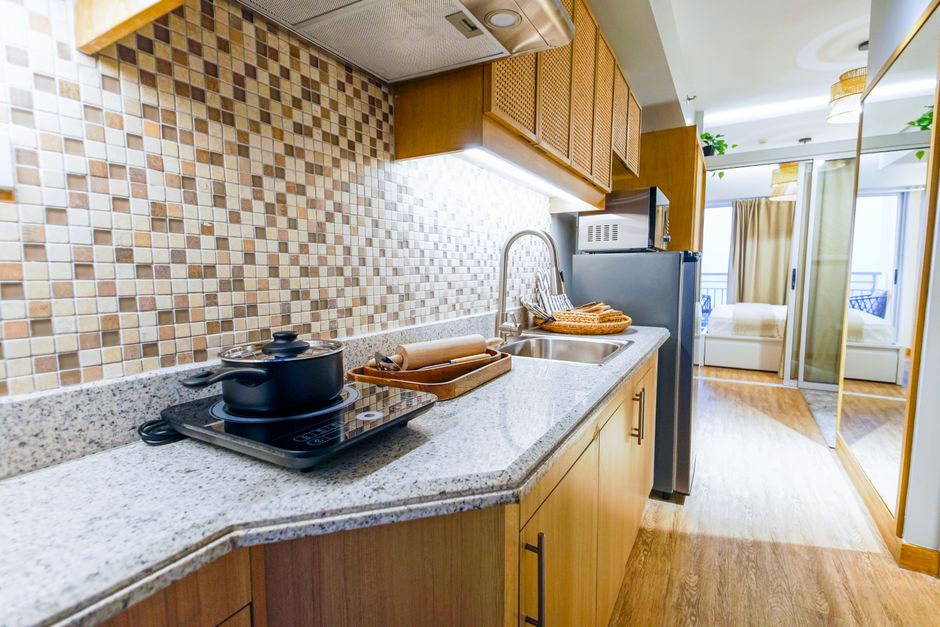
Apgujeong sits a half-tier below Cheongdam in price and a full tier above it in residential warmth — the district where boutique hotels and serviced apartments outnumber the international chains, and where the recovery week feels less like a hotel stay and more like a borrowed flat. The properties around Apgujeong-ro and the side streets toward Galleria are smaller, often under one hundred keys, and the staff turnover is low enough that one is, by the third day, recognised at the door. Glad Hotel Yeouido has a sister property here that handles longer stays well; the Henn-na Hotel Seoul Myeongdong's Gangnam outpost runs an efficient mid-tier room. The serviced-apartment market is, in my reading, where Apgujeong genuinely outperforms — Fraser Place Central Seoul, Oakwood Premier Coex Center, and a handful of smaller operators offer one-bedroom units with a kitchen, a separate living area, and the kind of laundry-in-unit detail that matters across a ten-day recovery. The price point sits roughly thirty percent below the Cheongdam upper tier without sacrificing the quiet. For a wellness traveller staying longer than four nights, Apgujeong is the district I most often recommend; the hotel-versus-apartment decision tilts toward the apartment as the stay lengthens.

Yeoksam: the efficient business tier, walkable to most clinics
Yeoksam is the efficient tier — the working district that handles the business traveller and, increasingly, the wellness traveller who values walkability over marble. The neighbourhood runs along the spine of Teheran-ro, dense with mid-tier international chains and a strong inventory of well-maintained four-star properties that price thirty to forty percent below Cheongdam without any meaningful drop in cleanliness or staff competence. The Ramada by Wyndham Seoul Yeoksam, the Tmark Grand Hotel Myeongdong's Yeoksam sister, and a small number of independents along Eonju-ro form the working backbone here. What recommends Yeoksam for a recovery itinerary is the geography: most of Gangnam's regenerative and aesthetic clinics sit within a fifteen-minute walk, and the subway connections at Yeoksam Station and Gangnam Station are the most useful in the district. The trade-off is the volume — the lobby is busier, the breakfast room louder, the late-evening corridor traffic more present than in Cheongdam. For travellers on a three- to five-night stay built around appointments rather than recovery, Yeoksam is, in my reading, the sensible choice; the budget difference funds an extra two days in the city.

Samseong: the quiet outer ring, anchored by COEX
Samseong is the quiet outer ring of Gangnam — anchored by the COEX complex and the Bongeunsa temple, with a hotel inventory that runs smaller and quieter than Yeoksam's. The Grand InterContinental Seoul Parnas and the InterContinental Seoul COEX form a paired anchor at the west edge of Samseong, both with the kind of lobby footprint that absorbs traffic well and keeps the upper floors genuinely silent. The Vista Walkerhill, technically across the river, is sometimes booked by Gangnam wellness travellers for the full seclusion. Samseong's strength for the recovery week is the proximity to the Han River parks — a ten-minute walk to Hangang's Jamwon section — and the temple grounds at Bongeunsa, which read, on a quiet weekday morning, as one of the few genuinely meditative spaces inside Gangnam proper. The trade-off is the clinic distance: a Samseong stay typically requires a ten- to fifteen-minute taxi to the Apgujeong cluster. For travellers prioritising quiet over walkability, the trade is worth making. The Korea Tourism Organization maintains a useful overview of the COEX district for visitors arriving without a fixed itinerary.
How to choose between hotel, serviced apartment, and longer-stay residence
Choosing between a Gangnam hotel, a serviced apartment, and a longer-stay residence comes down to three variables — the length of the stay, the procedure type, and the traveller's tolerance for kitchen self-sufficiency during a recovery window. For stays under four nights built around a single procedure or a consultation cycle, the hotel is almost always the right choice — the housekeeping is daily, the room service handles the soft-food window, and the concierge absorbs the logistical work. For stays of five to ten nights, the serviced apartment becomes meaningfully more comfortable; the kitchen lets the traveller manage diet specifics that hotel room service cannot accommodate, and the laundry-in-unit becomes useful around day four. For stays beyond ten nights — which is rare but not unknown for regenerative or stem cell protocols — a longer-stay residence in Apgujeong or Cheongdam, often booked through a relocation agency, is the discreet option that the upper tier of wellness travellers tends to use without discussing. The hotel-versus-apartment decision is, in my reading, the single highest-leverage choice in the trip planning. The price differential is modest; the comfort differential, across a recovery week, is not.
| District | Tier | Best for | Walk to clinic cluster |
|---|---|---|---|
| Cheongdam | Upper | Discreet recovery, longer stays | 5-15 minutes |
| Apgujeong | Upper-middle | Boutique stays, serviced apartments | Within district |
| Yeoksam | Middle | Walkable, efficient, shorter stays | 10-20 minutes |
| Samseong | Middle | Quiet, COEX access, river proximity | 10-15 minute taxi |
Practical booking notes from a Hong Kong perspective
A few booking notes that Hong Kong and Taipei travellers tend to learn the hard way — most of which the front desks will not volunteer. The upper-tier Cheongdam properties release their lower-floor inventory first; requesting a higher floor at the time of booking, citing a preference for quiet, is more reliable than requesting it at check-in. The serviced-apartment market in Apgujeong does not, as a rule, list its full inventory on the standard international booking sites; the better units are released through the property's own channel or through a Korean concierge service. The deposit structure runs higher than Hong Kong's — a credit card hold of roughly KRW 300,000 to 500,000 is standard for a four-night upper-tier stay, refunded within a week of checkout. The breakfast inclusion is worth checking; most upper-tier Cheongdam rooms exclude it, while the Apgujeong serviced apartments tend to include a continental tray. For travellers building a wellness-focused itinerary, the related guides on this site cover the Gangnam coffee scene as a recovery network and a broader Apgujeong dining guide for the soft-food window. The booking, treated as a logistical exercise rather than a leisure decision, repays the attention.
“The room — and this matters — must be chosen for the recovery, not the view. The upper-tier properties handle wellness travellers quietly, and the ones that don't, advertise it the loudest.”
Liu Mei-Hua, on choosing a Gangnam hotel for a recovery week
Frequently asked questions
Which Gangnam district is closest to the regenerative and aesthetic clinic cluster?
Apgujeong sits inside the cluster itself, with most clinics within a five- to ten-minute walk of the central boutique-hotel inventory. Cheongdam runs a short taxi or a fifteen-minute walk depending on the specific clinic. Yeoksam is walkable to the southern edge of the cluster within ten to twenty minutes. Samseong requires a brief taxi but compensates with a quieter base. The choice depends on whether walkability or quiet is the higher priority for the recovery week.
Are the upper-tier Cheongdam hotels actually quieter than the chains in Yeoksam?
The lobby and corridor experience differs more than the room itself. The upper-tier Cheongdam properties run smaller floor plates with fewer keys per floor, which produces less corridor traffic in the late evening. The Yeoksam chains handle higher volume and busier breakfast rooms, though the in-room sound insulation in the better four-stars is, in my reading, comparable. For a sensitive recovery window, the difference is meaningful; for a standard consultation trip, it is not.
Should I book a hotel or a serviced apartment for a ten-day recovery stay?
For ten nights, the serviced apartment is the more comfortable choice in nearly every scenario. The kitchen handles diet specifics that hotel room service cannot, the in-unit laundry becomes useful from day four, and the price typically runs below an equivalent hotel stay over the full window. The Apgujeong serviced-apartment market is the strongest in Gangnam; the Cheongdam options are smaller and more expensive. The trade-off is the lighter housekeeping schedule, which most longer-stay travellers prefer in any case.
How early should I arrive at the hotel relative to my clinic appointment?
A one-night cushion before any procedure is the conservative pattern most of my Hong Kong and Taipei contacts follow — it absorbs jet-lag from the three-hour time zone shift and gives the traveller a quiet evening to settle. For a same-day arrival and consultation, the flight should land before noon to allow a hotel rest before the appointment. The upper-tier Cheongdam and Apgujeong properties handle early check-in requests well when they are flagged at the time of booking.
Are the Gangnam hotels accustomed to wellness travellers, or do I need to explain my stay?
The upper-tier properties in Cheongdam and the Apgujeong boutiques have, in practice, handled wellness travellers for years and require no explanation. The staff are trained to read the cues — a request for a back lift, an adjusted housekeeping window, a delayed breakfast tray — and to respond without theatre. The mid-tier chains in Yeoksam vary; some handle the requests with the same discretion, others ask follow-up questions that the traveller may prefer to avoid.
What is the typical cost range for a four-night stay across the four districts?
Cheongdam upper-tier runs roughly KRW 450,000 to 800,000 per night for a standard king room, with the suite categories climbing further. Apgujeong boutiques and serviced apartments sit in the KRW 280,000 to 450,000 range. Yeoksam four-stars run KRW 180,000 to 320,000. Samseong sits closest to Yeoksam in price, occasionally above for the InterContinental properties. The numbers shift with seasonality, particularly around the spring and autumn shoulder seasons.
Do these hotels coordinate with clinics for transfers, or do I arrange that separately?
The upper-tier properties in Cheongdam and the better Apgujeong boutiques will coordinate clinic transfers through the concierge desk, often with a preferred driver or hotel car arrangement. The mid-tier chains in Yeoksam and Samseong typically expect the traveller to arrange transfers separately, though the front desk will book a taxi without difficulty. For a procedure with a sensitive return-to-hotel window, the upper-tier coordination is worth the price difference.
How does the Gangnam hotel scene compare to staying in Hannam-dong or Itaewon for wellness travel?
Hannam-dong runs a slightly more residential and design-forward register — the Hannam Hill area has a small inventory of boutique stays that some Hong Kong friends prefer for the neighbourhood quiet. The trade-off is the cross-river commute to the Gangnam clinic cluster, which adds twenty to thirty minutes each way and is, for a recovery itinerary, more friction than it is worth. For wellness travel specifically, staying within Gangnam's four districts remains the sensible choice.