A Reader's Seoul
Seven Slow Days: A Wellness-First Gangnam Itinerary, Hour by Hour
Day-by-day pacing for a recovery week — light walks, half-day cultural anchors, and the small evening rituals that earn the trip.
A wellness week in Gangnam, done correctly, is not a Seoul trip with a clinic appointment dropped into the middle of it; it is a different shape entirely. The hours run shorter. The walks run flatter. The dinners run earlier, and the late nights — when one does take them — sit at a quiet cafe rather than at a bar in Itaewon. 慢慢嚟, my mother messaged from Causeway Bay before I left for my first such week — slow, slow. She was right, of course. The itinerary below is the seven-day shape I would now recommend to a Hong Kong friend asking how to pace it. The clinic appointments belong inside it. The city, around them, holds the rest.
The pacing principle, before the days
A wellness-first Gangnam itinerary is one in which the recovery rhythm dictates the city plan, rather than the other way around — and the structural difference shows up almost immediately in how one reads the avenue between Sinsa and Apgujeong. What recommends this approach is not caution but composition. The treatment days ask for short walks and early evenings; the rest days reward gentle anchors — a half-day temple, a riverside promenade, a museum hour. The temptation to compress a Causeway-Bay-shaped weekend into the recovery window almost always produces a flatter trip; the temptation to do nothing at all produces a flatter one too. The seven-day frame holds because it allows two treatment days, three soft cultural days, one harder day for the saved-up walking, and one travel-bookend day that does no real work. One arrives. One eases in. One leaves quietly. The avenue, by the seventh morning, reads differently than it did on the first.
Day 1 — Arrival, Sinsa, and the easing-in
The first day belongs to arrival rather than to the city. From Incheon, the AREX express to Seoul Station and the short taxi to a southern Gangnam hotel takes about ninety minutes door to door; the alternative airport limousine bus 6020 to Apgujeong runs slightly longer but reads, after a long-haul, as the gentler option. One checks in by mid-afternoon, eats a small early dinner at a Sinsa-dong soup house — gomtang, sullungtang, the unfussy bowls that close jet lag without ceremony — and walks the twenty-block grid back to the hotel. Bedtime arrives early. Two non-negotiables hold the day: hydration above the Hong Kong baseline, and a refusal to schedule any treatment for tomorrow. The body, on day one, is still on a different time zone, and the editorial argument of the week begins with respecting that.
- Arrive Incheon, AREX to Seoul Station, taxi to hotel — ninety minutes
- Check-in mid-afternoon, unpack, hydrate, change
- Sinsa soup house dinner, eighteen-twenty-hundred — early
- Walk back to hotel, twenty blocks, no detours
- In bed by twenty-two-hundred
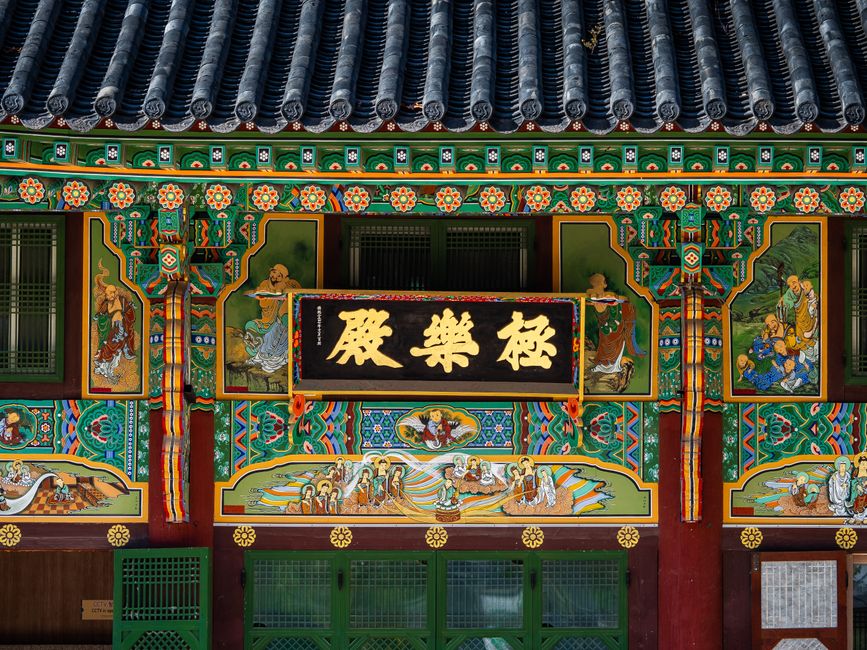
Day 2 — Bongeunsa morning, Han River afternoon, the first long evening
Day two is the first soft anchor day, and the shape is deliberately undramatic. The morning belongs to a half-day temple visit — Bongeunsa, twenty minutes by taxi from Sinsa, a working monastery in Samseong-dong that sits across from COEX and reads, on first impression, as Lee Garden Three's spiritual counterweight. Two hours, the Daeungjeon hall, the Maitreya Buddha, a small lunch at the temple cafe. The half-day at Bongeunsa as I have written elsewhere covers the visit in detail; on a wellness week one observes the lighter cardio of the temple stairs and stops there. The afternoon shifts to the river. The Han River-side promenade in its Gangnam-side stretch runs the gentlest flat surface in the city, and a forty-minute walk between Banpo and Jamwon is the editorial dose. Dinner sits early at a quiet Cheongdam table; the evening closes with herbal tea on the hotel terrace. The first treatment can sit on day three or day four, and the body, by tomorrow morning, is ready in the way it was not yesterday.
On the temple lunch
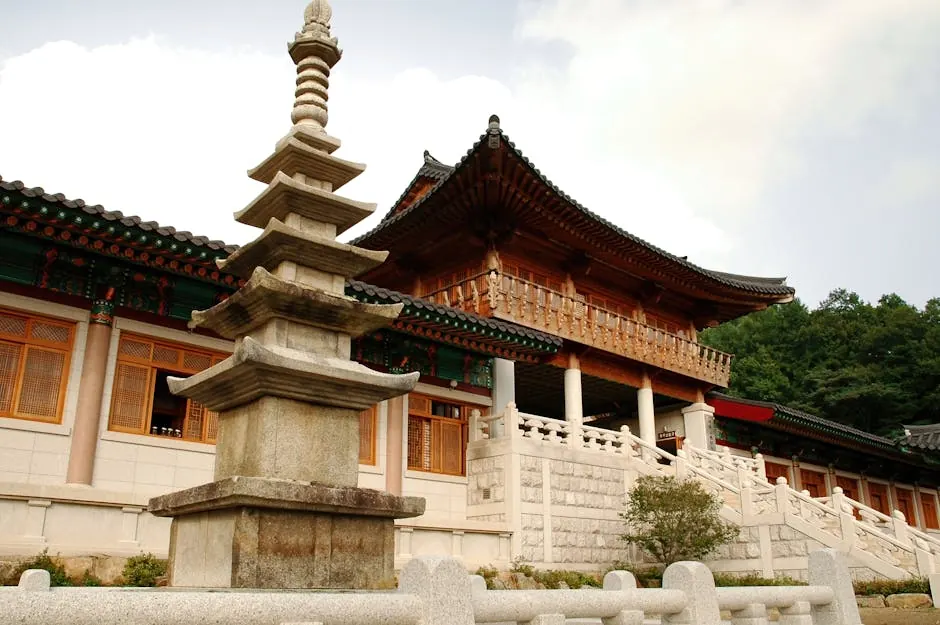
The Bongeunsa cafe runs a small temple-vegetarian lunch on weekdays — gentle, salt-light, restorative — that pairs the morning correctly. One eats slowly, returns to the riverside via taxi rather than walking the connecting blocks, and does not improvise an addition. The day, edited this way, holds together.
Day 3 — Treatment morning, hotel afternoon, the quiet recovery night
The first treatment morning is the structural fulcrum of the week, and the surrounding hours are the ones that most reward editorial restraint. The clinic appointment runs its scheduled length; one does not add a second clinic to the same day. Lunch sits inside the hotel — a soup, a salad, no late wine — and the afternoon belongs to a long pool session, a thin-novel hour on the suite terrace, and a deliberate refusal to test the city. Dinner arrives early, in-room or at the hotel's quietest restaurant, and the evening folds in by twenty-one-hundred. The cadence reads, on first impression, as too cautious. By morning it reads, on second reading, as exactly the dose. A Hong Kong reader trained on Saturday-night Causeway Bay tempo learns to listen to the difference. The recovery night is the night the rest of the week is built on; the temptation to fill it almost always shortens day four into a smaller version of itself.
- Treatment morning — single appointment, no overlap
- Hotel lunch — soup-led, no wine
- Pool or terrace afternoon — three hours, no scheduling
- Early dinner — in-room or hotel restaurant
- In bed by twenty-one-hundred, lights low
- Hydration sustained above baseline through the night
Day 4 — Dosan Park cafe loop, Apgujeong, an early dinner
The first full city day after a treatment is the Dosan Park morning, and the loop reads more like a long city walk than a sightseeing route. The Dosan Park cafe loop in detail covers the pattern; on a wellness week the rhythm is two cafes rather than four, the third hour reserved for the small Apgujeong design district browse, and the lunch settled in a quiet table at one of the area's natural-wine-adjacent kitchens — the wine itself reserved for tomorrow. The afternoon turns slow on purpose. A small-museum hour at one of the design galleries near the park, a coffee at the bookshop on Garosu-gil, and a return to the hotel by five. Dinner reads as the small celebratory edit of the week — Cheongdam, a tasting menu kept under three hours, the kind of room that does not interrupt the conversation. 慢食, as the older Hong Kong aunts still call it. The night ends without a second venue.
On museum pacing
A Gangnam wellness week supports one museum hour per day, no more — Leeum, the smaller Songeun, the design galleries near Dosan. Two in a row flattens both. The standing time inside the rooms is the cardio that matters here; the editorial discipline is to leave by the second floor regardless of what one has not seen yet.

Day 5 — The jjimjilbang night, properly framed
Day five is the most Korean of the seven, and the night belongs to the jjimjilbang — properly framed, not improvised. The jjimjilbang luxury edit covers the venues that read best for a Hong Kong wellness traveller; the format is, in short, a hotel-grade public bathhouse with multiple temperature pools, dry saunas at calibrated heats, sleeping rooms, and a small food floor that runs sikhye, sweet rice drink, and gyeran-jjim, steamed egg. One arrives by mid-afternoon, sets the schedule loosely — three pool sessions, two short saunas, one twenty-minute floor-mat rest — and stays through dinner. The bathhouse meal is the meal one eats here; one does not exit and try to add a Cheongdam table afterward. The whole evening costs less than a single tasting menu and produces a sleep quality that the week, until tonight, has only approximated. A travelling friend from Tatler Asia who first joined me at this format texted afterward: 呢個係我成個禮拜最好嘅一晚. She was, again, exactly correct.
- Arrive bathhouse fifteen-hundred to sixteen-hundred
- Three pool sessions, fifteen minutes each, in graduated temperature
- Two sauna visits, ten minutes each, hydration between
- Bathhouse dinner — sikhye, gyeran-jjim, light kitchen items
- Twenty-minute floor-mat rest, then return to hotel by twenty-one-hundred
Day 6 — Second treatment, late-night cafe, the longer evening
The second treatment morning sits on day six rather than day five, deliberately, so that the jjimjilbang night does not double as a recovery night. The clinic runs its appointment; lunch is taken light at the hotel; the afternoon repeats day three's rhythm — pool, terrace, the small-novel hour. The departure from the recovery script comes after dinner. A late-night cafe night in southern Gangnam — and the late-night cafe Gangnam edit lists the ones I would recommend by name — reads as the gentlest possible substitution for a bar evening, and the format suits the week's shape correctly. One walks the twelve blocks from the hotel through the cooler air, settles at a corner table, orders a single hot pour-over and a small dessert, and stays the kind of ninety minutes that the city's nightlife rooms cannot really deliver. The conversation runs differently. The volume runs lower. Bedtime sits at midnight rather than ten — and on day six, with the saved-up rest of the week behind it, the night is well-earned.
On caffeine timing
A late-night Korean pour-over is, by Hong Kong standards, more potent than the afternoon coffee one would normally substitute; the recovery body reads it as such. Decaf is widely available in Gangnam at this register; one orders without apology. The editorial argument of the cafe night is the room and the hour, not the cup.
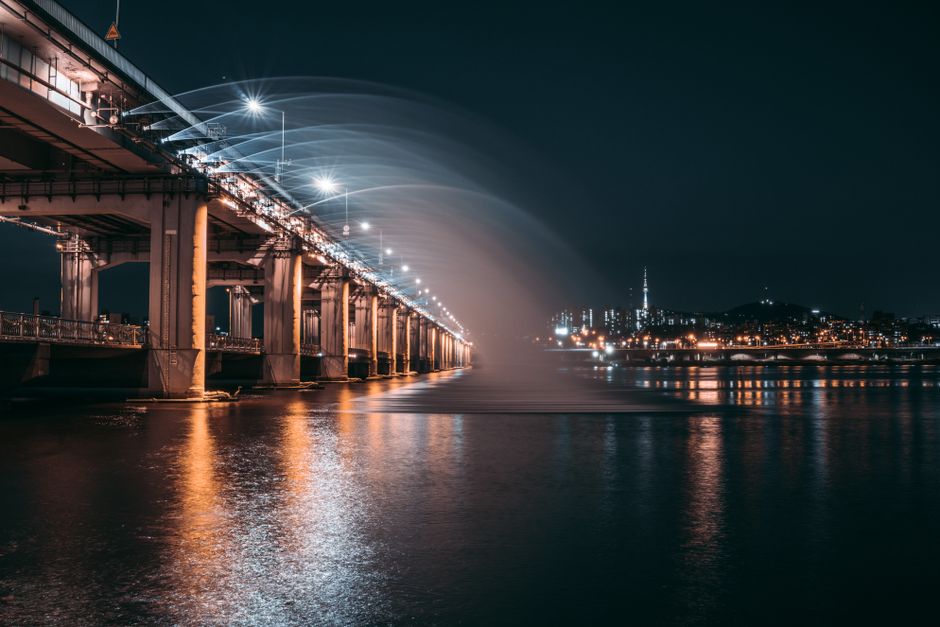
Day 7 — Banpo evening, the closing dinner, the morning departure
The seventh day is the closing day, and the structure runs as a deliberate recap rather than as a final sprint. The morning is unscheduled. A long breakfast, a small Hyundai Department Store haul that one had postponed all week, a quiet hour at the hotel pool. The late afternoon belongs to the river — the Banpo Bridge Rainbow Fountain on its evening schedule, with the picnic shape that Banpo evening as I have written it elsewhere covers in detail. One goes early, sits second-row, eats the convenience-store ramyun, and watches the 8.40 set rather than the 9pm one. Dinner closes the trip — a single Cheongdam table, the omakase-light variant, a glass of wine that one has saved for tonight. The evening folds in by twenty-two-hundred. Departure runs as a morning operation: a slow breakfast, the AREX from Gangnam-via-Hongik or the airport limousine direct, Incheon by lunchtime, Hong Kong by the afternoon flight. The week, edited this way, does not feel rushed at the close — and the city, by the boarding gate, reads as a place one has actually visited rather than survived.
“The recovery night is the night the rest of the week is built on; the temptation to fill it almost always shortens day four into a smaller version of itself.”
From the wellness-week notes.
Frequently asked questions
How many treatment days fit comfortably in a seven-day week?
Two treatment days are the editorial maximum for a wellness-first frame — typically days three and six, separated by a rest-and-light-city day. A third treatment compresses the recovery windows below the threshold at which the city walks remain pleasant. If the medical schedule requires three appointments, an eight or nine-day extension serves better than a denser seven-day frame.
Should one stay in Sinsa, Apgujeong or Cheongdam?
Sinsa-dong sits closest to the medical district and rewards the daily walk with the densest cafe and soup-house grid; Apgujeong reads slightly more polished and pairs naturally with the Dosan Park morning; Cheongdam reads quietest and most editorial but adds a taxi to most other points. For a first wellness week, Sinsa or southern Apgujeong delivers the better default.
Is jet lag really a factor for a Hong Kong traveller?
The time-zone difference is one hour, which seems trivial — and is, on a normal trip. On a wellness week, the body reads even a small offset more sharply through the first forty-eight hours, and a treatment scheduled on day one or day two often feels disproportionately heavy. The two-day soft start is not caution; it is calibration.
What about shopping — Hyundai, Galleria, the design district?
Shopping fits naturally into day four's afternoon and day seven's morning, and the editorial discipline is to choose two anchors rather than five. Hyundai Department Store reads most efficient for a single haul; Galleria sits closer for the design-led pieces; the Apgujeong showrooms reward an unscheduled hour rather than a planned circuit. Saturday afternoons are the only window worth avoiding.
Should one add Jeju or Busan to the seven days?
Not inside the seven days — the wellness pacing collapses the moment a domestic flight enters the schedule. A Jeju or Busan extension reads better as an honest add-on after the seven-day Gangnam frame closes; three additional nights on Jeju or two in Busan deliver the slower coastal coda the city week earns. The discipline is to keep the structures separate.
What is the right budget shape for the week?
Hotel reads heavier than the Hong Kong baseline expects — a wellness-grade Gangnam suite runs roughly 80 to 120 percent of a Mandarin Oriental Tokyo equivalent. Meals run lighter than the published Michelin guides suggest; the pacing favours fewer formal dinners and more soup-house lunches. Treatments are the largest single line and the easiest to plan from home before the trip begins.
How does one handle the language outside the hotel?
Most of the venues this itinerary recommends operate with English signage and bilingual staff, and a Hong Kong reader will find the cadence familiar — clean, unhurried, gently formal. A short phrase list in Korean for the soup houses and the bathhouse is worth carrying; Naver Maps reads more accurately than Google for taxi pickup points. The taxi apps default to English.
What if the weather collapses on a recovery day?
The week absorbs weather changes more easily than the printed itinerary suggests — the museum hour, the cafe loop, the bathhouse night and the hotel pool all run rain-resistant. The single weather-fragile component is the Banpo evening on day seven, and a rainy seventh evening shifts cleanly to a long Cheongdam dinner with the closing river walk substituted by a Hyundai window-shopping hour. The schedule rewards small substitution rather than wholesale rebuilding.