A Reader's Seoul
Seoul Forest, After Quiet Days: A Recovery-Friendly Walk
A flat, unhurried walk on the eastern edge of Seongsu — paced for the first slow days after a Gangnam appointment.
One arrives at Seoul Forest by the eastern edge of Seongsu the way one arrives at Victoria Park on a Sunday afternoon — quietly, slightly off-axis from the city's main grid, and aware almost at once that the pace has dropped a register. The park sits twenty minutes from Apgujeong by taxi, two stops from Gangnam by Bundang Line, and reads, on first impression, as the most undramatic public space in Seoul. Which is precisely the recommendation. On the first quiet days after a treatment — when one wants movement without strain, light without glare, and benches at considered intervals — Seoul Forest is the walk I would suggest before any other in the city.
Why Seoul Forest, and why on a recovery day in particular
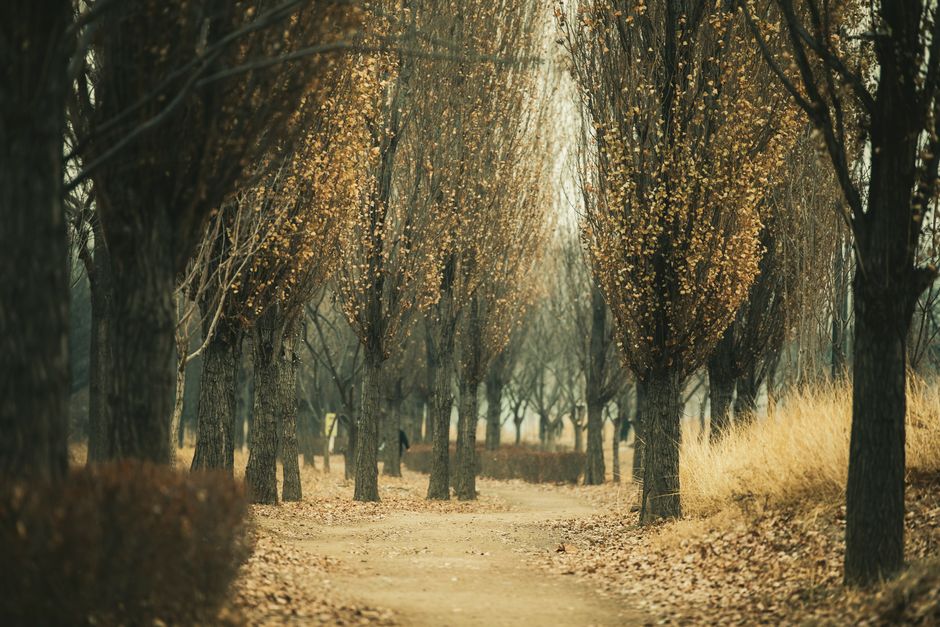
Seoul Forest is a 1.16 square-kilometre urban park on the north bank of the Han River, in the eastern Seongsu-dong district of Seongdong-gu — opened in 2005 on the site of a former water-treatment works and a horse-racing track. What recommends it for a recovery-day walk is the geometry. The paths are flat, paved, and wide; the gradients are negligible; the shade is generous; benches sit at thirty- to forty-metre intervals along the main loops. One does not have to think about route. The whole park can be entered and exited on the same level, the trees are mature enough to do meaningful work against late-morning sun, and the deer enclosure on the eastern side gives the walk an undramatic destination if one wants one. There is no climbing, no stair-and-stair traversal of the kind one negotiates on Mount Namsan, and no exposed promenade like the one along Yeouido. The park is, quite simply, designed to be walked slowly. From a Gangnam hotel the taxi runs eighteen to twenty-five minutes; from Apgujeong Station, by car, slightly less. 行下行下就舒服啲, my aunt would say of any park she liked. She would understand this one immediately.

The geography: five zones, and the two that matter on a quiet morning
Seoul Forest is loosely organised into five zones — the Cultural Art Park near the main entrance, the Eco Forest on the eastern flank, the Nature Experience Learning Park along the north, the Wetland Ecological Field at the river edge, and a smaller plaza near the southern gate — and on a recovery morning the only two that need attention are the Cultural Art Park and the Eco Forest. The Cultural Art Park holds the central avenue, the principal lawns, the seasonal flower beds, and the better-shaded benches; one enters here from the main gate, walks ten minutes east along the avenue, and finds oneself, almost without effort, at the deer enclosure that anchors the Eco Forest. The Wetland Field is worth a look on a second visit — the boardwalk is exposed, the flies are present in summer — but the recovery walk is built around the central avenue and the Eco Forest paths. One can complete the loop in forty-five minutes if one is moving steadily, or stretch it to two hours with bench pauses, which is what the cadence calls for. The pavement is even. Wheelchairs and strollers move through the park without difficulty. There is no point at which one has to descend a stair.
The cadence: walk, bench, walk, bench — the structure of the morning
What recommends the park as a recovery walk is not its scenery but its rhythm. The benches are placed, with what reads as deliberate kindness, at intervals that match the natural rest cadence of someone moving slowly — every thirty to fifty paces along the central avenue, every forty paces around the deer enclosure, more thinly along the riverside path which one need not attempt. I walked the loop on the third day after a clinic appointment in Cheongdam, paced it deliberately, and found myself sitting at six benches in the course of an hour. None of those pauses felt unnecessary. The avenue is wide enough that one can stop without obstructing other walkers, the shade is generous enough that one is not pushed back into motion by sun, and the morning crowd — mostly local residents, mostly senior — moves at a pace that makes one's own slowness feel ordinary rather than self-conscious. By the second pause one stops thinking about the body and starts noticing the trees, which is, I suspect, the entire point of recovery walking. There is no cafe in the park itself, which is also a virtue. One walks unimpeded by the small decisions a cafe imposes.

The deer, the gallery, and the small destinations along the way
Halfway through the walk one reaches the deer enclosure, which sits at the eastern end of the central avenue and is the park's single most photographed spot — but the photograph is not the reason to go. The reason is the structural pause it provides. There is a low fence, a feeding station that staff supervise on weekday mornings, and an open viewing area with substantial bench seating along the south side. One sits twenty minutes here, watches the deer move slowly through the cleared ground, and is aware that one is, for the first time in the morning, sitting still without checking a phone. Beyond the deer enclosure, on the way back, the small Seoul Forest Gallery hosts rotating exhibits of contemporary Korean photography — modest in scale, free to enter, and air-conditioned in summer. I would not plan a visit around it; I would, however, drop in for fifteen minutes on the way back to the main gate if the day is hot. 呢度好啱慢慢行, a HK Tatler colleague once put it after a similar Seoul morning. The phrase covers it well. There is no urgency in this park, and the architecture of one's morning should match.

Practical notes: timing, weather, what to bring, where to sit
The park opens twenty-four hours, but the recovery-friendly window runs nine to eleven on a weekday or three to five in the afternoon — outside those hours the heat (in summer) or the chill (in winter) work against the slow pace. Tuesday and Wednesday mornings are the quietest; weekends fill from late morning, particularly along the central avenue. I would bring a small bottle of water — there are vending machines near the main gate but none on the central paths — a thin scarf for the sun, and a lightweight cardigan for the deer enclosure shade. Comfortable walking shoes matter more than they sound; the pavement is gentle but the cumulative distance, with bench pauses, runs to two and a half kilometres on the recommended loop, and three and a half if one extends to the wetland boardwalk. Public restrooms sit at the main gate and near the deer enclosure, both clean, both with accessible stalls. The park is reachable by Bundang Line to Seoul Forest Station (Exit 3 or 4, four-minute walk) or by taxi from any Gangnam hotel in eighteen to twenty-five minutes. Coming back, a taxi from the main gate to Cheongdam runs roughly fifteen minutes outside rush hour.
What I would not attempt on a recovery day, and why
There are two routes through Seoul Forest that I would set aside for a later visit. The first is the riverside extension — a footbridge crosses the road at the southern edge of the park and connects to the Han River cycle path, which sounds romantic and is, in practice, exposed, hot in summer, and longer than it looks. The bridge itself involves a gentle ramp and a long flat section over traffic, neither of which is strenuous, but the round trip adds a kilometre and a half of unshaded walking; on a quiet recovery day, that is the difference between a measured morning and a tiring one. The second is the wetland boardwalk on the north side, which is structurally fine but tends, in late spring and summer, to attract more insects than the central paths. Save both for a second visit, when the body has reset and one has the appetite for the full perimeter. The first walk is the central avenue and the deer enclosure. Repetition will earn the rest.
Pairing the walk: a Cheongdam morning, a Seoul Forest noon, a hotel afternoon
The version of the day I would suggest, on a quiet recovery morning, runs as follows. Breakfast at the hotel — light, no rush, before nine. A short taxi to Cheongdam for any morning consultation or scheduled appointment. A second taxi at half past ten to Seoul Forest, arriving by eleven, which gives the park its most agreeable hour. Two and a half kilometres of slow walking with five or six bench pauses, the deer enclosure for twenty minutes, the gallery for fifteen if the day is hot, and a return taxi by half past one. Lunch back in southern Gangnam — a small restaurant in Apgujeong, nothing demanding, ideally a familiar room rather than a new one — and the afternoon held back for a hotel rest. The point is that the park does not need to anchor an entire day; it works best as the unhurried middle, between a morning that has structure and an afternoon that does not. 慢慢嚟 applies to the whole sequence, not only the walk.
Frequently asked questions
How long does the recommended walk take, with bench pauses?
Plan ninety minutes to two hours from gate to gate, including five or six bench pauses and twenty minutes at the deer enclosure. The central avenue and Eco Forest loop is about two and a half kilometres of flat, paved walking — gentle by any measure, and well-suited to a recovery morning when one wants movement without strain.
Is the park genuinely flat and accessible?
Yes. The recommended route is paved throughout, with no stairs and only the gentlest gradients. Wheelchairs and strollers move through the central avenue and the Eco Forest paths without difficulty. Public restrooms at the main gate and near the deer enclosure include accessible stalls.
How does one reach Seoul Forest from a Gangnam hotel?
By taxi the journey runs eighteen to twenty-five minutes outside rush hour from Apgujeong or Cheongdam. By subway, take the Bundang Line to Seoul Forest Station and exit at 3 or 4 — a four-minute walk to the main gate. Returning is the same in reverse, with taxis readily available at the gate.
What is the best time of day, and the best day of the week?
Weekday mornings between nine and eleven, or afternoons between three and five, are the quietest windows. Tuesday and Wednesday are gentler than Monday or Friday. Weekends fill from late morning along the central avenue, and the deer enclosure becomes considerably busier — though never crowded in the way central Seoul parks can be.
Is there a cafe or food in the park itself?
There is no cafe within the park, which is, on a recovery day, a quiet virtue — the walk runs uninterrupted by ordering decisions. Vending machines near the main gate handle water and basic drinks. For coffee or a light meal, the surrounding Seongsu neighbourhood holds several cafes within five minutes' walk of Exit 3.
Should one bring water, sunscreen, anything else?
A small bottle of water, a thin scarf or hat for the sun, and a lightweight cardigan for shade are sensible. Comfortable walking shoes matter more than the distance suggests — the cumulative pavement adds up. In summer, carry insect repellent if one plans to extend to the wetland boardwalk; the central paths do not require it.
Is the deer enclosure the highlight, or something else?
The enclosure is photographed often, but the genuine highlight is the cadence — the way the avenue's bench placement, the shade, and the pace of local walkers compose a morning that does the work of a slow walk without asking the body to plan it. The deer are a structural pause, not a destination.
Does the park work in winter or only in mild seasons?
Late October for the foliage and early April for cherry blossom along the western edge are the most agreeable windows. Mid-winter mornings are sharp but doable with proper layering — the avenue is wind-sheltered by mature trees, and the empty park has a particular quiet. High summer is the season I would shorten to forty-five minutes and keep strictly to the shaded sections.