A Reader's Seoul
A Quiet Morning at Seonjeongneung: Royal Tombs Among the Towers
A Hong Kong reading of Seoul's most improbable park — Joseon kings, pine forest, and Samseong skyline in a single hour.
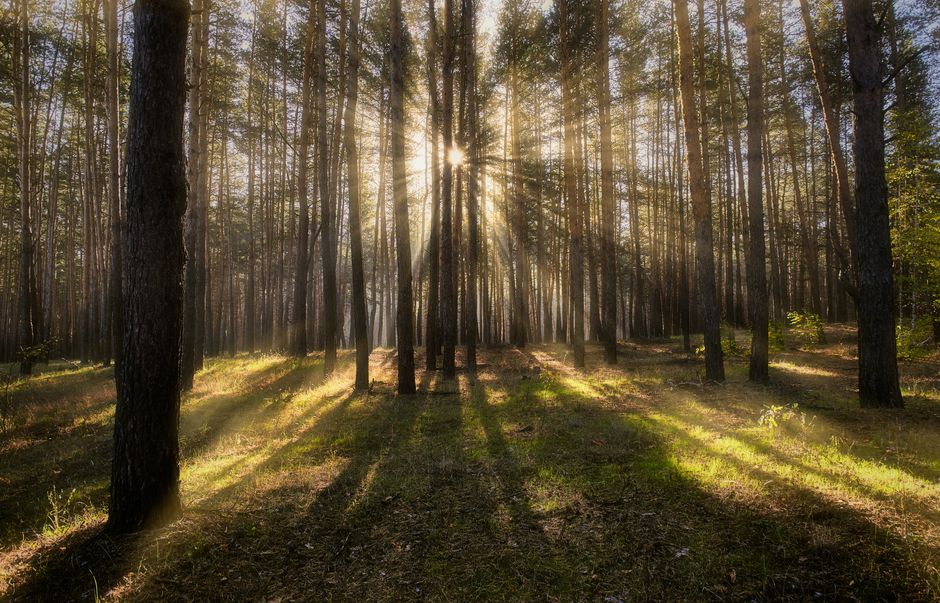
One arrives at Seonjeongneung the way one arrives at Hong Kong Park from Pacific Place — through a glass lobby, across a paved boulevard, into a stand of trees that should not, by any urban logic, be there. The site sits between Samseong and Seolleung stations, ringed by the Trade Tower and the COEX complex, and yet the gate opens onto a six-hundred-year forest. Inside lie three Joseon royal tombs — Seonneung, Jeongneung — under earth mounds laid out to a geomantic code I am still, after several visits, only half learning to read. Cantonese friends find the contradiction enchanting. 呢度真係靜得令人意外. The point of this piece is to suggest the morning hour, the gate sequence, and the small etiquette that turns a Gangnam visit into something closer to a templestay.
What Seonjeongneung is, briefly
Seonjeongneung is the joint UNESCO World Heritage tomb complex of King Seongjong (1457-1494), his second queen Jeonghyeon, and King Jungjong (1488-1544) — three Joseon-era mounds set within a single walled forest in the heart of Gangnam's Samseong district. The site was inscribed in 2009 as part of the Royal Tombs of the Joseon Dynasty cluster — forty tombs across eighteen locations, all maintained by the Cultural Heritage Administration. The compound covers roughly 24 hectares — modest by Seoul park standards, vast by what one expects to find ringed by glass towers. Two ticket gates serve the perimeter — the southern Seonneung entrance closer to Samseong Station, the northern Jeongneung entrance closer to Seolleung. Inside, the layout follows the spirit-path principle of Joseon mausoleum geomancy — a south-facing red-spirit gate, a stone-paved approach, a T-shaped wooden shrine, the earthen tumulus itself. One walks the sequence quietly. The pine canopy is the oldest in central Gangnam — most trees pre-date the surrounding office district by four centuries. What recommends the site is not the spectacle but the temperature drop: a perceptible two or three degrees cooler than the avenue outside, even in August.
Why the early hour matters
The gates open at six in the morning from March to October, and at six-thirty for the winter months — closing at nine in the evening in peak summer and at five-thirty in deep winter. Last entry is one hour before closing. The pricing is unserious — KRW 1,000 for an adult, free for visitors over sixty-five, free on Korea's heritage open days. What price does not capture is the difference between a seven-a.m. visit and a midday one. The morning hour belongs to a particular Seoul demographic — local retirees on their daily walking loop, office workers from the Samseong towers carrying takeaway coffee, the occasional tai-chi practitioner near the spirit-path threshold. By half past nine the school groups arrive in matching caps, and the spell is broken — gently, not unpleasantly, but broken. For a Hong Kong visitor recovering from the late flight or pacing a wellness itinerary, the first hour reads as the considered choice. The acoustic register is closer to Tai Tam than to Causeway Bay; one hears one's own footfall on the gravel. Take the late-night café route the night before, sleep four hours, and the morning visit reads as a small reward.
The walking sequence — gate by gate
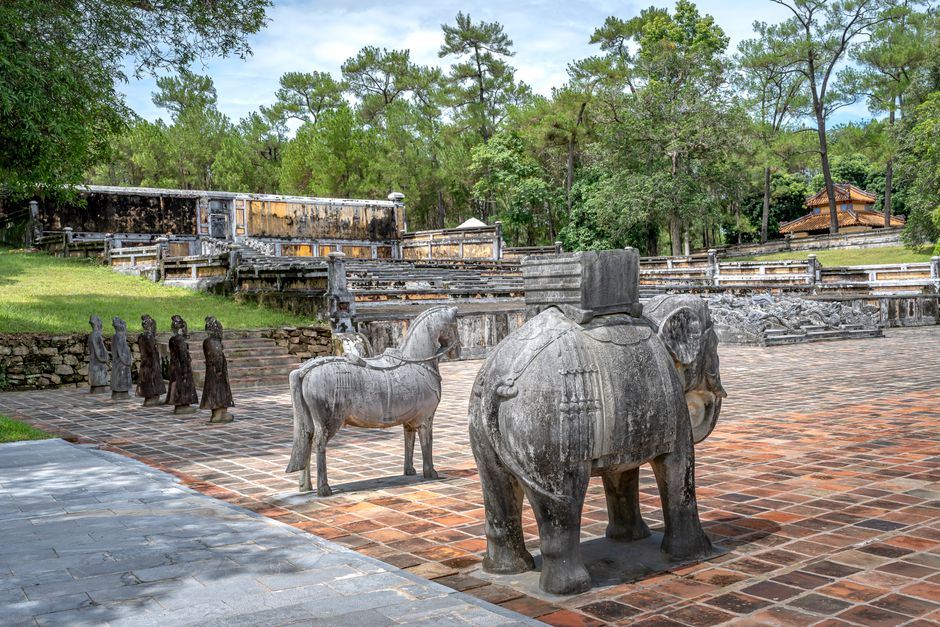
A first-time visitor is best served by entering from the Seonneung gate, walking the southern circuit, then crossing to Jeongneung's mound at the northern end. The full loop runs roughly 1.8 kilometres on flat gravel paths — a forty-five minute walk at a slow editorial pace, an hour with photo stops. The opening sequence passes a small interpretive museum — modest, well-curated, English signage adequate — which is worth the ten minutes if one has not visited a Joseon tomb before. From the museum the path curves through pine and oak to the red-spirit gate of Seonneung, where the protocol shifts. One does not, traditionally, walk on the elevated central stone path — that line is reserved for the spirit of the king. Visitors keep to the right-hand stone, slightly lower; this is the path for the living. The T-shrine sits at the foot of the tumulus, modest and wooden, and one circles to read the stone guardians — civil officers on the lower terrace, military officers and tigers and sheep on the upper. The mound itself is roped at a respectful distance. From Seonneung the path swings west and north through deeper forest to the Jeongneung mound — King Jungjong, solo, with its own shrine and stone court. This stretch is the quietest part of the compound, and the most rewarding.

On Joseon geomancy, briefly
What recommends Seonjeongneung to a Hong Kong reader — beyond the pine quiet — is the legibility of its design language. The siting principle is pungsu — the Korean variant of feng shui — and the rules read closely to what one knows from Hong Kong's New Territories ancestral halls. A tomb requires a mountain to the rear, a watercourse to the front, and a left-blue-dragon, right-white-tiger ridge to either side. The mound itself faces south. At Seonjeongneung the rear mountain has long since become a Samseong office tower — the Hyundai Group's headquarters, in fact — but the geomantic axis still reads in the layout: the spirit-path enters from the south, the tumulus rests in the north, and the original front-watercourse has been replaced by Bongeunsa-ro, the boulevard. What survives, intact, is the spatial vocabulary — the staged terraces of the approach, the calibrated distance between guardian and mound, the deliberate eastward-westward separation of king and queen. Read it once, and Korean royal landscape architecture becomes a coherent grammar rather than a sequence of mounds. The interpretive museum offers a short film on the pungsu principle that, in my reading, justifies the entrance fee on its own.

Getting there from Gangnam — transit and arrival
Seonjeongneung sits at the doorstep of Seolleung Station — Line 2 and the Bundang Line — and a five-minute walk from Samseong Station on Line 2. From a Sinsa or Apgujeong hotel, the journey is a single transfer of ten to fifteen minutes; from a Cheongdam base, a flat ten-minute taxi. A Kakao T cab from the central Sinsa hotel cluster to the Seonneung gate runs KRW 5,000-7,000 — under USD 6 — and arrives within four minutes off-peak. The Seolleung Station exit eight is the considered choice; one emerges onto Bongeunsa-ro and the southern gate is a three-minute level walk. For a visitor staying in Samseong itself — the Park Hyatt, the Intercontinental — the northern Jeongneung gate is closer, and the loop can be walked in reverse without consequence. An adult ticket costs KRW 1,000, paid in cash or contactless at the gate kiosk; foreign cards are read without complication. Audio guides are available in English, Mandarin and Japanese for KRW 3,000 and are worth the supplement. For onward travel, Bongeunsa Temple sits one Line 2 stop north — the two sites pair handsomely on a single morning.
Etiquette, pacing, and what to bring
Seonjeongneung is a working memorial, not a museum garden — the etiquette is gentler than at a Buddhist temple but more attentive than at a city park. Photography is permitted everywhere outside the inner shrines; drones are forbidden by national heritage law. The central spirit-path stone is not walked on. Voices stay low; phone calls are managed at the gate, not on the path. Food is not brought into the compound — the gate guards are courteous about this — and a closed water bottle is the accepted exception. Wheelchair accessibility is reasonable on the main loop but compromised on the upper terraces of each tumulus; the path gradient near the mound itself is gravel and slight uphill. Bring layered clothing — the pine canopy holds a real temperature differential — and shoes one can walk a kilometre in. For a wellness traveller pacing a post-treatment recovery, the loop is the soft outdoor walk one wants on day two — flat, shaded, contemplative — and the Seolleung-side café cluster on Bongeunsa-ro offers a sit-down breakfast within four minutes of the exit. Read in tandem with our Seoul Forest recovery walk for the wider category.
An editor's morning plan
If a Hong Kong reader asked me for a Seonjeongneung morning, this is what I would send. Wake at six, leave the Sinsa hotel by six-forty, arrive at Seolleung Station exit eight by seven. Buy the ticket and an audio guide — the museum opens with the gate. Walk the southern loop slowly — Seonneung first, the Hyojangmun museum film at eight, then the slow stretch west through pine to Jeongneung by quarter past eight. Leave the northern gate by nine, before the school groups arrive, and walk three minutes to the Bongeunsa-ro café cluster for a long black and a kkwabaegi. From here, two paths: one walks ten minutes north to Bongeunsa Temple for a continuation of the morning, or returns south to the hotel via Samseong Station. The Cultural Heritage Administration maintains an official English page with seasonal hours and the rotating heritage-open schedule; their entry is the only authoritative source for gate times — third-party blogs drift seasonally. Two hours, two thousand won, one of Seoul's quietest cultural readings.
Frequently asked questions
Are Seonjeongneung's three tombs all open to visitors?
Yes — the joint complex covers Seonneung (King Seongjong and Queen Jeonghyeon) and Jeongneung (King Jungjong), and all three mounds are visible from the public loop. The inner shrines remain closed to direct entry, but the spirit-path approach, the T-shrines, the stone-officer terraces, and the mound forecourts are all accessible. The full circuit takes forty-five minutes to an hour on flat gravel paths.
What does it cost to enter Seonjeongneung?
An adult ticket costs KRW 1,000 — under USD 0.75 — paid in cash or contactless at the gate. Visitors over sixty-five enter free. Audio guides in English, Mandarin and Japanese are an additional KRW 3,000 and are recommended for first-time visitors. The site is also free on Korea's national heritage open days, which fall four times a year; the Cultural Heritage Administration publishes the schedule each January.
What are the opening hours?
Gates open at six in the morning from March through October, and at six-thirty during November through February. Closing times run from five-thirty in deep winter to nine in the evening at peak summer. Last entry is one hour before closing. The site is closed every Monday for grounds maintenance. The early-morning hour — between six and eight — is the quietest and the recommended window for a contemplative visit.
How long should I budget for the visit?
A first-time visit fits comfortably into two hours — forty-five minutes for the main loop, twenty minutes at the interpretive museum, and the remainder for slow photography or a rest at one of the pine-shaded benches. A pure walking visit can be done in an hour. For a paired morning with Bongeunsa Temple — one Line 2 stop north — budget three to three and a half hours total.
Is Seonjeongneung wheelchair accessible?
The main perimeter loop is reasonably accessible — flat gravel paths, gentle gradients, and accessible toilets at both gate entrances. The upper terraces of each tumulus involve a short uphill stretch that may be difficult for solo wheelchair users; companions can assist. The interpretive museum has step-free entry and accessible lifts. For a post-treatment visitor pacing a recovery itinerary, the main loop is broadly comfortable.
Can I take photographs inside the compound?
Yes — photography is permitted everywhere outside the inner shrine buildings, including the spirit-paths, the stone-officer terraces, and the mound forecourts. Drones are forbidden by national heritage law without prior written permission from the Cultural Heritage Administration. Tripods are permitted on the main paths but discouraged near the mounds. Voices and phone use are kept low — the compound reads, in tone, as one would expect at a quiet Buddhist temple.
How do I get to Seonjeongneung from a Gangnam hotel?
Seolleung Station — exit eight, Line 2 or Bundang Line — sits three minutes' walk from the southern Seonneung gate. From a Sinsa or Apgujeong hotel the metro journey is ten to fifteen minutes with one transfer. A Kakao T or UT taxi from the central Sinsa cluster runs KRW 5,000-7,000 and arrives within four minutes off-peak. Foreign-issued cards are read at the taxi terminal and the gate kiosk without complication.