Travel & Culture
Seochon: A Quiet Counterpoint to Bukchon
West of Gyeongbokgung — narrower lanes, smaller galleries, and a cadence the tour maps have not quite found.
Seochon reads the way the lanes behind Mandarin Oriental Hong Kong used to read on a weekday afternoon — narrower, lower-lit, and held together by foot traffic that the tour maps have not quite found. The neighbourhood holds the same quiet density I recognise from the side streets above Lan Kwai Fong, lit from the side rather than from above. From Bukchon's western edge it is twenty-five minutes through the palace grounds; from a Gangnam hotel, ninety minutes by subway. What recommends Seochon is not what it has but what it is missing — the megaphones, the queue at the photographed corner, the foot-traffic compression. The visit reads, on first attempt, as the most undramatic afternoon one can spend in central Seoul.
Why Seochon, and how it differs from Bukchon
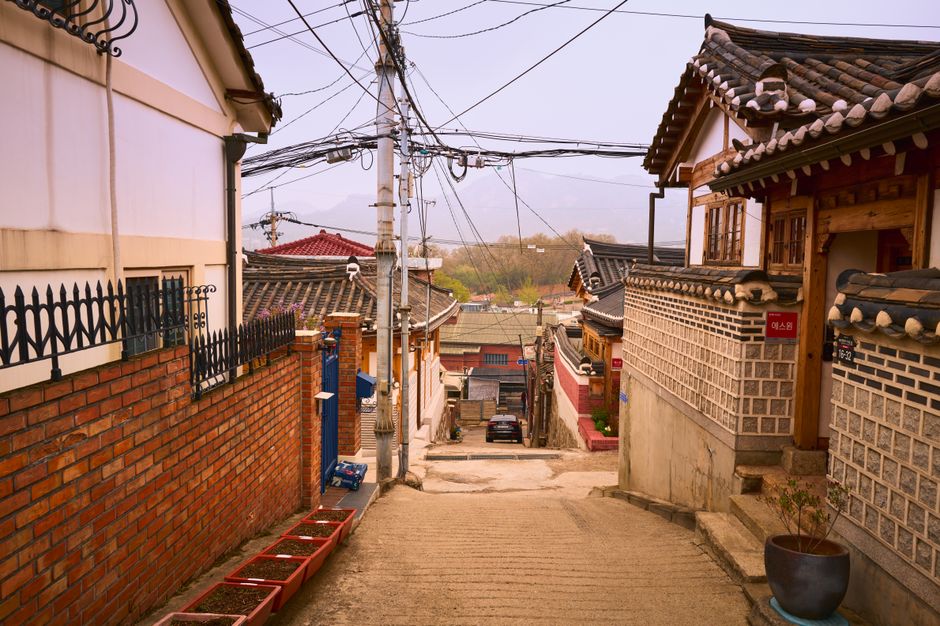
Seochon is the hanok-and-low-rise district immediately west of Gyeongbokgung Palace, occupying the slope between the palace's western wall and the foot of Inwangsan Mountain — and it differs from Bukchon in three specific ways. The first is foot traffic: Seochon receives a fraction of what Bukchon does on any given weekday, and the difference is audible. The second is restoration register: Bukchon's hanok have been more uniformly restored to a high standard, while Seochon's housing stock is a mix — restored hanok next to mid-century concrete next to small commercial conversions, and the variation reads, to my eye, more honestly. The third is the gallery and bookshop layer. Seochon — particularly the Tongui-dong section — holds a high concentration of small independent galleries, a few specialist bookshops, and the kind of stationery rooms that Hong Kong has, in the past decade, mostly lost. The combined effect is a neighbourhood that feels lived-in rather than curated. One walks slowly here, and the streets respond in kind. 呢度好靜, a friend texted me after her first visit. She was being literal.
The transit: from Bukchon, from Gyeongbokgung, and from Gangnam
Three approaches to Seochon, in increasing order of distance. From Bukchon's western edge — say, the Anguk Station area — one can walk through the Gyeongbokgung Palace grounds to Seochon's eastern edge in twenty-five minutes, weather permitting; this is my preferred approach on a longer afternoon. From Gyeongbokgung Station directly, Exit 2 of Line 3 lands one on the eastern edge of Seochon proper, three minutes from the first quiet lanes of Tongui-dong. From a Gangnam hotel — Apgujeong, Sinsa, or the avenue between Sinnonhyeon and Gangnam — the subway runs forty to fifty minutes door to station via Line 3, with another fifteen for the walk into the neighbourhood; a taxi outside rush hour is thirty to forty minutes and costs less than the equivalent distance in any tier-one Asian city I have written from. I would suggest the subway in either direction; Line 3 is reliable and the Gyeongbokgung exits land closer to the lanes than any car can drop one. For a same-day pairing with Bukchon, I would not recommend it on a recovery day — the combined walking is too much. For a return visit, it reads beautifully.
Tongui-dong: the gallery quarter, and how to walk it
Tongui-dong is the small section of Seochon immediately west of Gyeongbokgung's western wall, holding perhaps a dozen small galleries within a five-minute walking radius. The galleries are mostly single-room, mostly free or modestly priced, and mostly run by their own curators — which is to say, the work selection is genuine rather than commercial in the wider sense. What recommends Tongui-dong is the scale: one can read three galleries in an unhurried hour, sit for ten minutes between them, and leave with a clearer picture of contemporary Korean visual practice than a much larger institution would provide in the same window. I would suggest reading the gallery list before arrival — the rotations are quick, and the openings published on Instagram tend to be the better ones — but I would not over-plan. Walk in the door, sit on the bench at the back if there is one, and give the room twenty minutes. The gallery owners are present in a high proportion of the rooms; they will speak with the visitor who lingers. This is a register one rarely finds in Causeway Bay or Central anymore. Tongui-dong has it, and it is what makes the neighbourhood worth the ninety-minute transit.
The hanok alleys: quieter, narrower, less restored, more honest
North of Tongui-dong, climbing gently toward Inwangsan, lie the residential hanok alleys that give Seochon its quieter register. The lanes here are narrower than Bukchon's — some single-file in places — and the restoration register is mixed. One sees a beautifully restored hanok next to a 1970s concrete house next to a small convenience store, and the patchwork reads, to my eye, as the more honest version of an old Seoul neighbourhood. Walk slowly. Speak quietly. The same residential etiquette that applies in Bukchon applies here, though the city signage is sparser; one follows the spirit rather than the letter. I would recommend two specific lanes — Jahamun-ro 1-gil and the small alleys branching off it, which hold the most concentrated cluster of older hanok — but I would not chart the route. Wander the radius for forty minutes, accept that one will retrace one's steps, and let the village reveal itself. The point of Seochon is precisely not efficiency. 慢慢嚟, my mother would say. The lanes are what reward the walker who is willing.
Three Jongno cafes worth the sitting: a hanok room, a bookshop counter, and a roastery
Three indoor stops anchor a slower Seochon afternoon. The first is a small hanok cafe — there are perhaps four or five worth the visit, all of them in restored courtyards, all of them with seating for under twenty. I prefer the rooms with a low wooden table by the window and a single drip coffee on the menu; one orders, sits, and lets the courtyard light do its work. The second is a bookshop with a small coffee counter — Seochon holds two or three independent bookshops where the coffee is incidental and the books are not. The bookshop counters are where I have spent the better part of my second and third Seochon afternoons; one buys a single book, a small espresso, and reads thirty minutes by the window. The third is a small roastery on the southern edge of the neighbourhood, near the boundary with Tongin-dong; the roaster pulls the espresso, the room holds eight seats, and the menu is short by design. Three rooms across a three-hour afternoon is the right cadence. One is not collecting cafes. One is sitting between alleys, and the alleys are why one came.
Practical notes: timing, etiquette, and the recovery angle
A full Seochon read — gallery hour in Tongui-dong, alley wander north, two indoor stops — runs about two and a half kilometres of total walking, spread across three hours, with seated pauses. The lanes climb gently toward Inwangsan; none of the walking is strenuous, and the neighbourhood is well-suited to a quiet recovery day when one wants movement without strain. Etiquette matters. The hanok lanes are residential; speak softly, do not photograph through gates, do not enter open courtyards. The Jongno District Office has not yet imposed the restrictions Bukchon has, but the residents have, informally, the same expectations. Tour groups with megaphones are mercifully rare in Seochon, and one wants the neighbourhood to remain that way. Weather matters: in summer the lanes are humid and the climbs feel longer; in winter the indoor sittings become a virtue, and the neighbourhood in light snow is the loveliest version of itself. From Seochon to dinner in the Gwanghwamun area is a ten-minute walk; to a Gangnam hotel, fifty minutes by subway. If one is using the visit to fill the afternoon between a morning consultation and an evening meal, three hours in Seochon is the right scale. The neighbourhood rewards the returning visitor — and one returns.
Pairing Seochon with Bukchon, on a longer or a return visit
Seochon and Bukchon are natural counterparts, separated by Gyeongbokgung Palace and by perhaps half a register of foot traffic. The two together compose the most considered hanok-district reading central Seoul currently offers — but I would caution against doing both on the same afternoon if the day is meant to be quiet. The combined walking is around five kilometres, and the cumulative attention required by two adjacent but distinct neighbourhoods exceeds what a recovery day can absorb. The better pairing is across two visits: Bukchon on the first afternoon — louder, more restored, the postcard view — and Seochon on the second, when one has earned the contrast. The 1.5-hour Bukchon transit and slow read I have written about separately is the natural first half; Seochon, on a return, becomes the corrective. The two read together as a single argument about how Seoul has chosen to keep a small portion of itself low and slow. One leaves the second afternoon with a clearer picture of the city than any single neighbourhood would provide alone.
Frequently asked questions
How does Seochon actually differ from Bukchon?
Three things — foot traffic (a fraction of Bukchon's on any weekday), restoration register (Seochon's housing stock is more mixed and reads more honestly), and the gallery layer (Tongui-dong holds a dozen small independent galleries within a five-minute radius). Seochon is quieter, less curated, and more residential in the lived-sense.
How long does the transit from Gangnam to Seochon take?
Forty to fifty minutes by subway via Line 3 to Gyeongbokgung Station, with another fifteen for the walk into the neighbourhood — about an hour door to alley. A taxi outside rush hour runs thirty to forty minutes. The subway is more reliable between four and seven in the evening.
Which subway exit lands closest to Seochon?
Gyeongbokgung Station, Exit 2 on Line 3. From the exit one walks three minutes west into Tongui-dong, the gallery quarter on the eastern edge of Seochon proper. From there the residential hanok alleys climb gently north toward Inwangsan.
Is Tongui-dong worth a dedicated hour?
Yes, and a generous one. Three small galleries in an unhurried hour, with a ten-minute sit between them, will leave one with a clearer picture of contemporary Korean visual practice than a larger museum would provide in the same window. Read the rotations on the gallery Instagrams before arrival; openings tend to be the better windows.
Can Seochon and Bukchon be done in a single afternoon?
They can, but I would not recommend it on a recovery day. The combined walking is around five kilometres, and the cumulative attention required by two adjacent but distinct neighbourhoods exceeds what a quiet day can absorb. Pair them across two visits — Bukchon first, Seochon on a return — for the contrast to read clearly.
What etiquette applies in Seochon's hanok lanes?
The same residential etiquette as Bukchon, though the city signage is sparser. Speak quietly, do not photograph through gates, do not enter open courtyards, and follow the spirit of the residential register. Tour groups with megaphones are mercifully rare in Seochon, and the neighbourhood is the better for it.
Are there cafes worth the sitting?
Three categories — a small hanok cafe in a restored courtyard, a bookshop with a coffee counter, and a small roastery on the southern edge of the neighbourhood. I would suggest one of each across a three-hour afternoon. The point is not the espresso list but the cadence.
Is the neighbourhood walkable on a quiet recovery day?
Yes. The full read runs about two and a half kilometres across three hours, with two seated pauses, and the lanes climb gently rather than sharply. None of the walking is strenuous. One can shorten the visit to ninety minutes by skipping the alley climb and focusing on Tongui-dong plus one cafe.