The Short Edit
The Most Overlooked Museums Within a Gangnam Cab Ride
Ten quiet rooms across central Seoul — chosen for the editorial calm, the considered collections and the cab fare that rarely exceeds a flat white.
Gangnam is read, almost universally, by its avenues — Sinsa, Garosu-gil, Apgujeong Rodeo, Cheongdam — and by the four or five museums every guidebook duly files: Leeum, the National, the War Memorial, perhaps Dongdaemun Design Plaza on a generous day. The rooms that follow sit at a different register entirely. Each one is reachable by a short Gangnam cab — fifteen, twenty, occasionally thirty-five minutes when the river bridge is busy — and each runs at a volume the louder venues no longer can. The circuit holds ten rooms across western, central and northern Seoul, none on the standard guidebook checklist and most entered, on a weekday afternoon, by perhaps twenty visitors at a time. What recommends them is not novelty — several have run quietly for decades — but a curatorial register that reads as the work of an editor rather than a ticket office. The list is, like a well-edited retail floor at Lee Garden Three, deliberately spare. 慢慢睇, as the older Cantonese reader instinct says — and these rooms reward it.
How this list was put together
This list is an editorial circuit, not a ranking — a categorical edit of ten Seoul museums that meet four conditions: the venue sits within a thirty-minute Gangnam cab in normal traffic; the room is genuinely under-read by the major guidebooks and English-language press; the collection or programming runs to a serious editorial standard; and the visit composes well alongside other quiet rooms on a slow afternoon. I have walked, sat in and re-visited each of these spaces over a sequence of Seoul stays since 2022, occasionally with a Tatler Asia colleague, more often alone with a notebook and an espresso. Admissions, hours and closing days are accurate to the most recent visit, but Korean private museums adjust their schedules with seasonal exhibitions — verifying directly the day before is the courtesy the rooms expect of a thoughtful visitor. Cab fares quoted in Korean won are approximate and assume Kakao T metered service, not international apps. None of the venues featured here have any commercial relationship with this publication; the inclusions are editorial, undramatic and final. The order is roughly clockwise on the map, beginning at Hannam and finishing in lower Cheongdam — but the circuit reads in either direction without losing its rhythm.
What is excluded, and on what reasoning
Leeum, the National Museum of Korea, the War Memorial, the National Museum of Modern and Contemporary Art at Samcheong and Dongdaemun Design Plaza are excluded — not because they are unworthy, but because they are not overlooked, and the editorial premise here is precisely the rooms that are. The MMCA Cheongju annex falls outside the cab radius. The corporate museums of the chaebol holding companies — Samsung's broader collection beyond Leeum, Hyundai Motorstudio — were considered and held back, on the grounds that the public access calendar runs erratically. The room one returns to weekly belongs on this list; the room one visits once on a corporate junket does not.
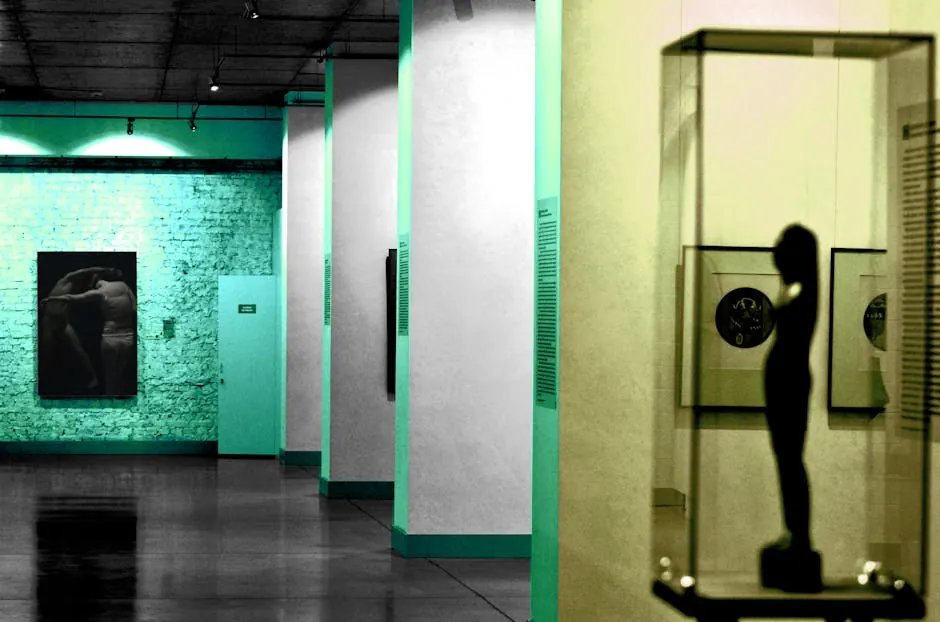
Amorepacific Museum of Art (APMA), Yongsan
Amorepacific Museum of Art occupies the lower floors of the David Chipperfield-designed Amorepacific headquarters in Yongsan — a building of considered restraint that, on first impression, reads as quiet office architecture and resolves indoors into a room of unusual editorial calm. The collection runs to Korean modern and contemporary works alongside a discreet rotating programme of international shows; recent rotations have moved through Rafael Lozano-Hemmer, Barbara Kruger and a thoughtful Korean ceramic survey. The wall texts are bilingual and tighter than the municipal register — closer, in cadence, to the labels at M+ Hong Kong than to those at the National. APMA is fifteen minutes from Gangnam by cab on a clear afternoon; one arrives at a sunken courtyard, takes the lift, and is offered, by the staff at the desk, the kind of unhurried welcome that signals the room. Photography is permitted in most galleries; the cloakroom is staffed without fuss; the small museum shop on the lower mezzanine prices its catalogues fairly, the way the better Tokyo private museums do. The cafe on the building's lower level — Amore Cafe — runs a quiet ground-floor lunch service that closes the visit cleanly, and the building's atrium itself, designed around a circular reflecting pool, reads as a public room one can sit in for thirty minutes without ordering anything. The architecture rewards a slow second loop. The lower atrium is open to the public during normal museum hours, and a careful visitor can use it as a reading room between galleries. 呢度好靜, a friend who curates for an HK auction house once said. She had walked the room twice in one afternoon. I have done the same on more than one occasion. APMA is closed on Mondays and the standard Korean public-holiday calendar; English-language guided tours run on the first Saturday of most exhibitions and ask for advance booking.
- Strengths: editorial wall texts, considered international rotations, calm courtyard architecture
- Specialty: Korean modern + contemporary alongside discreet international programming
- Pricing tier: $$ (modest admission, occasional free shows)
- Location: Yongsan-gu, a fifteen-minute Gangnam cab
Horim Museum (Sinsa flagship), Sinsa-dong
Horim Museum's Sinsa flagship is a gallery I have written about elsewhere on this site — at length and without apology — and it earns a place here because most short Seoul itineraries still file it too late, or not at all. The Sinsa branch presents Korean ceramic, lacquerware and modern works from the Horim Foundation collection in a set of generously proportioned galleries that read, in their pacing, like a Bulgari archive exhibition rather than a municipal display. The bunch'eong gallery on the second floor is the room I would point a visitor to first; the celadon room on the third runs at a register that the better Tokyo private museums rarely match for sheer breadth of period. The English wall texts are unusually well edited; the cloakroom is staffed without ceremony; the lower-level monograph shop prices its hardback catalogues fairly, and the small cafe on the ground floor serves a competent siphon coffee that closes the visit cleanly. A friend who collects ceramics in Hong Kong once described the bunch'eong gallery as 'the room I would visit if I had only one Seoul afternoon' — and the description has stayed with me. Horim is closed on Mondays and major public holidays. A visit of forty-five to seventy-five minutes reads about right for a single rotation. The cab from central Gangnam runs a single-digit fare on a quiet afternoon; on a Saturday, allow an extra ten minutes for Sinsa traffic. The Hannam annex, a smaller two-floor satellite focused on Buddhist art and contemporary curatorial commissions, programmes seriously and sits about twelve minutes by cab from the Sinsa flagship — a one-day pairing that closes neatly with a coffee on Itaewon's quieter southern slope. The Hannam annex's ground-floor commission gallery, in particular, has run a series of considered contemporary shows that rotate alongside the foundation's permanent Buddhist holdings; the contrast — a thirteenth-century gilt-bronze figure on one floor, a contemporary sound installation on the other — composes a visit that resolves more cleanly than its description suggests.
- Strengths: bilingual editorial register, ceramic and lacquer collection of long horizon, calm pacing
- Specialty: Korean ceramic, lacquerware, modern and contemporary on a foundation calendar
- Pricing tier: $ (modest admission)
- Location: Sinsa-dong with a Hannam annex; both within a Gangnam cab
Mimesis Art Museum, Paju Book City
Mimesis Art Museum sits, technically, outside Seoul — Paju Book City, a thirty-five-minute cab from western Gangnam on a clear afternoon, occasionally forty in earnest traffic — and earns inclusion here because the room is genuinely under-read and rewards the longer ride. The building is an Alvaro Siza commission of curving white concrete that resolves, indoors, into a sequence of slow-light galleries that read as much like an architectural essay as a display. Siza's plan turns the visitor through a soft helical path; the natural light, filtered through the curved upper clerestory, modulates with the hour in a way that makes the same gallery read differently at eleven, at three, at five. The programming runs to Korean and international contemporary on a quieter calendar than the major Seoul venues, and the cafe on the upper floor — modest, well-edited — overlooks the surrounding book city in a way that recommends a long lunch. A reader who knows Naoshima will recognise the editorial discipline; the museum belongs in the same architectural conversation as the Chichu and the Lee Ufan rooms, although it claims none of the destination weight. The cab fare from Gangnam runs to roughly the cost of a serious omakase appetiser one way; the return at golden hour, with the Han River on the right, is its own reward. The museum is closed on Mondays and the second Tuesday of each month, on the standard Korean private-museum cadence. Admission is moderate. A weekday visit is the editorial recommendation; on weekends, the broader Paju Book City foot traffic warms the calm just enough that one notices. The wider Paju ecology — three or four small bookshops, a publisher-run cafe, a single-floor design archive — composes the longer afternoon if a return cab can be deferred. A friend from Causeway Bay who flew in for a Friday spent five hours on the site without checking the time once.
- Strengths: Alvaro Siza architecture, slow-light galleries, contemplative pacing
- Specialty: Korean and international contemporary on a quieter calendar
- Pricing tier: $$ (moderate admission)
- Location: Paju Book City, a thirty-five-minute western Gangnam cab
Seoul Museum (Buam-dong)
Seoul Museum — not the city's municipal Seoul Museum of Art, but the smaller private foundation in Buam-dong, north of Gyeongbokgung — is a room I came across on a friend's recommendation in 2023 and have returned to four times since. The museum occupies a quietly modernist building set into the Buam-dong hillside; the collection runs to Korean modern paintings, Lee Jung-seob lithographs, ceramics and a small, considered photography archive. The galleries are calm, the wall labels bilingual, the visitor count rarely above twenty on a weekday afternoon. The hillside placement matters: from the upper gallery one looks out, through a single tall window, onto the wooded slope above Buam-dong, and the room itself adjusts in tone with the seasonal light. A small ground-floor cafe — terraced, with a hillside view — serves a competent siphon coffee and a single cake; on a clear October afternoon the terrace becomes the de facto reading room of the visit. The cab from Gangnam runs a long twenty minutes through Gwanghwamun on the way; on the return, the route through Sajik-dong and Hannam closes the afternoon with a handsome city skyline. Admission is modest. The room is closed on Mondays. Buam-dong itself rewards a longer detour — Seoul's quietest hillside neighbourhood, in editorial terms — but a visitor working to a tighter schedule can enter the museum, take the smaller exhibition floor at full pace, and return to Gangnam within ninety minutes door to door. The principal galleries are accessible by lift; the cafe terrace involves three shallow steps and a railing. 呢度好特別, a friend texted me from the cafe terrace. She had been to most of the louder rooms, twice over. The smaller rotating photography archive on the lower floor is, on its own, worth the cab. A reader looking for a single image to take home from Buam-dong will find it more readily here than at the louder rooms further south.
- Strengths: hillside architecture, bilingual wall texts, considered painting and photography archive
- Specialty: Korean modern paintings, ceramics, photography
- Pricing tier: $ (modest admission)
- Location: Buam-dong, a long twenty-minute Gangnam cab
Whanki Museum, Buam-dong (sister room, separate visit)
Whanki Museum — the foundation devoted to Kim Whanki, the Korean modernist whose dot-and-line abstractions bridge mid-century New York and the Korean post-war canon — is an eight-minute walk from Seoul Museum and reads, on first impression, as the more programmatically serious of the two Buam-dong rooms. The building is a sequence of small concrete galleries on a stepped terrace; the rotation runs Whanki's own works alongside thematically chosen contemporary commissions on a cadence of three or four exhibitions a year. A reader who has stood, even briefly, in front of one of the late blue-dot canvases will understand why the Korean auction market has lifted Whanki to the prices it now commands; the wall texts here, bilingual and unhurried, frame the work without overselling it. The painter's New York period — the years on Tenth Street, the friendships with the colour-field generation, the slow turn from Korean folk motifs to dot-grid abstraction — is the editorial centre of most rotations, and the foundation's permanent display traces the arc cleanly across the upper galleries. Admission is moderate. The room is closed on Mondays and at the turn of each major exhibition. A combined Seoul Museum + Whanki visit, with a short coffee between them on the Buam-dong slope, composes a clean afternoon — three hours, two cafes, one taxi back. The cab return through Hannam to Gangnam runs about twenty-five minutes at six in the evening. A practical note for the slower visitor: Whanki's stairs are generous but the upper galleries are reached without lifts on the older building wings; staff at the front desk will offer alternate viewing arrangements on request, and a wheelchair-accessible route covers the principal ground-floor rooms. The foundation also publishes a slim annual journal, in Korean and English, that is sold from the entry desk and reads as one of the better single-painter scholarly publications in the Korean canon.
- Strengths: Kim Whanki monographic depth, terraced gallery sequence, three exhibitions per year
- Specialty: Korean modernist abstraction, contemporary thematic commissions
- Pricing tier: $$ (moderate admission)
- Location: Buam-dong, walkable from Seoul Museum
Arumjigi Foundation Hall, Tongui-dong
Arumjigi Foundation — the cultural foundation devoted to traditional Korean lifestyle, craft and architecture — runs a small exhibition hall on a discreet Tongui-dong lane just west of Gyeongbokgung. The rotations are short, calendar-driven and unusually well edited: a winter exhibition on Korean wrapping cloth, a spring show on traditional kitchen ceramics, an autumn programme on Korean architectural details, an occasional summer show on Korean paper or natural dye. The room is not large — two principal galleries, a small reading space — and a careful visit runs forty-five to sixty minutes. What recommends the foundation is not the scale but the editorial register: every label, every object placement, every wall colour reads as the work of a curator who has thought about the room twice. A friend who edits an interiors magazine in Hong Kong walked the wrapping-cloth show with me in 2024 and stayed an hour longer than she had planned, taking notes on the way the foundation handled the light. The Tongui-dong location places the visit naturally alongside a longer Bukchon afternoon; a reader pressed for time can enter, read, leave and be back in Gangnam within ninety minutes. Admission is modest, occasionally free during a small show. The foundation closes on Mondays. The cab from Gangnam runs about twenty-two minutes via Sajik-dong, slightly longer at rush hour. The small cafe on the foundation's upper level closes by five and serves an honest hojicha latte that rewards a quiet hour. A small foundation shop on the entry level sells the show catalogues alongside a careful edit of contemporary Korean craft objects — the kind of small lacquer dish or hand-thrown bowl that travels home in a carry-on without complaint. The shop alone is worth a separate visit, and the foundation occasionally publishes limited-edition print collaborations with contemporary Korean craftspeople that sell out within the run.
- Strengths: editorial discipline, traditional Korean craft programming, discreet location
- Specialty: Korean traditional craft, lifestyle, architectural detail
- Pricing tier: $ (modest, occasionally free)
- Location: Tongui-dong, west of Gyeongbokgung
OCI Museum of Art, Gyeongun-dong
OCI Museum of Art — the corporate foundation museum of the OCI Group, on a quiet Gyeongun-dong lane near Insadong's eastern edge — is a room that the Korean contemporary scene knows well and the international press almost never files. The galleries run a thoughtfully curated mid-career programme: Korean painters and sculptors three or four exhibitions into a serious career, often with a publication and an artist talk on the closing weekend. The OCI Young Creatives prize, run annually, has produced several artists whose subsequent rotations at Songeun, the Atelier Hermes commission and the major Seoul auction houses have followed within two or three years; reading OCI is, in effect, reading the Korean contemporary calendar at the right end of the funnel. The wall texts are bilingual, the catalogues priced fairly, and the room itself — a reconverted four-storey building with generous sightlines — pulls one back for second visits. Admission is free, which one should not mistake for casual; the curatorial register here is closer to a foundation than to a commercial gallery, and the works often carry an editorial weight that is rare at zero ticket. The cab from Gangnam runs about eighteen minutes through Jongno; on the return, the route through Sejongno and Hannam closes the visit with a clean view of the river. The building is closed on Mondays and on Sundays during certain installation transitions. A practical note: the lift accesses the second through fourth floors; the small ground-floor entry has a single shallow step. The wider Insadong quarter — its tea houses, its small print archives, the Kyobo bookshop branch on Jongno — composes the longer afternoon if a careful schedule allows. A friend from Hong Kong once spent the morning at OCI, took an hour for tea on Insadong's quieter eastern lane, and walked the afternoon back through Anguk and Gwanghwamun without once consulting a map.
- Strengths: free admission with foundation curatorial register, Korean mid-career programming
- Specialty: Korean contemporary painting and sculpture, mid-career artists
- Pricing tier: Free
- Location: Gyeongun-dong, near Insadong's eastern edge
Daelim Museum (Hannam-dong, contemporary annex)
Daelim Museum — the foundation that ran a celebrated photography programme in Tongui-dong for many years — has shifted its principal exhibition energies to a Hannam-dong satellite that the Seoul press still occasionally calls D Museum, after its earlier branding. The Hannam space programmes large-format thematic shows on photography, design, fashion archives and twentieth-century visual culture; recent rotations have moved through a Henri Cartier-Bresson survey, a Korean denim history exhibition and a serious Wim Wenders-themed show. The galleries are wider and less editorially compact than at Songeun or Horim — closer, in scale, to a major travelling exhibition than to a foundation room — and the visitor count on a weekend afternoon runs higher than the rest of the rooms on this list. A weekday morning is the courteous hour. The exhibitions are heavily photographed by the broader Korean press and by a steady stream of K-content social platforms, which is part of why the room sometimes gets dismissed as a 'photo-spot' venue by the more austere editorial register; a slower walk, with the show catalogue in hand, restores the case. The Cartier-Bresson rotation, in particular, was edited with a seriousness one would expect from the European foundations rather than from a Korean satellite. Admission is moderate, occasionally premium for a major rotation. The cab from Gangnam runs about ten minutes — the closest stop on the circuit — and the surrounding Hannam coffee scene closes the visit with several considered options. The room is open on Mondays during major exhibitions, which is unusual on the private-museum calendar and worth noting. The Daelim shop, on the lower level, runs the strongest exhibition-tied retail of any room on this list — limited-edition prints, well-edited catalogues, occasional artist collaborations on small objects.
- Strengths: large-format thematic shows, photography and design archives, Hannam proximity
- Specialty: photography, fashion archives, twentieth-century visual culture
- Pricing tier: $$ to $$$ (moderate to premium during major rotations)
- Location: Hannam-dong, the closest cab on the circuit
Park No-soo Art Museum, Jongno-gu
Park No-soo Art Museum is a small, beautifully kept hanok-museum complex devoted to the twentieth-century Korean painter Park No-soo, on a quiet Jongno hillside lane that most international visitors never find. The room — properly, two rooms, in adapted hanok wings around a small courtyard — holds a permanent display of Park's ink-and-colour works alongside the painter's preserved studio, his brushes, his books, his window. The studio room is the heart of the visit: a long low desk, three brushes laid as the painter left them, a small bowl of dried ink, the window through which Park watched the slope behind the house for fifty years. The visit is short — forty minutes, perhaps fifty if the courtyard is empty enough to sit in — and the experience reads more like entering a private home than a foundation. A reader who has stood in front of an Andrew Wyeth in his Maine studio house, or in Hammershoi's Copenhagen apartment turned museum, will recognise the cadence. Admission is modest. The museum is closed on Mondays and certain holidays. The cab from Gangnam runs about twenty-five minutes through Gwanghwamun; one arrives, takes the lane on foot for the last hundred metres, and is offered tea. There is no shop, no cafe, no signage past the courtyard wall. The wall labels are bilingual but spare; the better reading is to look first and read after, in the hanok room rhythm. The painter's biography, which spans the colonial period, the Korean War years and the post-war modernist Korean canon, is sketched lightly on a single panel and elaborated in a slim catalogue available at the front desk. 呢度有 Hammershoi feel, a friend wrote on a postcard from inside. She was not wrong, exactly.
- Strengths: hanok-museum architecture, preserved painter's studio, contemplative scale
- Specialty: twentieth-century Korean ink-and-colour painting (Park No-soo monographic)
- Pricing tier: $ (modest admission)
- Location: Jongno-gu hillside lane
Some Sevit Floating Cultural Spaces (Banpo, programme-led)
Some Sevit — the floating cultural islands at Banpo, on the Han River — is, in fairness, the unconventional inclusion on this list, and the one I considered the longest before listing it. The complex hosts a rotating programme of small exhibitions, design showcases and occasional curated installations on its three floating pavilions; the calendar is irregular, the curatorial register varies, and on a quiet week the room reads more like a riverside event venue than a museum. What recommends Some Sevit is the unusual pairing it offers — a small but seriously chosen exhibition, the river outside the gallery glass, the Banpo Rainbow Fountain at dusk a six-minute walk along the promenade — that no other room on this circuit can match. Recent rotations have moved through a media-art group show on Korean light artists, a contemporary Korean ceramic installation curated by an Insadong gallerist, and an architecture-and-photography pairing tied to the Han River's seasonal moods. None of these would carry, on their own merits, the weight of a Songeun or a Horim rotation; together with the river view and the evening fountain, they compose an afternoon-into-evening that the more austere rooms cannot. The cab from Gangnam runs five minutes flat. Admission to most exhibitions is free or modest; the larger programmed shows occasionally charge a moderate fee. The pavilions are open most days, with the closing day varying by programme. A practical note: Some Sevit reads best as the closing room of an afternoon, paired with the eight o'clock fountain set and a dinner along the river, rather than as a stand-alone destination on a busy schedule. The cafe on the upper pavilion serves a competent espresso and, more importantly, holds a good west-facing table for sunset; reservation is not generally taken, but on a Friday evening one walks in twenty minutes early. The river light, on a clear evening, finishes the day on a register no indoor room quite matches.
- Strengths: river-and-glass setting, fountain pairing at dusk, irregular but considered programming
- Specialty: rotating small exhibitions, design showcases, riverside curatorial events
- Pricing tier: Free to $$ (variable by programme)
- Location: Banpo, the closest cab — five minutes flat
Comparison table — at a glance
The table below sets the ten rooms side by side on the editorial axes that matter to a thoughtful Gangnam-based visitor: cab time, programmatic register, principal collection focus, admission tier and recommended visit length. The table is categorical, not ranked; it is meant to help a reader choose among rooms by mood and afternoon shape, not by ordinal position.
| Museum | Cab from Gangnam | Focus | Admission tier | Visit length |
|---|---|---|---|---|
| Amorepacific Museum of Art | ~15 min | Modern + contemporary | $$ | 60-90 min |
| Horim Museum (Sinsa) | ~10 min | Korean ceramic + lacquer | $ | 45-75 min |
| Mimesis Art Museum (Paju) | ~35 min | Contemporary + architecture | $$ | 90-120 min |
| Seoul Museum (Buam-dong) | ~20 min | Korean modern paintings | $ | 60-75 min |
| Whanki Museum (Buam-dong) | ~22 min | Kim Whanki monographic | $$ | 60-90 min |
| Arumjigi Foundation Hall | ~22 min | Korean traditional craft | $ | 45-60 min |
| OCI Museum of Art | ~18 min | Korean mid-career contemporary | Free | 45-60 min |
| Daelim (Hannam annex) | ~10 min | Photography + design archives | $$-$$$ | 75-120 min |
| Park No-soo Art Museum | ~25 min | Korean ink-and-colour painting | $ | 40-50 min |
| Some Sevit (Banpo) | ~5 min | Rotating small programmes | Free-$$ | 45-90 min |
How to read the circuit, and on which days
The circuit is not a single-day proposition — ten rooms across western, central and northern Seoul are too many to walk well in one afternoon, and the visitor who attempts it tends to leave with a flattened recollection of all of them. A more considered reading splits the rooms into three afternoons. The first afternoon — Hannam to Sinsa — pairs Daelim, APMA and Horim Sinsa, with a coffee in Hannam's southern slope between them; this is the densest editorial day on the list, and runs cleanly from late morning to early evening. The second afternoon — Buam-dong, with one optional return — pairs Seoul Museum and Whanki, with a long coffee on the Buam-dong terrace between them; the whole afternoon reads as one slow walk on a hillside. The third afternoon — Tongui-dong and Jongno — pairs Arumjigi, OCI and Park No-soo, with a Bukchon lunch between them and a return cab from the Park No-soo lane at golden hour. Mimesis at Paju asks for its own day. Some Sevit closes any of the three afternoons, in a cab and a riverside walk. Mondays should be avoided across the board: most of the foundations on this list close on Mondays and on the standard Korean private-museum calendar of major holidays. Tuesdays and Wednesdays read most calmly. Saturdays warm slightly; Sundays warm more. The fountain at Banpo runs evening sets at intervals from late spring through early autumn, and finishes the longer trip on a different register entirely.
Editorial note
This list is a categorical edit, not a ranking — Korean medical-tourism advertising regulation under Article 56 paragraph 4 of the Medical Service Act prohibits direct comparison or ranking of named healthcare facilities, and while this is a museum guide rather than a clinic guide, the editorial discipline of treating named institutions as a categorical edit rather than an ordered queue serves the reader well across both registers. None of the venues featured here have any commercial relationship with this publication. Inclusions, exclusions, hours and admission tiers are accurate to the most recent verified visit; readers planning a careful afternoon should verify the day before, in the way one would for a respected restaurant. A correction policy is published on this site's editorial page. Comments and corrections may be sent to the editor at the address noted in the site footer.
Frequently asked questions
Are all ten museums genuinely reachable by a Gangnam cab in under thirty minutes?
Nine of the ten sit comfortably within the thirty-minute cab radius from central Gangnam in normal traffic; Mimesis Art Museum at Paju is the outlier at thirty-five to forty minutes one way, and is included on the list precisely because it rewards the longer ride. The rooms in Hannam — Daelim, APMA, Horim Hannam — run closest at ten to fifteen minutes; the Buam-dong and Tongui-dong rooms cluster around twenty to twenty-five minutes; Park No-soo and OCI run roughly twenty-five and eighteen minutes respectively. Some Sevit at Banpo is five minutes flat. Saturday afternoons add ten minutes across the board.
Which of the ten museums offer free admission?
OCI Museum of Art runs a permanent free admission policy that one should not mistake for casual; the curatorial register is genuinely foundational. Some Sevit's smaller programmed shows are typically free, with occasional moderate fees for larger rotations. Most of the others sit at modest admission tiers — well below the equivalent at major Hong Kong, Tokyo or London institutions — and Daelim's larger Hannam exhibitions occasionally reach a premium tier during a major show. Verifying the current rotation's pricing the day before is the courtesy these rooms expect.
Are the wall texts and signage adequate for a non-Korean-speaking visitor?
Generally yes, and at several venues — APMA, Songeun (mentioned elsewhere on this site), Horim Sinsa, Whanki — the bilingual English texts are unusually well edited, closer in cadence to a serious foreign museum than to a municipal display. OCI and Arumjigi run bilingual labels reliably. The smaller rooms — Park No-soo, Seoul Museum, the occasional Mimesis show — vary by exhibition; staff at the front desk speak conversational English at every venue on this list, and printed English-language exhibition guides are typically available on request.
Which days of the week should be avoided for this circuit?
Mondays close most private museums in Seoul, including Horim, OCI, Arumjigi, Whanki, Seoul Museum, Park No-soo and APMA. Daelim is the one room on this list that occasionally opens on Mondays during a major exhibition. Major Korean public holidays — the Lunar New Year period, Chuseok, Buddha's Birthday, Liberation Day and a handful of others — produce a similar effect across the board. Tuesday through Saturday afternoons read most reliably. Sunday is workable but cafes near the rooms warm by mid-afternoon.
Is the circuit appropriate for a visitor recovering from a quiet medical or wellness procedure in Gangnam?
Several of the rooms read well for a visitor pacing a quiet recovery afternoon — APMA, Park No-soo, Arumjigi and Some Sevit in particular, all of which run shorter visit lengths and gentler walking distances. Buam-dong's Seoul Museum and Whanki involve a hillside terrace and steps; a recovering visitor may prefer to wait until normal mobility has returned. The longer Paju trip to Mimesis is best deferred to a later day, on the grounds that a thirty-five-minute cab and a longer indoor walk add up. Anyone managing a specific medical recovery should follow the protocol provided by their treating physician, not a museum itinerary.
How does this list differ from the better-known Gangnam museum circuit on this same site?
The Gangnam quiet museum circuit, published elsewhere on this site, is a single-afternoon walking circuit of six rooms within Gangnam itself — Sinsa to Cheongdam, on foot, three to four hours. This list is a wider editorial edit of ten rooms reachable by a short cab from Gangnam, spanning Yongsan, Buam-dong, Tongui-dong, Jongno, Hannam, Banpo and Paju. The two reading lists are complementary rather than overlapping; a thoughtful Seoul stay of five or six days might include both a single Gangnam walking afternoon and one or two of the cab-reachable afternoons described here.
Are guided tours or audio guides available at these museums?
APMA and Daelim run audio guides in Korean and English, occasionally Chinese and Japanese for major rotations. Horim Sinsa offers a printed English-language exhibition guide that runs to a tighter editorial register than most audio guides. Whanki and Mimesis publish accompanying catalogues that read well in lieu of an audio guide. The smaller rooms — Park No-soo, Seoul Museum, OCI, Arumjigi — are best read without mediation, on the grounds that the wall texts are sufficient and the rooms are small enough that a guide tends to slow rather than help. Group tours are available on advance request at most venues.