A Reader's Seoul
A Warm Winter Itinerary for Gangnam: Indoors, Slowly, Properly
A cold-weather edit of Gangnam — hot chocolate, hanjeungmak heat, hotel lounges, and the unhurried pacing a recovery week wants.
Gangnam in January is colder than Hong Kongers tend to expect — not the wind-tunnel cold of Beijing, not the wet grey of a London February, but a clean, crystalline cold that the avenues between Sinsa and Apgujeong absorb very efficiently. The architecture helps; the city is engineered, like Causeway Bay's vertical mall stacks, to reward staying indoors. One arrives in a long coat that proves unnecessary — the buildings are warmer than the streets. 呢度凍係凍,但唔濕, my mother said after she visited me one February. She was right. The dryness is the trick of it.
Why a winter visit, and the case for slowness
A Gangnam winter is, in plain terms, the off-peak season for the wellness-traveller corridor — quieter clinics, shorter waits, lower hotel rates, and a calendar of indoor culture that the summer crowd never quite sees. The neighbourhood between Apgujeong and Cheongdam runs at perhaps seventy percent of its high-season density from mid-December through late February; the better restaurants take walk-ins again, the better cafés have window seats. What recommends winter is not the absence of crowds but the recovery-friendliness of the cold. A regenerative or aesthetic protocol almost always specifies a heat-and-immersion cooling-off period, and in summer that constraint feels punishing — the city is humid, the streets are loud, and one cannot sit outdoors without sweating into the dressings. Winter inverts the equation. The cold is, in its own way, the recovery; one walks slowly in the dry air, returns to a heated lobby, drinks something warm, and the protocol's restrictions stop reading as restrictions.

The hot-chocolate map
Gangnam's hot-chocolate culture is, in my reading, the single best thing the neighbourhood has imported from elsewhere. The better cafés take it seriously — single-origin Valrhona or Domori, milk steamed to 65°C and held there, served in small ceramic cups rather than the takeaway sleeves one finds in lesser places. Garosu-gil has perhaps four cafés that one returns to; Dosan Park has two; the lobby café at one of the Apgujeong hotels has, quietly, the best one in the corridor — it is not advertised on any list, and the regulars guard it. The drink, properly made, is closer to a French chocolat chaud than to an American hot cocoa: thick, slightly bitter, no whipped cream. One sits with it for forty minutes, watches the avenue darken at four-thirty, and the day reorganises itself around the cup. The Hong Kong coffee-shop reflex — order, drink, leave — does not translate; the better Gangnam cafés are designed for staying.
- Garosu-gil — four reliable cafés in a six-block stretch
- Dosan Park — two, both with quiet upstairs rooms
- Apgujeong hotel lobby — single best, unadvertised
- Cheongdam — the newer ones, slightly more expensive, slightly better cocoa

The jjimjilbang in winter, sequenced
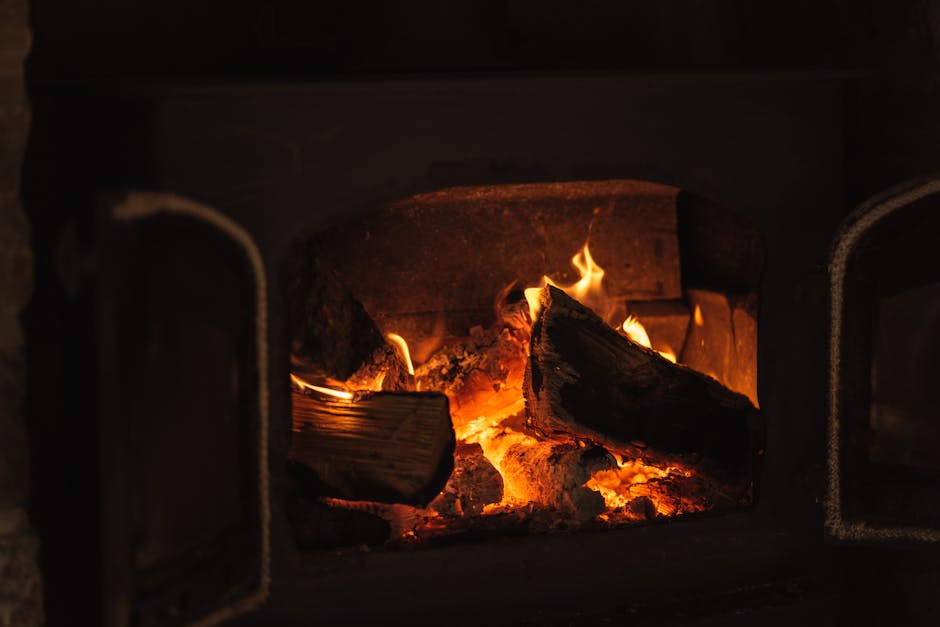
The bathhouse is the structural centre of any winter Gangnam itinerary; it is the room one builds the rest of the day around. The sequence does not change between seasons — shower, warm pool, hot pool, brief cold plunge, kiln rooms, closing warm pool — but the cadence does. In winter one stays longer in the warm pool and shorter in the cold plunge; the kiln rooms, the hanjeungmak, are the part one waits all year for. The charcoal room is the working choice in February; it sits between the jade and the salt on temperature, runs dry-warm rather than dry-hot, and the cedar-and-charcoal smell is, undramatically, the smell of being warm. A jjimjilbang flow runs two to three hours in summer; in winter the same flow stretches, comfortably, to four. One does not rush; the building does not encourage it. The Korean Ministry of Health & Welfare's wellness-tourism English pages distinguish between bathhouse wellness and clinical recovery, and the distinction matters — heat and immersion remain off-limits for the first three to seven days after most regenerative protocols, regardless of season.
Indoor culture: museums, bookshops, the COEX route
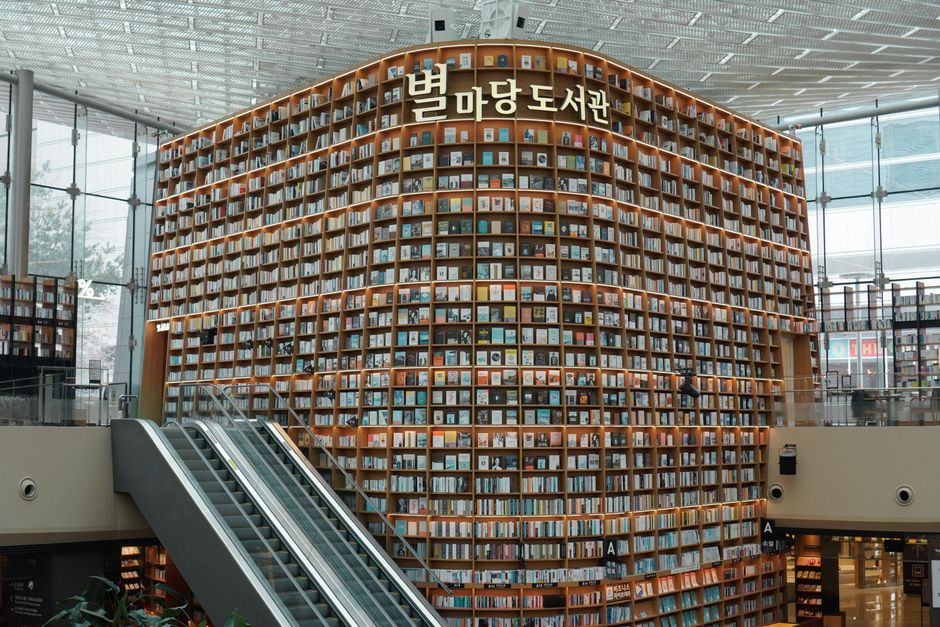
Gangnam's indoor cultural infrastructure is denser than visitors tend to realise; in winter it becomes the spine of the day. The Leeum, the contemporary art venues clustered around Hannam, the smaller commercial galleries along Dosan-daero — these are the spaces one moves between in long coats and damp boots. The COEX mall, an underground city beneath Samseong, is the working answer for an afternoon when even the short transits between buildings begin to feel cold; one descends at one of the metro entrances and does not reappear above ground for three hours. Starfield Library at COEX is the photographable centre of the complex, but the better use is the bookshops on the lower levels — quieter, warmer, and stocked with the English imports that the more central Kyobo branch sometimes lacks. A two-museum afternoon, broken by a lunch at one of the COEX-adjacent restaurants, is the standard winter cultural day. The pacing matches a recovery week's energy budget very closely.
- Leeum Samsung Museum — 90-120 minutes, never longer
- Dosan-daero gallery row — 60 minutes, three or four spaces
- Starfield Library at COEX — 30 minutes, photogenic
- COEX bookshops — the better English imports
- Lunch break — one of the lower-level restaurants, not the food court
Hotel lounges, afternoon tea, and the four o'clock window
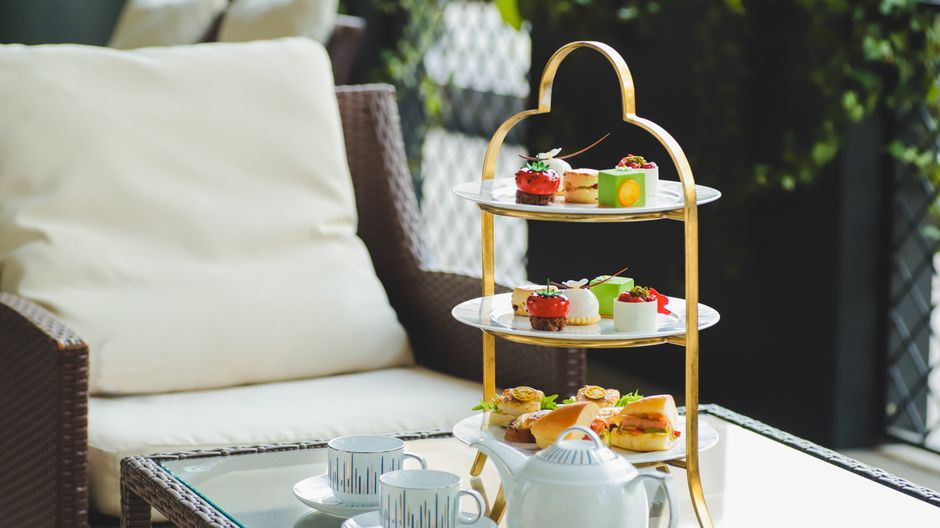
The afternoon-tea hour in Apgujeong's hotel lounges is the most underused asset in the Gangnam winter calendar — and the one that translates most directly from the Hong Kong hospitality vocabulary. The format is recognisable: three tiers, finger sandwiches, scones, pastries, a pot of darjeeling or a Korean grain tea. The execution is, in the better venues, equal to a Mandarin Oriental or a Peninsula service in Hong Kong; the price, comfortably lower. Booking is required at the higher-end venues and recommended at the others, particularly on weekends. The four-o'clock seating is the working choice — it bridges a late lunch and an early dinner, and it absorbs the dimming hour of the winter day in a way that nothing else quite does. The lounges that face west, towards Namsan, are the ones to ask for; the light from three-thirty to five is the quiet showpiece. Tatler Asia's Seoul edit lists most of the better venues, though the very best one is, characteristically, omitted.
Dinner: warm, slow, and not barbecue
The reflex to book a Korean barbecue restaurant for a winter dinner is, in my view, the wrong move — the smoke and noise of a barbecue room undoes the day's careful pacing, and the heat is the wrong kind of heat. The better winter dinner is at a hanjeongsik (set-menu) house, a Korean-Italian fine-dining room of which Gangnam now has perhaps a dozen of genuine quality, or a kalguksu (knife-cut noodle) shop in one of the older Apgujeong side streets. A hanjeongsik dinner runs ninety minutes to two hours, ten to twenty small dishes, none of them rushed; the room is quiet, the lighting low. A kalguksu dinner is the opposite end of the spectrum — twelve minutes, one bowl, one small banchan plate — but it has the same warming function and a price-to-satisfaction ratio that the hotel restaurants cannot match. One alternates. The Korean tourism portal's winter-cuisine pages are reasonably reliable on which Gangnam restaurants accept English-language bookings; the smaller kalguksu places mostly do not, and the walk-in queue at six-thirty is itself part of the experience.
Pacing the week: a recovery-friendly skeleton
A winter Gangnam week, structured for a wellness traveller, follows a five-or-seven-day rhythm rather than a daily one. The first two days are arrival and consultation — short walks, hot chocolate, an early dinner; the third is the procedure or the treatment day, which is its own self-contained schedule; days four and five are the recovery window, in which one does very little and the cold does most of the work. The bathhouse, if cleared, returns on day six; the cultural programme returns on day seven. The structure leaves a great deal of unfilled time, by design. The Hong Kong instinct to maximise — three meals, two activities, one evening event — is the wrong instinct for a winter recovery week. One leaves rooms early, returns to the hotel at four, and does not feel that the day has been wasted; in winter, in Gangnam, that is the correct shape of a day.
“What recommends a Gangnam winter is not the absence of crowds but the recovery-friendliness of the cold. The dryness does the work; one walks slowly, returns to a heated lobby, drinks something warm, and the protocol's restrictions stop reading as restrictions.”
Liu Mei-Hua, on the Gangnam-Apgujeong corridor in January
Frequently asked questions
How cold does Gangnam actually get in January?
January averages run from minus six to two degrees Celsius, with a few colder days in the minus-eight to minus-twelve range; the wind chill on those days is real but the air remains dry, which makes the cold considerably more tolerable than a humid four-degree London February. A long wool coat, a scarf, and waterproof boots are the working baseline; gloves are optional indoors and necessary for outdoor stretches over fifteen minutes.
Is a winter visit a good window for a clinical procedure?
Many clinics consider December through February the better window for regenerative and aesthetic work — recovery is easier in cold, dry air, and the off-peak calendar gives the consultation and procedure days more breathing room. The decision is, finally, the treating physician's; most published protocols favour winter for procedures that involve a heat-and-immersion cooling-off period.
What can I do during the post-procedure cooling-off window?
A great deal, provided it is not heat or immersion. Walking in the cold air, hot chocolate at one of the Garosu-gil cafés, museum visits, hotel-lobby afternoon tea, indoor bookshop browsing, and quiet hanjeongsik or kalguksu dinners are all within the standard cooling-off restrictions. The jjimjilbang, the gym sauna, and the hot-spring excursions sit outside that window for three to seven days, and the clinic will specify the exact figure.
How does the four-thirty sunset change the day's shape?
It compresses the daylight half of the day and expands the lounge-and-restaurant half. The practical effect is that lunch becomes the day's outdoor anchor — a late breakfast, a 90-minute walk or museum visit, lunch at one — and the four o'clock onwards is reserved for warm rooms. The hotel lounges and afternoon-tea services are designed for this exact rhythm, and the better cafés keep their window seats reserved for it.
Are the Apgujeong hotel lounges accessible to non-guests?
Yes, at every venue I would recommend. Booking is required at the higher-end ones and walk-in friendly at the rest. The minimum spend, where one applies, is the price of an afternoon-tea set or a single drink; the four o'clock seating is the working choice. Reception desks are reliably bilingual and a phone booking in basic English is straightforward.
How does Gangnam in winter compare to Hong Kong's coldest weeks?
Drier, colder, and considerably better-engineered for indoor staying. A Hong Kong cold snap rarely drops below six degrees and rarely loses humidity; Gangnam in January is a different climate entirely — the dryness is the part that surprises, and the indoor-warmth infrastructure is denser and more consistent than Hong Kong's. The two cities share a vertical mall culture, but Gangnam's hotel-lounge and bathhouse density is the part Hong Kongers tend to underuse on a first visit.
Is COEX worth a half day in winter specifically?
Yes — it is the only neighbourhood in Gangnam in which one can structure an entire afternoon without surfacing into the cold. Starfield Library is the photographed centre, but the bookshops, the smaller cafés, and the lower-level restaurants are the working assets. A three-hour COEX afternoon, anchored by lunch and a coffee, is a reliable rainy-or-bitterly-cold-day plan.
What about the snow?
Gangnam gets perhaps four to seven days of snow per winter, mostly light, occasionally heavier; the city handles it well, the metro continues running, and the indoor culture remains uninterrupted. A heavier snow day is, in fact, the better day for the bathhouse-and-hotel-lounge plan — the avenues are quieter, the lounges are emptier, and the contrast between the cold outside and the kiln rooms inside is, frankly, the point.