A Reader's Seoul
Quiet Tea Houses in and Around Gangnam
A slow edit of Korean tea rooms within easy reach of a southern Seoul hotel — low cushions, hojicha, and the recovery-friendly cadence one comes for.
Gangnam, on the surface, is not where one looks for traditional tea. The avenue between Sinsa and Apgujeong reads — at first impression — as the wrong neighbourhood for a slow pour and a floor cushion; the lobbies are marble, the cafes glass-fronted, the register cosmopolitan rather than considered. And yet a quietly held network of Korean tea houses sits within the southern Seoul perimeter — restored hanok rooms, low wooden tables, celadon ware, the unhurried hour the avenue does not allow. 飲茶要慢, my grandmother used to say in Causeway Bay.
Why a tea house, and why now in particular
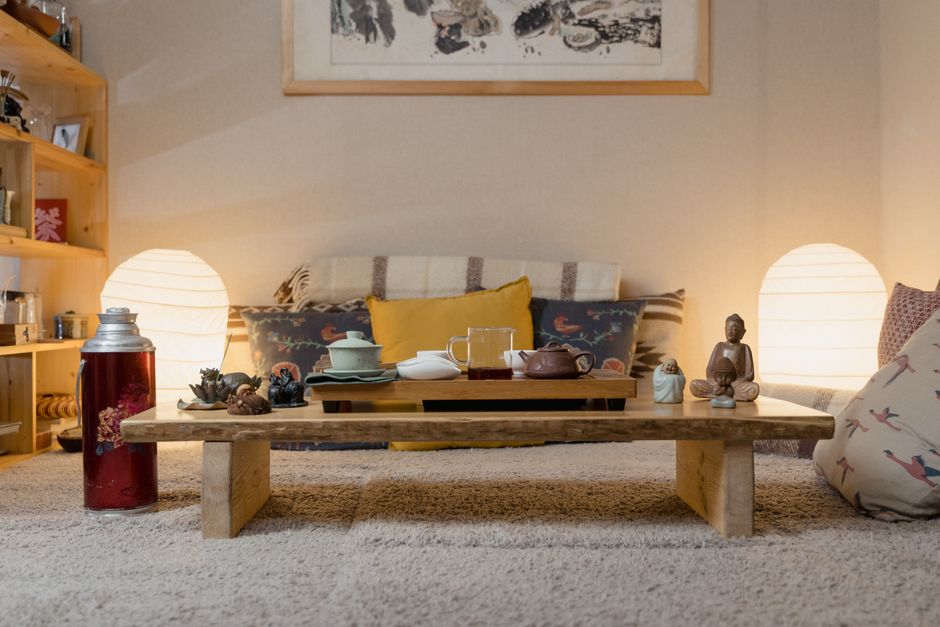
A traditional Korean tea house — jeontong-chatjip — is a small, often hanok-housed room in which a single host pours leaf tea by the cup, at a deliberate pace, with no music and rarely a screen. The room is the point; the tea is its register. What recommends a tea house, particularly on a recovery afternoon between a morning consultation and an evening meal, is the cadence rather than the menu. One sits on a floor cushion or a low chair; one orders one tea, perhaps two; one allows forty minutes to pass without picking up the phone. The light is usually low, the conversation quiet, and the staff trained to leave a guest alone unless asked. This is not the Hong Kong yum cha I grew up with — there is no trolley, no clatter, no dim sum chorus from the next table — but the underlying instinct is the same. One takes the room slowly. After a cosmetic procedure or a clinic visit in Gangnam, when the afternoon is one's own and the body asks for stillness rather than steps, a Korean tea house is the most undramatic and most useful place to spend an hour. The tea is incidental, in a way; the sitting is the recovery. Gangnam is full of cafes that perform calm; the tea houses I am writing about here are calm without performing it.

The southern edit: tea rooms within Gangnam itself
Within the Gangnam perimeter — broadly the avenue running from Sinsa through Apgujeong and Cheongdam, with the Garosu-gil district to the west — the tea house census is smaller than the cafe census, but it exists. A handful of restored or hanok-styled rooms sit tucked into the side lanes of Sinsa-dong and the quieter blocks behind Apgujeong-ro; one or two occupy the ground floors of small mixed-use buildings on Eonju-ro and the laneways near Hak-dong Park. I will not list these rooms by name — the editorial register here is wrong for a directory, and the rooms themselves prefer a measured visitor count to the foot traffic that a single mention can bring — but the way to find them is consistent. Walk the side streets parallel to the main avenue rather than the avenue itself; look for low signage in hangul, often handwritten on wood; a wooden door, a single window, a low ceiling visible from the street. The price register is moderate by Gangnam standards — comparable to a coffee at one of the better Apgujeong cafes — and the room cadence is forty minutes to an hour. One orders a green tea, a rooibos, a Korean herbal blend, or a single-estate hojicha; the host will pour the first cup and step back. The Sinsa-Apgujeong walking distance to the better rooms is fifteen to twenty minutes from the major hotels; one builds the visit into a slow late afternoon rather than a destination trip.

Insadong, fifty minutes north — the canonical district, edited carefully
Insadong is the canonical Korean tea district — a single neighbourhood north of the Han River where, within a five-block radius, perhaps thirty traditional tea houses operate in restored hanok or hanok-styled rooms. The transit from southern Gangnam runs about fifty minutes door-to-door: Bundang Line or Line 3 from Apgujeong or Sinsa to Anguk Station, Exit 6, then a four-minute walk south into the Insadong-gil approach. What recommends Insadong is the density and the longevity — many of the rooms have operated for twenty or thirty years — but the same density attracts the foot traffic that thins a Korean tea room's register fast. The edit, therefore, matters here more than in any other district. Avoid Insadong-gil itself, the main pedestrianised spine, between eleven in the morning and four in the afternoon; the foot traffic there is wrong for the room. Walk one or two side lanes east or west into the smaller numbered alleys — Insadong 14-gil, 16-gil, the smaller branches — where the tea houses sit in courtyards, behind shorter signage, with two or three tables and a host who will recognise a quiet visitor. A weekday after four, or any morning before ten-thirty, is the right window. The trade is timing rather than discovery. 早啲去靜啲, a friend from Hong Kong put it — earlier is quieter, and the rooms reward the early hour. One chooses the rooms by walking past, looking through a window, and reading the cadence of the staff inside.

Bukchon and Seochon — three rooms across two villages
Twelve minutes' walk west of Anguk Station, the Bukchon Hanok Village holds perhaps half a dozen tea houses set into restored hanok along the residential lanes — the alleys above and east of Bukchon-ro 11-gil, away from the much-photographed viewpoint. The cadence here is different from Insadong: the rooms are smaller, often four or five tables only; the tea selection is narrower but more carefully chosen; the courtyards add a quiet that a ground-floor room cannot. A slower read of the village — which I have written about separately as the unhurried Bukchon plan from a Gangnam hotel — places one of these tea houses naturally in the second hour of the visit, between the upper alleys and the descent toward Anguk-dong dinner. To the west of Gyeongbokgung Palace, the smaller and quieter hanok district of Seochon holds a handful of equally considered rooms, with even less foot traffic and a more residential register. Across the two villages, three rooms in three visits is the correct cadence — not three rooms in one afternoon, which is the kind of collection that flattens the experience into a checklist. Pair Bukchon and Seochon across two trips; one Bukchon tea house on a recovery afternoon, one Seochon room on a return visit, one Insadong room across the third Saturday.

What to order, what to ask, and what to leave the staff to choose
A Korean tea house menu is shorter than a cafe menu, and the better rooms expect a guest to take a small leaf-tea recommendation rather than to scan twenty options. The canonical orders are nokcha (green tea, often Boseong-grown), hwangcha (yellow tea), jakseolcha (early-harvest sparrow's-tongue green tea), and a small set of herbal blends — daechu-cha (jujube), omija-cha (five-flavour berry), yujacha (citron), and a roasted barley boricha often offered free as a welcome. For a recovery afternoon when caffeine is a question, the herbal blends and a roasted hojicha-style tea are what I would order; the host will steep slowly, refill twice, and time the second pour herself. The right register at the order is to mention a preference — caffeine or no, hot or warm, leaf or blend — and to let the staff choose the specific tea. 老闆推薦啦, in the Hong Kong phrasing, translates here as ordering by trust rather than by menu. The price for a single tea, with two pours, runs eight to fifteen thousand won in Insadong and Bukchon; in Gangnam the same tea is closer to twelve to twenty thousand. One does not tip, one does not photograph through the door, and one leaves the cup in the position the staff returned it. The room is read by these small things.
A recovery-friendly cadence — and how the room fits the day
For a guest in Gangnam between a morning consultation and an evening meal, a tea house slots into the afternoon better than almost any other indoor stop. The walk to the room is short, the sitting is forty to sixty minutes, the leaving is unhurried, and the post-tea register — slowed pulse, settled mind, no caffeine spike if one has chosen a herbal — pairs with the next part of the day rather than fighting it. The pairings I would suggest, by neighbourhood, are these: a Sinsa-Apgujeong tea room before a quiet dinner along Garosu-gil; an Insadong tea room after a slow morning walk along Bukchon's residential alleys, before a return to a southern hotel; a Bukchon hanok tea room as the second hour of an unhurried village afternoon, with the descent toward Anguk-dong dinner closing the day. None of these routes asks for more than three kilometres of total walking; none requires a car beyond the airport-to-hotel transfer. For a recovery day, the most useful sequence is a late-morning slow walk, lunch in a small Apgujeong restaurant, the tea room from three to four, and a quiet hotel return by five. The afternoon reads, when one looks back, as the kind of day one comes to Seoul to have.
Practical notes: language, payment, hours, and what the rooms are not
Most Korean tea houses operate without an English menu, and the better rooms expect this; a small phone-translated exchange — "caffeine, no caffeine", "hot, warm", "recommend" — is sufficient, and the staff will lead. Card payment is universal in the Insadong and Bukchon rooms, less consistent in the smaller Gangnam tea houses; carrying twenty to thirty thousand won in cash covers any single visit. Opening hours run roughly from eleven in the morning to nine at night, with many rooms closed on Mondays and a handful closed on Sundays for staff rest. Reservations are unusual for two guests; for four or more, a phone call ahead is courteous. The rooms are not cafes. Laptops are unwelcome in most, conversations are kept low, and a single guest at a four-cushion floor table will be moved gently to a smaller table or a counter seat rather than left to occupy a room. None of this is intended as friction; the rooms are calibrated for a different kind of visitor than the cafe. For a guest from Hong Kong used to the cha chaan teng tempo, the recalibration takes about ten minutes — and the room rewards it.
Frequently asked questions
Are there genuine traditional tea houses inside Gangnam itself, or does one have to travel north?
There are — a handful — though the census is smaller than in Insadong or Bukchon. They sit in the side lanes of Sinsa-dong, the quieter blocks behind Apgujeong-ro, and the laneways near Hak-dong Park. The way to find them is to walk the side streets parallel to the main avenue and look for low hangul signage on wood. Price runs twelve to twenty thousand won per tea.
What is the transit time from a Gangnam hotel to Insadong, the canonical tea district?
About fifty minutes door to door. The route uses the Bundang Line or Line 3 from Apgujeong or Sinsa to Anguk Station, Exit 6, then a four-minute walk south into the Insadong-gil approach. A taxi outside rush hour runs thirty to forty minutes; the subway is more reliable between four and seven.
When is the quietest window for an Insadong tea house?
A weekday after four in the afternoon, or any morning before ten-thirty. The main pedestrianised spine of Insadong-gil is wrong for a tea room between eleven and four; one walks one or two side lanes east or west — Insadong 14-gil, 16-gil — and chooses a smaller room with two or three tables.
What should one order on a first visit?
Mention a preference — caffeine or no, hot or warm, leaf or blend — and let the host choose the specific tea. The canonical leaf orders are nokcha, hwangcha, and jakseolcha; the herbal blends include daechu-cha, omija-cha, and yujacha. For a recovery afternoon, a herbal blend or a roasted hojicha-style tea is what I would order.
Is a Korean tea house appropriate on a recovery day after a clinic visit?
Yes — the cadence is built for it. The walk is short, the sitting is forty to sixty minutes, the leaving is unhurried, and a herbal blend will not spike caffeine. A late-morning walk, a small lunch, the tea room from three to four, and a quiet hotel return by five is the sequence I would suggest.
Can one combine a tea house with the Bukchon Hanok Village in a single afternoon?
Yes, and it is the natural pairing. A slower read of Bukchon places a hanok tea house in the second hour of the village walk, between the upper alleys and the descent toward Anguk-dong dinner. The rooms in Bukchon are smaller and more carefully chosen than the Insadong density.
Is English spoken in the tea rooms?
Sometimes, often partially. Most rooms operate without an English menu, and a small phone-translated exchange is sufficient. The staff will lead. Card payment works universally in Insadong and Bukchon and is more variable in the smaller Gangnam rooms; carrying twenty to thirty thousand won in cash covers any single visit.
Are laptops or working sessions welcome?
No. The rooms are calibrated for a different visitor than a cafe — laptops are unwelcome in most tea houses, conversations are kept low, and the cadence is for sitting rather than working. A single guest at a four-cushion table is gently moved to a smaller table or a counter seat. The recalibration takes about ten minutes.