Gangnam Stem CellAn Editorial Archive
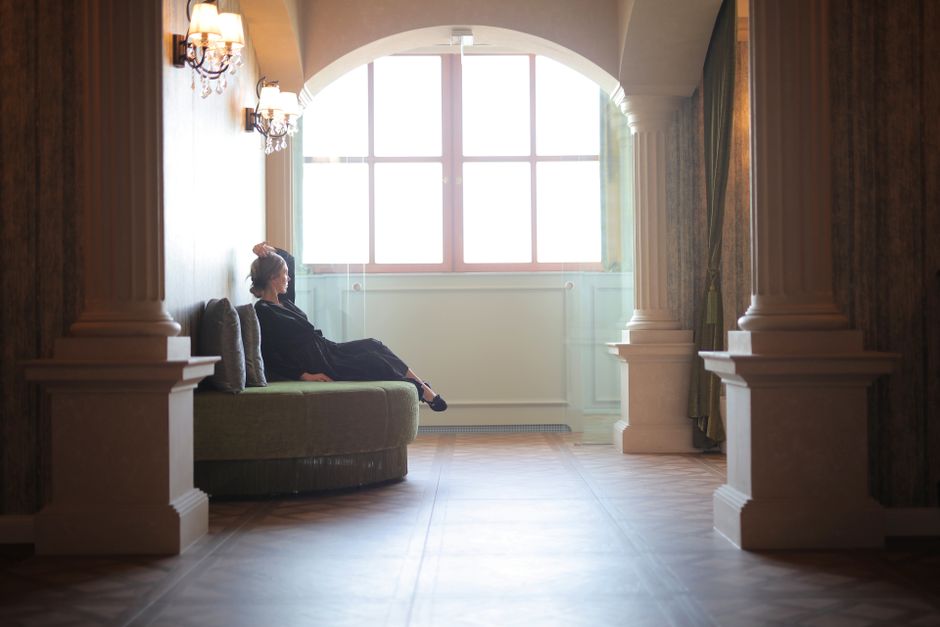
Solo traveller seated by a quiet Gangnam cafe window in low afternoon light

Travel & Culture

Quiet Corners of Gangnam for the Solo Traveller

Cafes, bookshops, and small galleries scaled for one — the rooms that read better alone than in company.

By Liu Mei-Hua · 2026-05-09

Gangnam reads, from outside, as the loud quarter of Seoul — the avenues of Apgujeong, the glass towers along Teheran-ro, the night blocks of Yeoksam. What the avenues do not show is the second register: the small rooms one street back, the bookshops on the upper floors, the single-room galleries. These are the corners the solo traveller learns first, because they are scaled for one. The bookshop with two armchairs by the window assumes one reader, not two. One arrives, takes the lift, and is offered tea — and the afternoon proceeds at the pace one sets oneself.

What recommends Gangnam to the solo traveller, and what does not

Gangnam, for the solo traveller, is a quarter of two registers — the public avenues that flatter a group, and the small interior rooms that flatter one. The avenues read poorly alone. Apgujeong Rodeo on a Saturday evening, the foot traffic on Garosu-gil, the queue outside the better dessert rooms — these are spaces designed for company, and a solo traveller in them reads, faintly, as someone waiting. The interior rooms are the opposite. A small espresso bar with twelve seats — a bookshop with two armchairs — a gallery that holds eleven works in a single room — these are scaled, almost without intent, for the single visitor. The afternoon I want to describe is built from the second category. One does not avoid the avenues; one uses them as connective tissue between rooms, takes the lift to the third floor, and is alone again. 一個人都好, a Hong Kong friend texted me on my second visit. She was right. The quarter rewards the solo register more honestly than its reputation suggests.

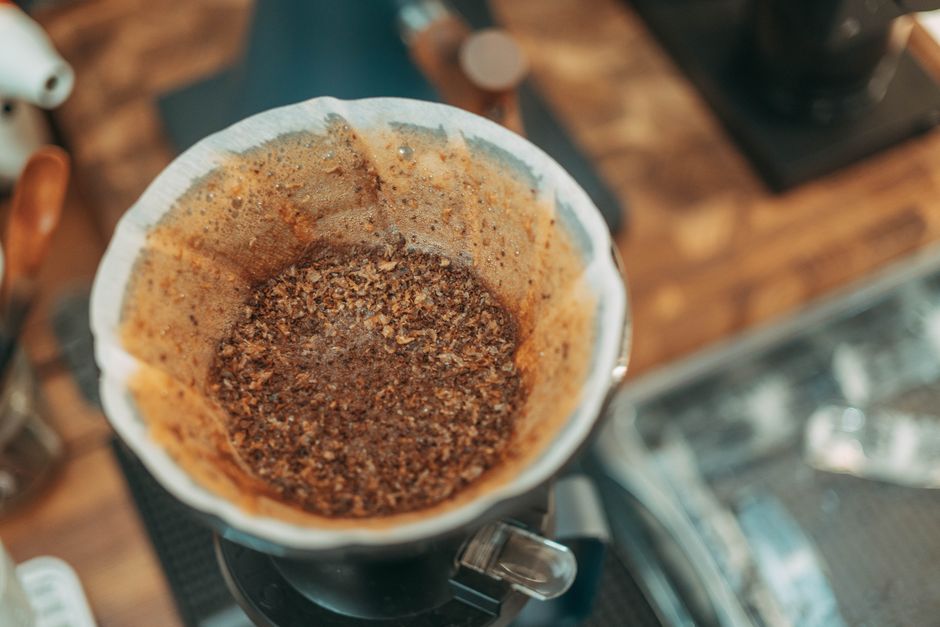
Sinsa basement drip-coffee room with six seats and no music
Six seats, a single owner, no music.

The cafes — small rooms, single tables, no obligation to leave

The cafe register in Gangnam runs from the celebrated rooms — written up in Tatler Asia, queued for on Saturdays — to the small upstairs rooms that hold ten seats and serve one barista's selection. For the solo traveller, the second category is the one to learn. The rooms I return to share three traits: a single-row counter or a long bench facing a window, a short menu that does not require explanation, and a quiet that the room seems to keep on one's behalf. Three I would name as types — a plaster-walled espresso bar in southern Apgujeong, a basement drip-coffee room in Sinsa with six seats and no music, and an upstairs bench-and-window cafe in the lanes east of Dosan Park. None require reservations. None impose a minimum order beyond a single drink. None notice, in any meaningful way, how long one stays. The trade with the celebrated rooms is foot traffic — the architecture is often more careful, the coffee is competent, and the room is, by four in the afternoon, full. A solo traveller in a full room reads less comfortably than in a quiet one. The hierarchy here, for one, is reversed; the small rooms are the destination, and the celebrated rooms are the photograph one takes on the way past. Twenty minutes per room is the right cadence — long enough to settle, short enough that the loop holds three or four cafes across an afternoon.

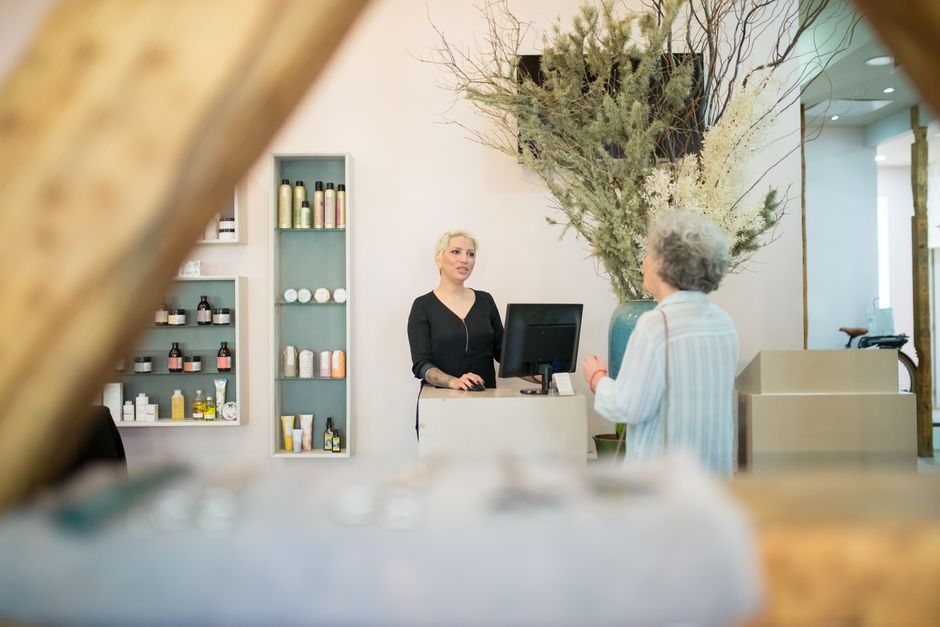
Small Apgujeong bookshop with armchair by window and design titles on shelves
Two armchairs, one reader, late afternoon.

The bookshops — two armchairs, a window, the assumption of a single reader

Gangnam holds three bookshop registers worth the solo traveller's afternoon. The first is the large flagship — Kyobo at COEX, the Starfield Library — which is impressive but reads as a public space, better suited to a half-hour photograph than to an hour of reading. The second is the considered independent — small rooms above the avenue, often on the third or fourth floor, holding three to six thousand titles in carefully edited categories: design, photography, translated fiction, occasional rarities. The third is the bookshop-cafe hybrid, which sits between the two and, in the better examples, succeeds as both. What recommends the second category, in particular, is the assumption of a single reader. Two armchairs by the window. A small back room with a single desk. A staff member who notices but does not interrupt. Three bookshops I would name by type rather than name — one in Garosu-gil with English-language design and architecture titles, one in Sinsa specialising in translated literary fiction, and one in Apgujeong above a homeware showroom that holds photography books one cannot find at Kyobo. The cadence is the same as the cafes: thirty to forty-five minutes per room, a coffee in hand, a book one will probably not buy but is grateful to have read for an hour. The bookshops also solve a small logistical question — a quiet hour on a rainy afternoon is hard to engineer in Seoul without paying for a room, and the bookshops provide it without that transaction.

Single-room contemporary gallery in Cheongdam with photography show installed
A small Cheongdam gallery between exhibitions.

The small galleries — single-room shows, no audio guide, no queue

The gallery register in Gangnam splits, usefully, into two tiers — the major destinations and the small contemporary rooms. The major destinations sit largely outside Gangnam itself; Leeum is in Hannam, the National Museum of Modern and Contemporary Art has its Seoul branch in Sogyeok-dong, and these are full afternoons in their own right. What Gangnam offers the solo traveller, instead, is the small commercial gallery — a single room, ten to fifteen works, an opening every six to eight weeks, no audio guide, and no queue. The cluster I return to sits between Cheongdam-dong and Apgujeong: half a dozen galleries within a fifteen-minute walk, each occupying the ground floor or second storey of a low-rise. One enters, takes ten to twenty minutes, and continues. The works range from Korean contemporary photography to small-scale sculpture to occasional design objects; the better galleries also publish bilingual exhibition notes, which spare the visitor the need for translation. The cadence here is different from the cafes. One does not sit. One walks slowly, returns to a work twice if it asks for it, and leaves before the staff has cause to engage in conversation. The total time across three or four galleries is under two hours — a manageable slot between a late lunch and an evening in Cheongdam, and a register that reads particularly well alone, as the room asks the visitor to set their own pace and a companion's presence often disrupts it.

Wooden bench under gingko trees in Dosan Park in late October
The connective tissue — Dosan Park, late October.

How to sequence a solo afternoon — pace, light, and the connective tissue

The afternoons that read best, in my experience, are sequenced rather than improvised. The cadence I would suggest runs from cafe to bookshop to gallery — light to dimmer to brighter again — with the avenue serving as connective tissue. Begin at one in the afternoon, when the small rooms have opened and the avenues have not yet filled. Cafe one is forty minutes, including the slow opening. The walk to the bookshop is six to ten minutes; the bookshop sitting is thirty-five to fifty minutes. Cafe two — the smaller, the upstairs, the basement — runs thirty minutes, and serves as the rest before the gallery loop. Two galleries in succession take an hour. A second cafe, or a return to the bookshop for a final fifteen minutes, closes the afternoon at five-thirty. The total walking distance is under three kilometres; the total cafe and bookshop sitting is roughly three hours. The sequence is gentle enough to suit a recovery afternoon, when the day's medical appointment has ended by noon and one wants quiet movement without strain. The light matters more than the route. The interior rooms read best between two and four; the avenues are best between four and six; the galleries hold their own light and can be visited at any point. If the afternoon turns to rain, the bookshop hour expands to two, and the loop closes earlier.

Practical notes — language, payment, accessibility, and the recovery angle

The practical register in Gangnam is gentler for the solo traveller than the avenues suggest. English-language menus are common in the cafes, less common in the small bookshops, and almost universal in the galleries — exhibition notes are routinely bilingual, and the staff English is functional. Cards are accepted in nearly every cafe and bookshop; only one or two of the smaller upstairs rooms prefer cash. A small amount of Korean won — fifty to a hundred thousand — is sensible insurance. Accessibility varies: most of the cafes and galleries are at street level or accessed by a single short stair, but the upstairs bookshops and the basement drip-coffee rooms involve a flight, which is worth flagging if mobility is a constraint. For the solo traveller arriving from a clinic visit — which is the register this guide is written from — the loop scales well to a recovery afternoon. The walking is gentle, the sitting is generous, and the rooms make no demand on a face that may still be a little flushed or a scalp that may still be a little tender. One can wear a cap; the rooms read it as a hat, not as a clinical signal. The taxi from any of the better hotels in southern Gangnam to the Apgujeong cluster is six to ten minutes; the subway is workable but adds a layer of orientation that, on a recovery day, one may not want.

Frequently asked questions

Is Gangnam comfortable for a solo traveller, or is it a quarter that reads better in company?

It reads in two registers. The public avenues — Apgujeong Rodeo, Garosu-gil after dark, the busier stretches of Cheongdam — flatter company. The interior rooms — small cafes, upstairs bookshops, single-room galleries — flatter one. The afternoon I describe is built almost entirely from the second register, and Gangnam, on those terms, suits the solo traveller more honestly than its reputation suggests.

Are reservations needed for the smaller cafes and bookshops?

No. None of the small cafes I would recommend take reservations, and none of the bookshops require one. The trade is timing rather than booking — weekday afternoons between two and four are when the rooms are most reliably quiet. Saturday afternoons, especially in the celebrated rooms, the foot traffic rises sharply and the solo register becomes harder to hold.

What is the best season for this kind of afternoon?

Late October for the gingko colour around Dosan Park, and late March to early April for the cherry blossoms — both lengthen the comfortable outdoor walking window. Summer is humid in the lanes and shortens the avenue walking. Winter is the season I would actually recommend for the interior rooms; the longer indoor sittings feel earned, and the cafes and bookshops grow noticeably quieter.

Does the route work for a recovery day after a clinic appointment?

Yes — the loop is built for it. The walking distance is under three kilometres, the cafe and bookshop sitting absorbs three hours of the afternoon, and the rooms make no demand on a face or scalp that may still be a little tender. A cap is read as a hat, not as a clinical signal. The galleries, in particular, are forgiving — one walks slowly, sits when needed, and leaves when one has had enough.

Is English usable across the cafes, bookshops, and galleries?

It is reliable for ordering and for exhibition notes. The cafes carry bilingual or pictogram menus; the galleries publish bilingual notes; the bookshops are the most variable, and the staff English is best in the larger flagships and most limited in the small upstairs rooms. Translation apps cover the gap. One does not need conversational Korean for any part of the afternoon.

Can the loop be combined with a museum afternoon at Leeum or MMCA Seoul?

Yes — Leeum sits in Hannam, fifteen minutes by taxi from the Apgujeong cluster, and pairs well as a morning destination before an afternoon of cafes and small galleries. MMCA Seoul is further north in Sogyeok-dong, and works better as a half-day on its own. The small Gangnam galleries are not a substitute for either; they are a different register, scaled for the casual hour rather than the major visit.

Where should the solo traveller stay, to make this register easy?

Southern Gangnam — the better hotels along Apgujeong-ro, Eonju-ro, or in Cheongdam — places the visitor within a six- to ten-minute taxi of the Apgujeong cluster, and within a ten- to fifteen-minute walk of Dosan Park. Hotels further north in Hannam are workable but require an additional taxi. The solo register is easier the closer one is to the small rooms, because the loop can be walked rather than connected.

Is there a way to extend the afternoon into an evening that still reads well alone?

Yes. The natural close is a small Korean tea room before five, followed by a counter-seat dinner — sushi, sashimi, or a single-counter Korean room — in Cheongdam or southern Apgujeong. Counter seats are the solo traveller's friend in Seoul; the chef faces the seat, the conversation is optional, and the room makes no demand on company. The avenue lights up after six, and the walk back is short.