A Reader's Seoul
Pharmacies and Drugstores in Gangnam: A Practical Guide
Where the pharmacy ends and the drugstore begins — Olive Young, the green-cross pharmacy, and how a visiting traveller actually sorts the two.
On a first visit to Gangnam, the line between a pharmacy and a drugstore is not where most travellers expect it to be. The Olive Young on every corner — bright, pastel, English-friendly — reads, on first impression, as the obvious place to ask for paracetamol. It is not. The unassuming storefront with the green-cross sign and the slightly older interior is the pharmacy. One sells cosmetics, sheet masks, and a curated selection of over-the-counter brands. The other dispenses prescription medication, weighs out what a Hong Kong reader would recognise as proper 藥房 stock, and is staffed by a licensed pharmacist. This guide is the version I wish I had read on my first visit.
Pharmacy versus drugstore: the line that matters
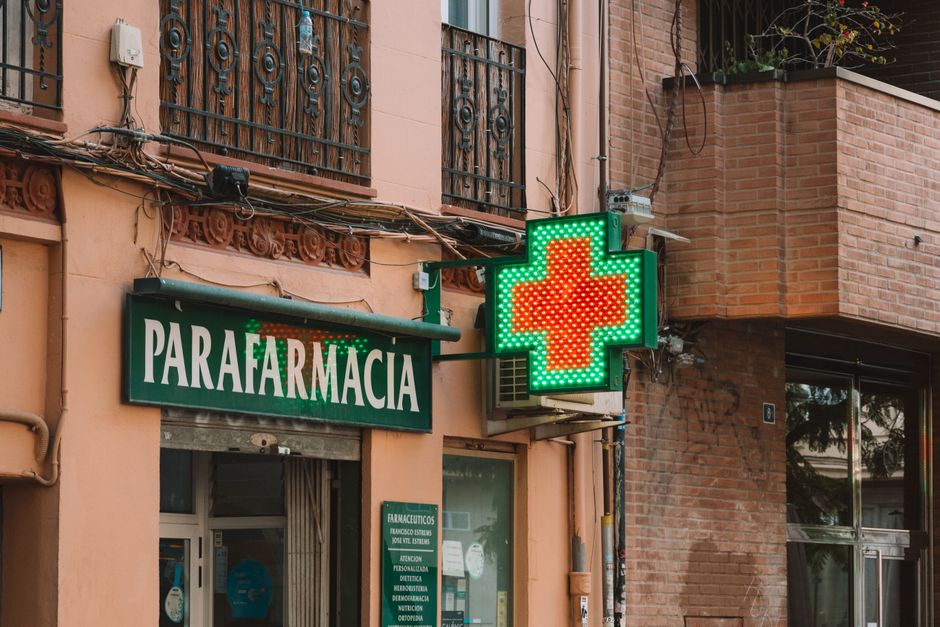
A pharmacy in Korea — yakguk, written pharmacy — is a licensed dispensary staffed by a registered pharmacist, marked almost universally by a green-cross sign in the window. It is the only place that can fill a prescription, and the only place that carries the wider category of behind-the-counter and prescription-only medicines. A drugstore in the Korean sense — Olive Young, Lalavla, Chicor, the smaller Boots-style chains — is a beauty and lifestyle retailer that also stocks a narrow range of over-the-counter products: paracetamol, ibuprofen, basic cold medicine, antiseptic plasters, motion-sickness tablets, hangover drinks. The difference, and this matters, is that one cannot ask the Olive Young staff for a clinical recommendation. They are retail staff, not pharmacists. The pharmacy a block away, by contrast, is set up precisely for that conversation. The single most useful sentence in this guide, if one only takes one: for cosmetics and basic OTC, Olive Young is fine; for anything that requires a question, walk the extra block to the green cross.

Olive Young, briefly — what it is good for and what it is not
Olive Young is, by some distance, the largest health-and-beauty retail chain in Korea, with multiple branches in every Gangnam micro-district — Sinsa, Apgujeong, Garosu-gil, Gangnam Station, Cheongdam. The flagship locations near Gangnam Station and on Garosu-gil run to two and three floors, with English-friendly signage, multilingual staff at the larger branches, and a tax-refund counter for tourists. What recommends Olive Young, for a traveller, is the curation of Korean skincare brands one would otherwise spend an afternoon hunting through department-store counters to find. The own-brand sheet masks, the rotating new-launch wall, the cosmetics-by-Korean-celebrity displays — these are the part of the Korean wellness-retail experience that translates well into a tourist itinerary. The OTC corner, usually toward the back of the store, holds the basics: a few brands of paracetamol and ibuprofen, basic cold and flu medication, electrolyte powder, hangover drinks, motion-sickness chewables, plasters. It does not hold antibiotics, prescription-strength painkillers, or anything that requires pharmacist counselling. For those, the green cross.
The green-cross pharmacy: what is inside, and how to find one
A licensed pharmacy in Gangnam will almost always be a small, single-storey shopfront — twenty to forty square metres, glass front, green-cross sign in the window, a counter at the back, shelves of boxed medication along the walls. They cluster near hospitals and clinics, which means around Gangnam Severance, around the medical buildings on Eonju-ro, near the larger plastic-surgery and dermatology buildings in Apgujeong, and on the streets immediately around Gangnam Station exit nine. Most are open from roughly nine in the morning to seven or eight in the evening, with shorter hours on Saturday and many closed on Sunday — the late-night exception is the yagan-yakguk, the night-pharmacy, which the city designates on a rotating basis and lists on the official Seoul pharmacy app. The interior reads, on first impression, more like a quiet medical office than a retail store. One does not browse; one approaches the counter and explains what one needs. The pharmacist will ask brief questions — symptoms, duration, allergies, current medication — and dispense accordingly. English varies by location. Near the international clinics in Apgujeong and Sinsa, one will usually find a pharmacist who can manage a clinical conversation in English; in residential pockets further south, the conversation runs better with a translation app open.

How to communicate without fluent Korean
The communication problem in a pharmacy is more specific than the general tourist phrasebook tends to acknowledge. One does not need to discuss the weather; one needs to describe a symptom precisely enough that a clinician can match it to a drug. The version that works, in my experience, runs in three layers. First — bring the original packaging or, if at home, a clear photograph of the medication one normally takes; the international generic name is usually printed somewhere on the box, and a Korean pharmacist can read a generic name without translation. Second — use a translation app for the symptom rather than the medication; headache for three days, mild fever, dry cough translates more reliably than a guess at a Korean drug name. Third — be specific about contraindications. I am pregnant, I take blood thinners, I am allergic to sulfa drugs — these phrases, in a pharmacy app or written on a card, will be read carefully and acted on. Papago, the Naver-built translation app, handles Korean clinical vocabulary materially better than the Google equivalent in my reading; I keep both open. The pharmacist, in turn, will often write the dosing schedule on the box in numerals, which translates without language. 慢慢嚟, take time, get it right — this is not a conversation to rush.
Filling a Korean prescription: the system, briefly
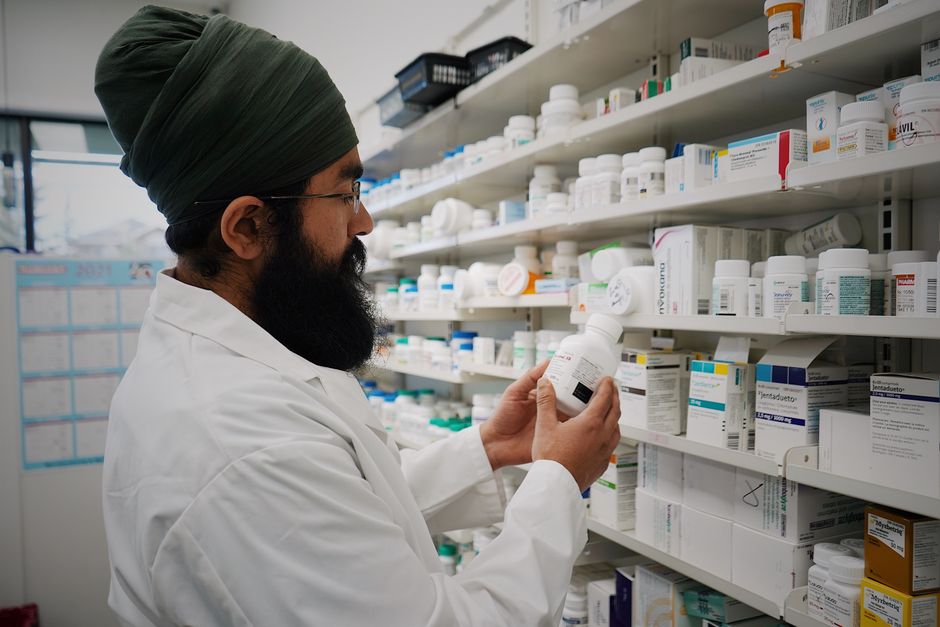
Korea operates a separated prescribing-and-dispensing system — the doctor diagnoses and writes the prescription, the pharmacy dispenses it. The two are physically separate businesses, almost always within a short walk of one another, which is why one sees pharmacy clusters around hospitals and medical buildings. After a clinic visit, one is handed a printed prescription — usually a single A5 sheet with the patient's name, the clinic stamp, the medication list with Korean and Latin names, and a barcode. One walks to any pharmacy with a green cross, hands over the prescription, and waits — typically five to fifteen minutes — while the pharmacist counts and packages the medication, often into individual paper sachets organised by dose time. The pharmacist will explain the schedule, write it on the package in numerals, and ask about allergies one last time. Foreign visitors without Korean health insurance pay the full cost out of pocket, in cash or by card; the cost is usually modest by international comparison — most short-course prescriptions for a common complaint run under fifty thousand won. One does not need a Korean ID to fill a prescription. One does need the printed prescription itself, which is not optional.
What to actually buy at each, on a typical visiting trip
What recommends each, in practice, is not the same list. At Olive Young — sheet masks one cannot find at home, the current cult skincare release, sun cream of the kind Korean dermatologists actually use, lip balm, hand cream, body wash by one of the small Korean apothecary brands, the OTC paracetamol and ibuprofen one would rather have in the hotel room than walk out for at midnight. At the green-cross pharmacy — anything one would, at home, take to a chemist with an actual question. Hangover medication of the more serious sort. Stronger cold-and-flu courses. Acid-reflux medication. Topical antibiotics for a small cut that has gone red. Sleep aids beyond melatonin. Anti-itch creams for an unfamiliar reaction. Anything one would not give to oneself without first asking. The pharmacy is also where one fills any prescription written by a Korean clinic — dermatology, aesthetic medicine, general practice — and where one returns if the medication has produced an unexpected reaction. The drugstore cannot do any of this. The pharmacy can do all of it, and at a price that, by Hong Kong or Singapore standards, reads as restrained.
After-hours, weekends, and the night-pharmacy question
Most Gangnam pharmacies close by eight in the evening, with reduced Saturday hours and many shut on Sunday — which becomes a real problem at, say, ten on a Saturday night with a sudden allergic reaction or a fever that has decided to spike. The system's answer is the yagan-yakguk — designated overnight pharmacies that rotate by district, with the current list published on the Seoul Metropolitan Government health website and on the Healing Eaeut app. There are usually two or three operating overnight in the broader Gangnam district on any given night, most of them within a twelve-minute taxi ride. Olive Young flagships, by contrast, run later — the Gangnam Station and Garosu-gil branches typically until eleven — and will cover the OTC basics if the symptom is genuinely mild. For anything beyond mild, the night-pharmacy is the answer; for anything urgent, the emergency department of Gangnam Severance or Samsung Medical Center, both of which run twenty-four-hour international-friendly desks, is the level above. One does not, in my experience, want to discover this map on the night one needs it. Saving the night-pharmacy app on arrival is the same kind of small preparation that saving the ride-hail app is — boring on the day one downloads it, useful on the night one doesn't.
Frequently asked questions
Can I get paracetamol or ibuprofen at Olive Young, or do I need a pharmacy?
Olive Young carries paracetamol and ibuprofen at the OTC corner of most branches — typically Tylenol-brand and a few Korean equivalents. For ordinary headache or fever, that is sufficient. For anything stronger, anything requiring a clinical question, or anything in higher dosing strengths, the green-cross pharmacy is the correct stop. Olive Young staff are not pharmacists and will not advise on dosing beyond the package.
Will the pharmacist speak English?
It varies. In the Apgujeong and Sinsa pharmacies that serve the international clinics, English is usually adequate for a clinical conversation. In residential pockets further from the medical buildings, the conversation runs better with the Papago translation app open. Bringing the original packaging of any medication one normally takes, plus a written list of allergies in both languages, materially improves the exchange.
Do I need a Korean ID to fill a prescription written at a Korean clinic?
No. Foreign visitors can fill a Korean prescription at any licensed pharmacy with the printed prescription sheet from the clinic, which is handed over at the end of the consultation. Payment is out of pocket without Korean national insurance, but the cost is usually modest — most short-course prescriptions for common complaints run under fifty thousand won. Cash or card both work.
Where is the nearest twenty-four-hour pharmacy in Gangnam?
There is no fixed twenty-four-hour pharmacy in the Gangnam area — the system instead rotates designated overnight pharmacies, the yagan-yakguk, by district. The current list is published on the Seoul Metropolitan Government health page and on the Healing Eaeut app. There are typically two or three operating overnight within the broader Gangnam district on any given night. Saving the app on arrival is the practical move.
What should I do if a medication I bought produces an unexpected reaction?
Return to the pharmacy with the packaging if the symptom is mild — the pharmacist will review the dispensing and adjust or substitute. For anything more than mild, the international emergency desks at Gangnam Severance Hospital and Samsung Medical Center run twenty-four hours and handle English-language consultations routinely. Keep the original packaging and the prescription sheet; both will be asked for at the desk.
Are the prices at Olive Young actually lower than at the airport duty-free?
On Korean skincare brands, generally yes — Olive Young runs frequent promotions, often twenty to forty percent off published price, and stocks the full domestic range that duty-free shops do not always carry. On luxury imports, duty-free is usually competitive. For a traveller building a skincare haul, the considered move is Olive Young in the city for the Korean lines, duty-free at departure for anything imported.
Can I bring Korean prescription medication home, and what about customs?
Most short-course prescriptions for personal use travel without difficulty in carry-on, in the original pharmacy packaging, with the prescription sheet kept in hand. Quantities materially beyond a normal personal supply, controlled substances, and certain cosmetic injectables raise customs questions in some jurisdictions. The conservative practice is to keep the original printed prescription, declare on arrival if asked, and check one's home country's import rules before purchasing in volume.
Is there a pharmacy near the major aesthetic clinics in Apgujeong and Sinsa?
Yes — the medical buildings on Apgujeongno, Eonju-ro, and the streets around Sinsa Station are flanked by pharmacy clusters, almost all of them with at least one pharmacist who handles English well. After an aesthetic-medicine consultation that ends in a prescription — for topical aftercare, oral antibiotics, anti-inflammatory courses — the same building or the one next door will almost always have the green cross within sight.