
A Reader's Seoul
Airbnb or Hotel? A Long-Stay Calculus for Gangnam
A considered guide to choosing between hotels, serviced apartments, and Airbnb in Gangnam for a recovery-led visit beyond the first week.
The Gangnam accommodation question changes shape the moment one's stay crosses ten days. A four-night stay reads, naturally, as a hotel question — the lobby, the concierge, the breakfast room. A four-week stay does not. One starts to want a kitchen, a desk one can leave one's papers on, a laundry one does not need to hand over, and a quiet that holds at four in the afternoon as much as at eleven at night. The hotel suite that was the right answer for week one becomes, by week three, a slightly oversized hotel room with an oversized bill. 住酒店住到第二個禮拜就會覺得唔對路, a friend once said to me — she was right, exactly. The long-stay calculus deserves its own careful page, and the Gangnam options reward it.
When the hotel is genuinely the right answer
A hotel suite is the considered choice, in my reading, for any Gangnam stay of seven nights or fewer — and for a meaningful subset of stays that run longer. The reason is service density. The room arrives serviced; the breakfast arrives without one's needing to think about it; one's laundry returns the same evening; the concierge will, if asked, schedule a clinic transfer, a Korean BBQ reservation, and a half-day driver in fifteen minutes. The Gangnam hotel landscape is unusually strong. The Andaz Seoul Gangnam holds the cleanest design language in the district and the better lap pool; the Glad Gangnam pairs a quieter lobby with a meaningful price advantage; the Mondrian Seoul Itaewon, just north of the river, is the right answer if one wants the design-hotel experience and is willing to taxi over the Hannam Bridge daily. What recommends the hotel for a short stay, more than the design or the breakfast, is the cognitive offload. One arrives, takes the lift, and is offered tea. One does not, on the first afternoon of a recovery schedule, want to be assembling a kitchen or sourcing one's own bedding. For ten nights or fewer the hotel suite is the right room. The arithmetic shifts after that.
When the serviced apartment becomes the considered choice
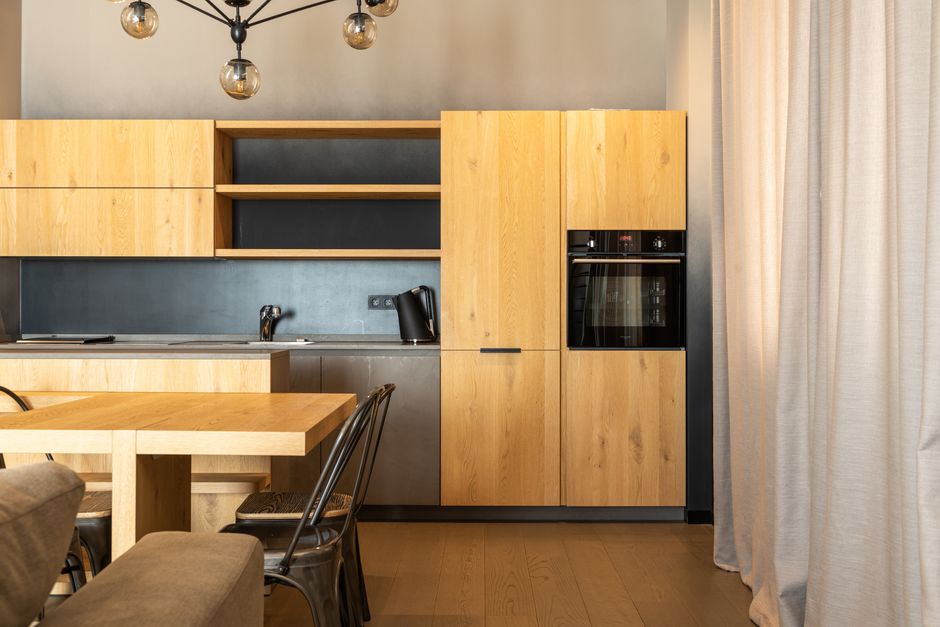
A serviced apartment — and the distinction matters more than most travellers realise — is a residence-style apartment building with hotel-grade services attached, operated by a hospitality brand rather than a private host. The Gangnam options worth naming are the Fraser Place Central Seoul, the Vabien Suite at the Itaewon-Gangnam corridor, and the Lotte City Hotel Mapo's longer-stay wing. The room reads as an apartment — full kitchen, separate living room, a proper desk, a washing machine in the bathroom — but the building reads as a hotel. The lobby is staffed; the lift requires a key card; the cleaning runs three times a week without one's organising it; the front desk handles parcels, restaurant bookings, and the occasional broken tap. The premium over a comparable Airbnb runs about twenty to thirty-five percent. The discount versus an equivalent hotel suite, on a stay over fourteen nights, runs about thirty percent in the other direction. The serviced apartment, in my reading, is the right answer for stays between two and six weeks — long enough to want the kitchen, short enough that the additional hotel-grade services genuinely matter. One does not, on a recovery schedule, want to be the person organising one's own cleaner or arguing with a private host about the boiler at half past nine in the evening.
When Airbnb makes sense, and when it does not
Airbnb in Gangnam is a real category — the inventory is genuine, the listings are mostly accurate, and the price advantage on a six-week stay over an equivalent serviced apartment runs about fifteen to twenty-five percent. The category is not, however, uniformly suitable for the recovery-led traveller, and the cases where it is and is not deserve careful separation. Airbnb works, on a Gangnam long stay, when one is travelling with a partner who handles logistics, when one's recovery schedule is light enough that a building hiccup is manageable, and when one has chosen a listing in a serviced-residence-style building rather than a private apartment in a residential block. The two categories look identical on the platform; they are not. A serviced-residence Airbnb — typically a unit in a building like the Fraser, the Somerset, or the better aparthotel residences, listed by a long-stay operator rather than a private host — runs essentially as a serviced apartment with a slightly looser service layer. A private-host listing in a residential building runs as a private rental, with the host handling everything from key handover to plumbing problems by phone. The first works for a long stay. The second, on a recovery schedule with a clinic timetable to keep, is a category I would generally avoid — the variability is the issue, not the price. One reads the listing carefully; one looks for an operator brand on the host page; one pays the small premium for the residence-style listing.
The recovery-schedule fit: what each room actually solves
A recovery schedule asks specific questions of an accommodation, and the three categories answer them differently. The first question is rest. The hotel and the serviced apartment both deliver a quiet, climate-controlled, well-curtained room with no upstairs neighbour audible at four in the afternoon; the Airbnb in a residential building does not, reliably, deliver this. The second question is food autonomy. Recovery schedules involve, for many visitors, lighter meals at irregular hours and the wish for a simple breakfast at home. The hotel solves this with room service and a breakfast room; the serviced apartment solves it with a kitchen one can use; the Airbnb solves it the same way as the serviced apartment, with the same caveats. The third question is privacy. The hotel offers privacy with a public lobby; the serviced apartment offers privacy with a residential lobby; the private-host Airbnb offers the most privacy but the least back-up if something goes wrong. The fourth question is laundry. Hotels handle laundry by service; serviced apartments handle it by in-suite washing machine; Airbnbs vary — and on a long stay, this is the question that often decides between them. The fifth question is transfer logistics. The hotel concierge will, on a recovery morning, schedule a quiet driver to a clinic and back without one's needing to use one's phone in the lift. The serviced apartment will do something similar through a more limited front desk. The Airbnb leaves it to the visitor and Kakao Taxi. None of this is decisive in isolation. Cumulatively, on a six-week recovery stay, it is.
A short comparison: nightly rate, service density, and stay length
The numbers, sized to a one-bedroom equivalent in Cheongdam or Apgujeong, run roughly as follows in 2026. A four-star Gangnam hotel suite — the Andaz, the Glad — sits between two hundred and fifty and four hundred US dollars per night, with breakfast and full service included. A serviced apartment one-bedroom — the Fraser Place, the Somerset — sits between one hundred and seventy and two hundred and seventy per night on a thirty-day stay, with cleaning three times a week and a serviced lobby. A residence-style Airbnb listing in a comparable building sits between one hundred and thirty and two hundred and ten per night on a thirty-day stay, with cleaning typically once a week and a private host. A private-host Airbnb in a residential building can sit below one hundred per night, with the variability the discount implies. The break-even for the serviced apartment over the hotel, on most reasonable comparisons, sits around twelve to fourteen nights. The break-even for the residence-style Airbnb over the serviced apartment sits around twenty-one nights. Below ten nights the hotel wins on every reasonable metric. Between ten and twenty-one nights the serviced apartment is the considered choice. Above twenty-one nights the residence-style Airbnb starts to make a real arithmetic case, and one decides on the basis of how much service density one's recovery schedule actually requires.
Practical notes: neighbourhood, transfers, and the question of building generation
The neighbourhood within Gangnam matters more than most accommodation pages allow. Cheongdam sits at the quieter end — residential streets, designer flagships, the better serviced apartments, and a six-minute taxi to the cluster of clinics one is most likely to be visiting. Apgujeong sits a tier livelier — the original Hyundai food hall, the better cafes, the older serviced apartments, and roughly the same clinic transfer time. Sinsa and Garosu-gil sit livelier still, with more weekend foot traffic and a younger evening crowd; the hotels here are good, the serviced apartments fewer, and the Airbnb listings denser. South Gangnam — Yeoksam, Seocho, Gangnam Station proper — runs the highest hotel concentration, including the larger international flags, and is the right answer for a visitor whose schedule includes the southern Gangnam clinic clusters. The transfer question is mostly settled by Kakao Taxi at any building category — the app is reliable, fares are honest, and clinic transfers within Gangnam run between four and twelve dollars regardless of room type. The building generation question deserves a closing note. Gangnam apartment buildings span four decades; the older ones — pre-2010 — have smaller lifts, thinner walls, and the heating idiosyncrasies one would expect. The newer residence-style buildings — post-2018 — run quieter, brighter, and warmer in winter. On a long stay, on a recovery schedule, the newer building is the considered choice. One asks for the construction year, in any category, before booking.
Frequently asked questions
How long does a stay need to be before a serviced apartment beats a hotel?
Roughly twelve to fourteen nights, in my reading, for most reasonable comparisons in Gangnam. Below ten nights the hotel wins on service density, breakfast, and the cognitive offload of arrival. Above fourteen the serviced apartment's nightly rate, kitchen, and laundry start to compound into a meaningful advantage. The exact crossover depends on the brand pair one is comparing.
Is Airbnb in Gangnam genuinely safe and reliable for a long-stay visitor?
Yes, with a careful caveat. Residence-style listings — units in serviced buildings, listed by long-stay operators rather than private hosts — run reliably and at a meaningful price advantage. Private-host listings in residential buildings vary more widely; the variability is not a deal-breaker for a flexible traveller, but on a recovery schedule with clinic appointments to keep, the residence-style listing is the considered choice.
Which Gangnam neighbourhood is the right base for a recovery-led long stay?
Cheongdam, in my reading, for most visitors. The streets are quieter, the better serviced apartments cluster here, and the clinic transfer times sit well within ten minutes by Kakao Taxi. Apgujeong is a close second, with marginally livelier evening foot traffic and the original Hyundai food hall within walking distance. Both put one near the better grocery floors and the cleaner stretches of riverside walking.
Do Gangnam serviced apartments accept stays as short as two weeks?
Most do, with a small minimum-stay surcharge. The Fraser Place and the Somerset typically accept fourteen-night minimums; some smaller residences open to seven-night stays at a higher nightly rate. The pricing curve is meaningful — a thirty-night stay can run twenty to thirty percent below the equivalent fourteen-night nightly rate. If the schedule allows the longer booking, it is usually the right call.
Are kitchen utilities and basic groceries provided when one moves in?
Most serviced apartments arrive with a working kitchen — saucepans, a chef's knife, basic crockery, an electric kettle, a small rice cooker — and a courtesy welcome basket of water, tea, and instant coffee. They do not arrive stocked with the European pantry one will actually want. The first morning, in my reading, is the right time to walk to Hannam Super in Cheongdam and assemble a considered first-week shop.
Is breakfast included in serviced apartment rates the way it is in hotels?
Generally not, on a Gangnam serviced-apartment booking. The pricing assumes one will eat breakfast in the kitchen or at a nearby cafe; the residence-style buildings sometimes offer a paid breakfast option in a shared dining room, but the take-up is low and the quality varies. The cafes within five minutes of most Cheongdam serviced apartments — Pause, Felt, Mort — are, in my reading, a meaningful upgrade on the equivalent hotel breakfast spread.
How does building age affect the long-stay experience in Gangnam?
More than most listings suggest. Pre-2010 buildings tend toward smaller lifts, thinner walls, and quirkier heating; post-2018 residences run quieter, brighter, and noticeably warmer in winter, with full double-glazing and proper underfloor heating throughout. On a recovery schedule, the newer building is the considered choice. Asking the operator for the construction year before booking is a quiet, useful habit.