
Travel & Culture
A Day Trip to the DMZ, Booked from Gangnam
Pickup logistics, the day's actual cadence, and the recovery-fit considerations a measured traveller should weigh.
The DMZ reads as the day-trip the visitor cannot reasonably skip — historically essential, geographically singular, and yet distant from the register of cafes and galleries that fills the rest of a Seoul itinerary. From Gangnam the trip is a six- to eight-hour commitment, most of it on a coach. What recommends a careful approach — particularly for the visitor on a measured recovery cadence — is not the geopolitics but the logistics. The day is long, the walking moderate, the sun exposure real, the cancellation rules stricter than other day-trips from Seoul.
What the DMZ day trip actually consists of, and what it does not
The DMZ — the Demilitarized Zone — is the four-kilometre buffer along the 38th parallel that has separated North and South Korea since 1953, and the day trip the visitor books from Seoul is, more precisely, a tour of the South Korean side of that buffer and the civilian-control zone immediately south of it. The full-day standard tour runs roughly eight hours, departs central Seoul between seven-thirty and nine in the morning, and returns between four and six in the afternoon. The conventional sequence is Imjingak Park, the Third Infiltration Tunnel, the Dora Observatory, Dorasan Station, and on certain tour formats Camp Greaves or the Bridge of Freedom. The Joint Security Area — the room with the blue conference cabins where the two Koreas meet at the line — is the historically photogenic stop and is, at the time of writing, restricted; access has been suspended and resumed in cycles over the past several years, and a tour that includes it should not be assumed without verification. What the day trip is not is a quick visit. The minimum is six hours; the median is eight; and the schedule is set by the coach, not by the visitor. One does not linger at any single stop; the cadence is move, twenty to forty minutes at the location, board, drive twenty minutes, repeat. 慢慢嚟, on a DMZ day, is not on offer.
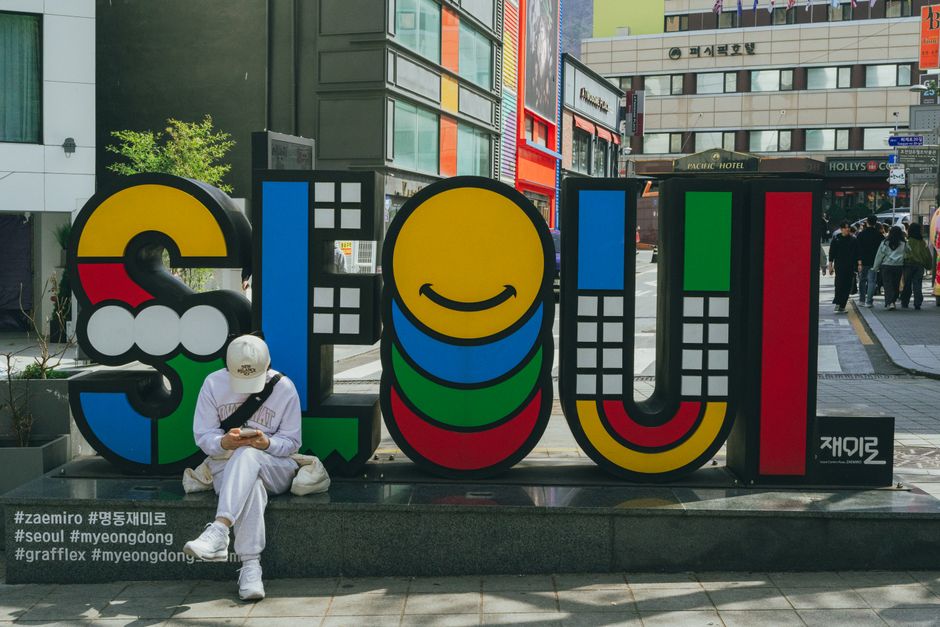
Pickup from Gangnam — where the coach starts, and what it does not collect
The standard tour pickup points cluster in central Seoul — Myeongdong, Hongdae, City Hall, Insadong, and the better hotels in those districts — rather than in Gangnam itself. From a Gangnam hotel the visitor has two options. The first, and the one I would suggest, is to use the hotel's morning taxi to a pickup point in Myeongdong or near City Hall — a fifteen- to twenty-five-minute ride at six-thirty to seven-thirty in the morning, depending on traffic — and to join the coach there. The second is to book a tour that offers Gangnam pickup as an upgraded service; a few of the higher-tier operators do this, the surcharge runs roughly twenty to thirty thousand won, and it removes the early-morning taxi from the equation. What I would not do is rely on the subway. The early-morning subway connection from southern Gangnam to the pickup points in central Seoul takes longer than the taxi, requires at least one transfer, and runs counter to the register of the day. The DMZ tour is one of the few Seoul day-trips where time of departure is non-negotiable; if the coach leaves at eight, the visitor who arrives at eight-oh-one is left behind. A taxi at seven-fifteen, in my reading, is the conservative choice. The coach itself collects passengers across two or three pickups in central Seoul and is on the expressway north by nine.

The day's cadence — Imjingak, the Tunnel, the Observatory, Dorasan
The standard sequence is built around four stops, each with a distinct register. Imjingak Park is the first — a wide outdoor memorial complex with the Bridge of Freedom, the Mangbaedan altar, and the rusted train carriage from the war, and it serves as the orientation stop. Forty minutes here, mostly outdoors, with significant walking on flat paving. The Third Infiltration Tunnel is the second and, for many visitors, the most physically demanding part of the day; it is one of four known tunnels dug south by the North during the 1970s, and the visitable section runs roughly 350 metres downhill into the rock and the same distance back up. The descent is steep, the tunnel is low — visitors over six feet will walk most of it stooped — and the air is cool but humid. A small monorail option exists at one entry point and is worth using if the gradient is a concern. The Dora Observatory is the third stop — the elevated platform with the binocular view across the buffer into Kaesong on the North side — and is the most photographed but the least physically demanding; twenty minutes is enough. Dorasan Station closes the sequence, a railway station built in 2002 for a future inter-Korean line that has never operated commercially, and the visitor stamps a passport-style card on the platform. The total walking across the four stops is two to three kilometres; the difficulty is concentrated in the tunnel.
The recovery-fit consideration — when the day works, and when it does not
The DMZ day is not a recovery-day activity. I want to write this clearly, because the question is asked frequently. The combination of an early start, a long coach segment, three to four hours of intermittent walking — much of it outdoors and exposed — the steep tunnel descent, and the fixed schedule does not align with the cadence of a face that is still settling, a scalp that is still tender, or a treated area that is still flushed. For the visitor who has come to Seoul partly for a clinic appointment, the question of when to schedule the DMZ trip is therefore a calendar question rather than a willpower question. Three windows work. The first is the day before the appointment, when the visitor is fresh, the schedule is open, and the trip serves as the orientation day to the country. The second is several days after the appointment, when whatever was treated has substantially settled — a window that varies by intervention, and which the clinic should be the source of advice on, not the editorial. The third, less obvious, is the day after a full rest day, when the visitor has had at least twenty-four hours of true quiet. What I would not do is schedule the DMZ trip for the morning after a procedure. The coach is not the place to be on a flushed face. Sun exposure during the outdoor segments is real — Imjingak and the Observatory are largely exposed — and a wide-brimmed hat or a cap with a high SPF is sensible regardless of the recovery angle. For visitors who have had stem cell, regenerative, or laser-adjacent procedures, the operating clinic's specific aftercare guidance overrides any general rule; the DMZ register has no medical standing, and one should defer to the clinical instruction.
What to bring, what to wear, and what the operators provide
The kit is straightforward and worth getting right. Footwear: closed walking shoes with grip — the tunnel descent is paved but slick in places, and Imjingak's outer paths are uneven. Layers: the tunnel is roughly fifteen degrees year-round and feels cool against an outdoor temperature that ranges from minus five in February to thirty-two in August; a light jacket or a packable layer is sensible across all seasons. Sun protection: cap or wide-brim hat, sunglasses, and a high-SPF sunscreen reapplied at the Observatory stop. Water: most operators provide one small bottle on boarding; a second 500-ml bottle in the bag is sensible. Identification: passport is required at the checkpoint into the civilian control zone, and the bus will not pass without it for every passenger; a copy is not sufficient. Phone and camera: photography is permitted at most stops but explicitly forbidden at the Tunnel entrance and within the tunnel itself, and the rule is enforced. What the operators provide varies. The mid-tier coaches provide an English-speaking guide, water, and a printed itinerary; the higher-tier operators add a hotel pickup option, a smaller coach (twenty to thirty seats rather than forty-five), and lunch at a local Korean restaurant in Paju on the return. Lunch is sometimes optional and sometimes bundled; verify before booking, because the alternative is a long afternoon without food.
Practical notes — booking, cancellation, weather, and the post-trip evening
Booking windows for the DMZ tour are tighter than for other Seoul day-trips. The Tunnel and the Observatory operate on a tour-quota system, and the better operators sell out three to seven days in advance during peak season — late March through May, and late September through November. Booking three to five days before is a sensible window; same-day booking is occasionally possible through hotel concierge but should not be relied on. Cancellation rules are stricter than most other tours. Twenty-four-hour cancellation is common for full refund; same-day cancellation typically forfeits the full fare. If the recovery calendar is uncertain, book a tour with a forty-eight-hour cancellation window — the fare is roughly ten to fifteen percent higher and the flexibility is worth the differential. Weather is non-negotiable. The DMZ tour runs in light rain and in cold, but the Observatory is closed in heavy fog and the Tunnel descent becomes uncomfortable in heavy rain. A check of the forecast the night before is sensible. The post-trip evening, in my reading, should be quiet rather than ambitious. The visitor returns to central Seoul tired; a counter-seat dinner in Cheongdam, a quiet bath, and an early night is the right register. The trip is an early-itinerary anchor or a mid-itinerary day, not a same-day combination with the avenues of Apgujeong.
Frequently asked questions
Can the DMZ day trip be done on a recovery day after a clinic procedure?
Not in my reading. The early start, the long coach segment, the steep tunnel descent, the outdoor sun exposure, and the fixed schedule are not aligned with a recovery cadence. The conservative choice is to schedule the trip the day before the appointment, or several days after — and in any case to defer to the clinic's specific aftercare instructions over any general editorial guidance.
Is there pickup from Gangnam, or does the coach leave only from central Seoul?
Most standard tours pick up in Myeongdong, near City Hall, or around Hongdae, rather than in Gangnam itself. Two solutions exist — a morning taxi from a Gangnam hotel to the central pickup point, fifteen to twenty-five minutes at that hour, or a higher-tier tour with Gangnam hotel pickup as an upgraded service for an additional twenty to thirty thousand won.
How long is the day, and how much of it is walking?
Six to eight hours total, of which two to four are coach time, and roughly two to three kilometres of walking across the four standard stops. The Third Infiltration Tunnel is the most physically demanding segment — a 350-metre descent and ascent on a steep gradient — and the rest is moderate flat walking on paving.
Is the Joint Security Area — the famous blue conference cabins — included?
Currently it is not, in most standard tours. JSA access has been suspended and resumed in cycles over the past several years and is set by inter-Korean conditions rather than by the operator. A tour that advertises JSA access should be verified at the time of booking, and the JSA-included fare is meaningfully higher when the access is open.
What should the solo traveller bring on the day?
Passport — required at the civilian-control checkpoint, no photocopy accepted — closed walking shoes with grip, a light layer for the tunnel, a cap or wide-brim hat for the outdoor stops, high-SPF sunscreen, sunglasses, and a second small water bottle. Phones are permitted at most stops but not inside the Tunnel. Cash for the lunch stop if it is unbundled.
What is the right season to book the DMZ trip?
Late March to May and late September to November are the most reliable — temperate weather, clear visibility from the Observatory, and manageable outdoor exposure. Summer is humid and the outdoor segments become uncomfortable; winter is feasible but cold, and the Observatory is occasionally closed in heavy fog. Booking three to five days in advance is sensible in peak season.
What are the cancellation rules typically like?
Stricter than most Seoul tours. Twenty-four-hour cancellation for full refund is the standard; same-day cancellation usually forfeits the full fare. If the recovery calendar is uncertain, the right move is to book a tour with a forty-eight-hour cancellation window — the fare is roughly ten to fifteen percent higher, and the flexibility is worth the differential.