
Travel & Culture
Bukchon Hanok Village, Without the Rush
From a Gangnam hotel to a quiet Bukchon alley in ninety minutes — a slow, measured read of the village.
Bukchon unfolds the way the older lanes above Mid-Levels do on a humid Hong Kong afternoon — narrow, layered, lit from the side rather than from above. The village holds the same quiet density I recognise from the side streets behind Lee Garden Three: low rooflines, considered restorations, and a foot-traffic rhythm that the wider boulevards in Jongno do not allow. From a Gangnam hotel one can be inside the village in ninety minutes, door to alley, with no strain on the day. What recommends Bukchon is not the much-photographed viewpoint but the slowness of the alleys themselves — and the visit reads, on first attempt, as the most undramatic way to spend an afternoon in central Seoul.
Why Bukchon, and why a slow read in particular
Bukchon Hanok Village is a residential neighbourhood of restored Joseon-era hanok houses occupying the slope between Gyeongbokgung Palace and Changdeokgung Palace in central Seoul — and it is, importantly, still residential. People live in these houses; school children walk through these lanes on weekday mornings; deliveries arrive at the gates. What recommends a slow read here, rather than a viewpoint-and-photograph circuit, is the scale: the village rewards an unhurried hour in three or four alleys far more than it rewards the Instagram-mapped descent from the upper viewpoint. The buildings are mostly single-storey, the lanes narrow, and the foot traffic — on weekday afternoons after three — civilised. One walks, one pauses, one turns into a side lane that the tour groups have skipped. The whole village is roughly one square kilometre; one can cover the meaningful portion in ninety minutes if one is unhurried, or in three hours if one chooses to sit in two cafes and a tea room along the way. The point of the visit is not to see Bukchon. The point is to read it.
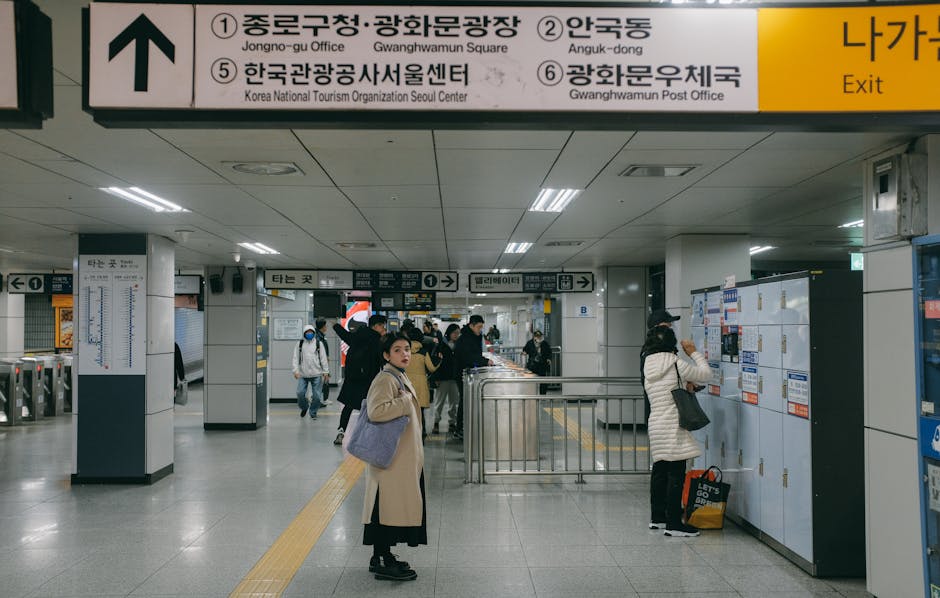
From Gangnam to Bukchon: the ninety-minute transit, unhurried
From the better hotels in southern Gangnam — along Apgujeong-ro, Eonju-ro, or the avenue between Sinsa and Sinnonhyeon — the transit to Bukchon takes about ninety minutes if one is unhurried, or fifty if one is willing to compress it. My preferred route uses the Bundang Line or Line 3 from Apgujeong or Sinsa to Anguk Station, which deposits one at Exit 2, three minutes' walk from the western edge of the village. The ride itself is forty to fifty minutes; one allows another twenty for the walk to and from the station, and an additional ten for the Bukchon Tourist Information Centre near the village entrance, which provides a paper map I would still recommend over the apps. A taxi from southern Gangnam to Anguk runs thirty to forty minutes outside rush hour and costs a fraction of what the equivalent distance would in Causeway Bay or Central — the avenue traffic is the variable. I would suggest the subway in either direction. It is faster between four and seven in the evening, and the Anguk Station exits land closer to the village than any car can drop one. 坐地鐵會快好多, a friend who had lived in Seoul reminded me. She wasn't wrong.

The first alley: where to enter, and what to ignore
From Anguk Station Exit 2 one walks three minutes north on Yulgok-ro and turns into the village proper at Bukchon-ro 11-gil — a wider lane that climbs gently toward the upper viewpoints. Most visitors continue straight up this lane to the photographed descent. I would suggest doing the opposite. Turn right, almost immediately, into the smaller residential alleys to the east — the lanes signed as Bukchon-ro 5-gil and the small numbered gil branching off it — where the foot traffic thins within twenty paces. The hanok here are restored but lived-in: laundry is occasionally visible, gates are closed for a reason, and the silence reads as a request rather than as atmosphere. Speak quietly. Do not photograph through gates. The Seoul city government has posted reminders along the lanes; the residents have asked, repeatedly, that the village be treated as a neighbourhood rather than a set. The first thirty minutes here, walking slowly through three or four of the smaller alleys, is the part of Bukchon I would actually recommend to a friend visiting Seoul for the first time.
The viewpoint: how to use it, and what it actually offers
The much-photographed view of Bukchon — the layered grey rooftops descending toward the city centre, with the office towers of Jongno rising behind — is taken from the upper section of Bukchon-ro 11-gil, near a small intersection that the tourist maps mark as the Bukchon Eight Views point. What recommends this spot is the framing rather than the angle: the descent of the tiled rooves against the modern skyline reads, in a single image, as the negotiation Seoul has made with its own past. The trade is foot traffic. On a weekday after three the spot is tolerable; on a weekend or any morning before noon, it is not. I would suggest visiting on a Tuesday or Wednesday between three and five, taking the photograph one wants, and continuing east into the quieter lanes — which is where the village actually lives. Ten minutes here is enough. The point of Bukchon is not the viewpoint; the viewpoint is one of perhaps a dozen reasons to walk the lanes, and the lanes themselves are why one came.

Three rooms worth sitting in: a tea house, a small museum, and a hanok cafe
Three indoor stops anchor a slower read of the village. The first is a Korean tea house — there are several genuine ones, mostly in restored hanok with low wooden tables and a handful of seats — where one can order a Korean tea, sit on the floor cushions, and let twenty minutes pass without a phone in hand. I will not name the room I prefer; the point is to find one's own. The second is a small museum: the Bukchon area holds a number of hanok-housed cultural museums (embroidery, knot-tying, traditional musical instruments) where the entry is modest, the rooms are quiet, and one learns something specific in twenty minutes. Choose by interest, not by ranking. The third is a hanok cafe — there are now perhaps a dozen worth the visit, most of them small, plaster-walled, and built into the courtyards of restored houses. 慢慢嚟, my mother would say of these rooms, and she would be right. A coffee or a hojicha here, taken slowly, is what the afternoon is for. Three rooms across three hours of walking is the right cadence; one is not collecting destinations, one is sitting between alleys.
Practical notes: timing, etiquette, weather, and the recovery angle
The full village read — entrance, three or four alleys, viewpoint, two indoor stops — runs about two and a half kilometres of total walking, spread across three hours, with two seated pauses. The lanes climb gently; none of the walking is strenuous, and the village is well-suited to a quiet recovery day when one wants movement without strain. Etiquette matters more here than in most Seoul neighbourhoods. The Jongno District Office has, in recent years, restricted certain lanes to morning hours and posted residential quiet windows; the signage is in English and Korean, and one follows it. Speak softly. Do not enter open courtyards. Tour groups with megaphones are discouraged and, on certain lanes, prohibited. Weather matters: in summer the lanes are humid and the climbs feel longer; in winter the indoor sittings become a virtue, and the village in light snow is the loveliest version of itself. From the village to dinner in Anguk-dong is a five-minute walk; to a hotel in southern Gangnam, fifty minutes by subway after seven. If one is using the visit to fill the afternoon between a morning consultation and an evening meal, three hours in Bukchon plus one cafe is the right scale. The village rewards a returning visitor more than a first-time one — and one comes back.
Pairing Bukchon with Seochon, the quieter counterpoint to the west
Bukchon's natural pairing, on a return visit or a longer afternoon, is the smaller hanok district to the west of Gyeongbokgung Palace — Seochon. What separates the two is foot traffic and register: Seochon is quieter, less restored, more residential in the lived-sense, and the alleys hold a different kind of slowness. From Bukchon's western edge the walk to Seochon's eastern edge runs about twenty-five minutes through the palace grounds, or fifteen by taxi around them; the two villages can be done in a single long afternoon by a walker with stamina, but I would not recommend it on a recovery day. Pair them across two visits — Bukchon on the first afternoon, Seochon on a second — and the contrast becomes legible. The neighbourhoods read as variations of the same instinct, restored differently. For a Seochon-only afternoon, with attention to its specific quietness, the quiet counterpoint to Bukchon I have written about separately is the route I would follow.
Frequently asked questions
How long does the transit from Gangnam to Bukchon actually take?
About ninety minutes door to alley if one is unhurried — fifty if one compresses it. The subway from Apgujeong or Sinsa to Anguk Station runs forty to fifty minutes, with another twenty for walking and the village entrance. A taxi outside rush hour takes thirty to forty minutes; the subway is more reliable between four and seven.
Which subway exit lands closest to the village?
Anguk Station Exit 2, on Line 3. From the exit one walks three minutes north on Yulgok-ro and turns into the village at Bukchon-ro 11-gil. The Bukchon Tourist Information Centre sits near the entrance and provides a paper map I would recommend over the navigation apps.
When is the quietest time to visit?
Weekday afternoons, between three and five — Tuesday or Wednesday by preference. The viewpoint and the wider lanes thin out in that window; the smaller residential alleys are tolerable even earlier. Mornings before noon and weekends after eleven are the busiest periods, and I would avoid both.
Is the village walkable on a quiet recovery day?
Yes. The full read runs about two and a half kilometres across three hours, with seated pauses, and the lanes climb gently rather than sharply. None of the walking is strenuous. One can shorten the visit to ninety minutes by skipping the viewpoint and focusing on three alleys plus one cafe.
What etiquette should one observe in Bukchon?
Bukchon is a residential neighbourhood — people live in these houses. Speak quietly, do not photograph through gates, do not enter open courtyards, and follow the signage that marks residential quiet windows. The Jongno District Office has restricted certain lanes to morning hours; the signage is bilingual and clear. Tour groups with megaphones are discouraged.
Are the hanok cafes and tea houses worth sitting in?
Yes — three indoor stops anchor a slower read of the village. Choose a Korean tea house for a floor-cushion sitting, a small hanok cafe for a coffee in a restored courtyard, and one of the small cultural museums for twenty minutes of something specific. Three rooms across three hours is the right cadence.
Can Bukchon be combined with another neighbourhood in a single day?
It can be combined with Seochon to the west of Gyeongbokgung Palace, but I would not recommend both in a single afternoon on a recovery day. Pair them across two visits — Bukchon first, Seochon on a return — and the contrast reads more clearly. From Bukchon to dinner in Anguk-dong is a five-minute walk, which closes the afternoon naturally.
Is there a best season for the village?
Late October for the autumn light against the tiled rooves, and early April for the first weeks of cherry blossom along the palace walls. Summer is humid and lengthens the comfortable walking window only marginally; winter, particularly in light snow, is the season I would actually recommend for the village itself, when the indoor sittings feel earned.