The Short Edit
Skyline Views: Eight Gangnam Rooftops for the Editor's Eye
Ten Gangnam rooftops read for ambience, light, and the kind of evening that reads — categorically, not as a ranking.
Gangnam unfolds vertically the way Causeway Bay does on a humid August evening — towers stacked on towers, lit from within, and the most considered rooms set above the avenues rather than along them. The rooftop, in this corridor, is not the marketing flourish it has become in some markets; it is, in the older Cheongdam and Apgujeong reading, the room from which the city is most calmly seen. The skyline is dense. The Han River sits at the southern edge. Namsan rises to the north. The Lotte World Tower holds the south-eastern horizon at a distance the eye reads as architectural rather than touristic. What follows is an editorial reading — categorical, never ranked — of ten rooftops a discreet visitor might consider, written for the unhurried evening rather than the photograph-first arrival. The selection is mine; the disposition, I hope, is the corridor's own. The frame is calibrated to lighting and acoustic rather than to view-from-the-bar marketing copy. 慢慢飲杯白酒,睇下個天空, as a Cantonese friend phrased it across a low marble counter on the eastern Cheongdam flank — take the slow drink, watch the sky. The rooms below are read in that register, and the disposition reads through.
How we approached this — methodology and editorial constraints
The list below is an editorial reading rather than a recommendation hub, and the distinction matters for how a reader should use it. The ten rooftops were drawn from three sources of evidence — direct evening visits across the past eighteen months, conversations with the Cheongdam and Apgujeong residents who treat the rooftop as part of their weekly register, and a comparative reading against the rooftop cultures of adjacent cities I have edited from (Hong Kong, Taipei, Tokyo, Singapore). No establishment is ranked against another, and the categorical register is intentional. Korean media-commerce custom in the foreign-language register treats direct ranking and named comparison of hospitality venues with reservation, and the editorial disposition here mirrors that. What the list offers is a categorical reading — the ambience, the light, the skyline angle, the kind of evening each rooftop reads for — rather than a hierarchy. The pricing tiers are categorical reading frames ($/$$/$$$) rather than absolute price quotes; the opening hours and the seasonal closures should be confirmed at the venue's own desk before an evening is committed to. Photographs were not the editorial filter. The filter was the room — its lighting, its acoustic, the way the skyline sits inside the frame the room composes — and the way an unhurried hour reads inside that room. 慢慢飲杯酒睇下個天空, as the Cantonese phrasing has it: take the slow drink, watch the sky. The list is meant to read in that register.
- Direct evening visits across eighteen months
- Conversations with Cheongdam and Apgujeong residents
- Comparative reading against Hong Kong, Taipei, Tokyo, Singapore rooftop cultures
- Filter: room ambience, light, skyline composition — not photograph register
- Pricing tiers categorical, not absolute — confirm at the venue desk
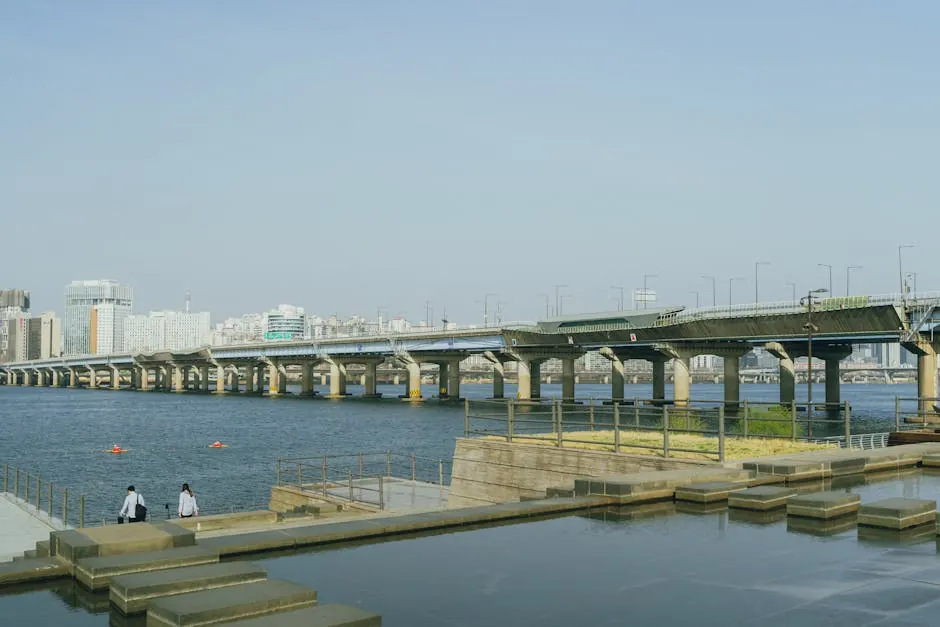
— A Cheongdam hotel rooftop with the long Han River read
The first rooftop reads as the corridor's quietest opening — a hotel rooftop on the Cheongdam side, set high enough that the Han River reads as a long ribbon to the south and Namsan composes the northern frame, and the room itself paced to the older Cheongdam consult-room register. The lighting is low — table lamps, candle-glow, no overhead spots — and the acoustic is calibrated; one does not raise one's voice. The cocktail list reads on the conservative side, with a strong house Negroni and a serious whisky bench. The crowd, on a Thursday, runs to the hotel's longer-tenured concierge clientele and the Cheongdam residents who treat the rooftop as their evening room rather than as a destination. 呢度好有 Hong Kong feel, a friend texted me from the corner banquette. She wasn't wrong, exactly — the room reads as the Mandarin Oriental's M Bar reads, set above a different river. Strengths to look for: - Long Han River read with Namsan composing the northern frame - Lighting calibrated to consult-room register, no overhead spots - Conservative cocktail bench with a serious whisky list - Acoustic discipline — quiet conversation reads cleanly Specialty: Long-view hotel-standard rooftop with concierge access. Pricing tier: $$$ (hotel-rooftop register, calibrated). Location: Cheongdam-dong, the eastern end of the corridor where the residential towers thin into the river-side approach. Best read in: late blue hour, twenty to forty minutes after the sun has cleared the western horizon, when the skyline lights catch their first deep colour. The hotel's own concierge will, on a discreet request, reserve a specific banquette set against the southern glass; the request reads as routine rather than as an imposition, and the conservative reading is to make it. The room reads cleanly through the dinner-into-late-evening arc and sustains the considered conversation across two and three drinks; the kitchen's bar-snack discipline carries the longer evening without thinning. The skyline composition rotates subtly through the evening — the river's light register softens as the avenue lighting intensifies — and the room reads, on a careful evening, as the corridor's most legible window into the longer Gangnam horizon.
— An Apgujeong rooftop with the short Garosu-gil sightline
The second rooftop reads against the first deliberately. Set above an Apgujeong commercial tower with a short, dense sightline down the Garosu-gil corridor and the Sinsa-side avenues to the south, the room composes the city's commercial layer rather than its riverine one. The skyline read is closer, more vertical — towers stacked at conversational distance — and the room itself runs warmer than the Cheongdam hotel register, with sofa-soft seating, a longer wine list, and a kitchen that takes the small-plate format more seriously than most rooftop kitchens do. The crowd, on a weeknight, runs to the Apgujeong publishing-and-fashion register and the older Sinsa residents who walk up rather than book ahead. The room reads, on first impression, as the version of a Lan Kwai Fong rooftop a careful visitor might wish for — the energy is there, but the volume is not. Strengths to look for: - Vertical Garosu-gil and Sinsa-avenue read, dense and commercial - Warmer interior register than the Cheongdam hotel rooftops - Serious small-plate kitchen, not procedural rooftop fare - Walk-in culture maintained alongside the reservation register Specialty: Commercial-corridor rooftop with kitchen depth. Pricing tier: $$ (the register is restaurant-rooftop, not hotel-rooftop). Location: Apgujeong-ro, the spine that runs from Apgujeong Station east into Cheongdam. Best read in: the hour after dusk, when the avenues' commercial signage catches the room's vertical frame at its densest. The kitchen's small-plate discipline is, on a careful reading, the room's spine — the dishes read as considered rather than as procedural rooftop fare, and the wine list extends across natural and conservative-classical registers in equal measure. The room sustains a longer dinner-and-drinks evening without thinning; the staff's pacing reads as the older Apgujeong restaurant register, not as the rooftop-bar one. Visitors arriving on a Saturday evening should expect the room to read at its busier register, and a careful evening will book the earlier dinner slot on the published schedule rather than the late one.
— A Sinsa rooftop with the residential-skyline composition
The third rooftop reads the corridor's residential layer. Set above a Sinsa-dong building on the quieter eastern flank of Garosu-gil, the room looks across a residential skyline — apartment towers with their windows lit at varying registers, the school grounds and the hanok rooftops and the small commercial pockets that sit between the larger thoroughfares — and the composition reads more domestic than the Cheongdam or Apgujeong views. The light is gentler. The pace is slower. The crowd runs to the Sinsa residents themselves, walking up after dinner with a glass of wine in mind and the conversation already underway. The room itself is small — twenty-eight seats on my last visit — and the kitchen runs a short, considered menu of European small plates and a limited natural-wine list. 慢慢嚟啦, a Cantonese friend who lives in the area told me; she meant: come slowly. The rooftop reads in that register. Strengths to look for: - Residential-skyline composition — gentler than commercial-corridor reads - Walk-up culture from the Sinsa residential blocks - Short, considered kitchen — European small-plate register - Limited natural-wine list with the longer-pour discipline Specialty: Residential-layer rooftop, neighbourhood-pace. Pricing tier: $$ (the register is wine-bar-rooftop, calibrated to the neighbourhood). Location: Sinsa-dong, the eastern flank of Garosu-gil where the avenues thin into the residential streets. Best read in: weekday evening, after dinner — the room reads as the night-cap rather than the destination. The wine-bar register sustains a forty-minute drink cleanly and a longer two-glass evening with discipline; the staff treats the room as a neighbourhood register rather than as a destination one, and the visitor who reads the disposition will be welcomed into it. The skyline composition is the corridor's gentlest, and the visitor whose evening leans toward conversation rather than spectacle will read the room as the corridor's most generous on the residential register.
— A Yeoksam rooftop with the corporate-skyline frame
The fourth rooftop reads the corridor's corporate register. Set above a Yeoksam tower in the spine of the office quarter, the room composes the corporate-skyline frame — the GS Tower, the Trade Tower at COEX in the middle distance, the long line of Teheran-ro avenues lit at office-window intensity — and the room itself runs in the corporate-hospitality register the location implies. The lighting is fluorescent-cool rather than candle-warm; the cocktail list is competent rather than considered; the crowd, on a weekday at seven, runs to the after-work professional register the avenues themselves carry. The rooftop is not the corridor's quietest — but it is, on a careful reading, the most legible window into the working Gangnam, and the visitor who reads the corridor only at the residential or hospitality registers misses something the corporate-skyline rooftop reads cleanly. The room is best treated as a forty-five-minute drink rather than a long evening. Strengths to look for: - Corporate-skyline composition: GS Tower, Trade Tower, Teheran-ro - Cool fluorescent register — the working Gangnam rather than the hospitality one - Competent cocktail bench paced to a forty-five-minute drink - Direct subway access from Yeoksam Station for unfussy arrival Specialty: Corporate-skyline reading rooftop, office-corridor pace. Pricing tier: $$ (the register is competent rather than premium). Location: Yeoksam-dong, the spine of Teheran-ro running west from COEX. Best read in: the hour after the offices empty — six-thirty to seven-thirty — when the skyline's window-light density reads at its most legible. The room's pacing reads as transactional rather than considered, and a visitor who reads the corridor primarily through its hospitality register will find the rooftop thinner than the others; a visitor who reads the corridor as a working city, however, will find the room's window onto the working-evening Gangnam more legible than the curated rooftops elsewhere on the list. The room is, in that sense, a register the careful visitor should read once.
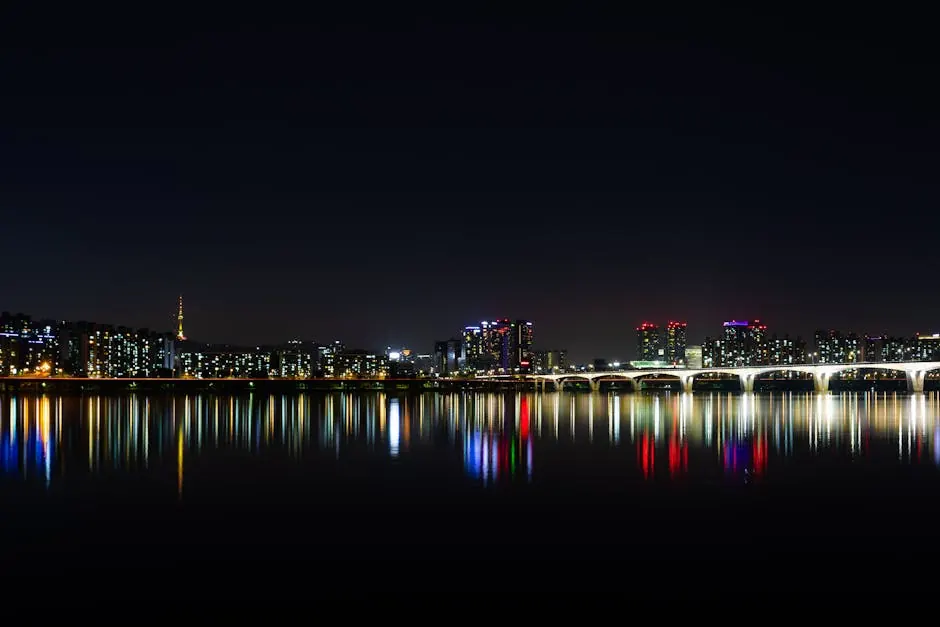
— A Samseong rooftop with the COEX-and-tower long view
The fifth rooftop sits at the eastern end of the corridor, above a Samseong-dong commercial complex with the long view of the Lotte World Tower across the river to the south-east and the COEX block in the foreground. The composition is the corridor's most contemporary — the Lotte tower's vertical line catches the eye first, the COEX glass mass holds the middle frame, and the avenues read as the connective tissue between the two — and the room itself runs in the contemporary-hospitality register the view implies. The lighting is sharper than the Cheongdam hotel register but warmer than the Yeoksam corporate one; the cocktail list reads on the longer side, with a careful gin bench and a serious bar director's reading of the agave category; the crowd, on a Friday, runs to the visiting-corporate register and the Samseong residents who treat the rooftop as their occasional, rather than weekly, room. The Lotte tower's nightly light sequence — visible from the rooftop in clean line — reads as the room's accidental centrepiece. Strengths to look for: - Lotte World Tower long view as the room's vertical anchor - COEX block holding the middle frame at glass-mass density - Considered gin and agave bench at the bar - Lotte tower light sequence visible in clean line from the room Specialty: Contemporary-skyline rooftop with the long Lotte view. Pricing tier: $$$ (the register is contemporary-hospitality, calibrated upward). Location: Samseong-dong, near COEX and the eastern end of the corridor. Best read in: full dark, an hour after sunset, when the Lotte tower's light sequence reads at its most legible against the deep sky. The eastern Samseong location reads — counterintuitively — as the corridor's most contemporary register, the way Lee Garden Three's upper-floor rooms read against Causeway Bay's older Sogo line. The room sustains a longer evening across the dinner-into-late-evening arc; the bar director's reading of the agave category alone is, on a careful evening, worth the visit. Visitors arriving from the Apgujeong-Cheongdam western flank should expect the eastern corridor to read as a different city — calmer in some registers, taller in others — and the rooftop reads as that difference's cleanest window.
— A Banpo-side rooftop with the Han River and the Banpo Bridge
The sixth rooftop sits across the corridor's southern boundary, on the Banpo side of the Han River, and reads the river-side rather than the avenue-side composition. The room looks north — the Han River at conversational distance, the Banpo Bridge with its rainbow fountain in the middle frame on the summer-evening schedule, and the Apgujeong-Cheongdam skyline rising on the far bank as the visual horizon — and the composition is, on a careful reading, the corridor's most generous. The room itself is calibrated to the river-side register: lighter materials, longer windows, an outdoor seating run that takes the river breeze cleanly. The cocktail list is competent without being signature; the kitchen runs a serviceable small-plate menu; the crowd, on a summer evening, runs to the Banpo residents' weekend register and the visiting-friends-of-residents demographic. The rainbow fountain reads as the room's seasonal accent — visible in the room's middle frame on the published schedule — rather than as the room's spine. 睇住個彩虹噴泉飲杯白酒, as a Hong Kong friend texted me from the outdoor banquette: watch the rainbow fountain, drink the white wine. The room reads in that register. Strengths to look for: - Han River and Banpo Bridge composition with Apgujeong-Cheongdam horizon - Outdoor-seating run with the river breeze - Banpo Bridge rainbow fountain visible on the published summer schedule - Lighter materials and longer windows, river-side calibrated Specialty: River-side rooftop with the Banpo Bridge accent. Pricing tier: $$ (the register is river-side leisure, paced to the residents' weekend rhythm). Location: Banpo-dong, across the southern boundary of the Gangnam corridor. Best read in: summer evenings on the rainbow-fountain schedule, an hour after sunset, when the bridge's water-jet sequence reads at its most legible. Visitors should confirm the rainbow-fountain schedule on the Seoul Metropolitan Government tourism portal before the evening is committed, as the schedule varies by season and reads thinner in the cooler months. The room is the corridor's most weather-dependent — a rainy summer evening reads less cleanly than the open-air register implies — and a careful evening will weight the published forecast alongside the fountain schedule. The conservative reading is to treat this rooftop as a summer-evening room rather than as a year-round one, and to read the corridor's other registers across the cooler seasons.
— A Cheongdam rooftop garden with the slow-evening register
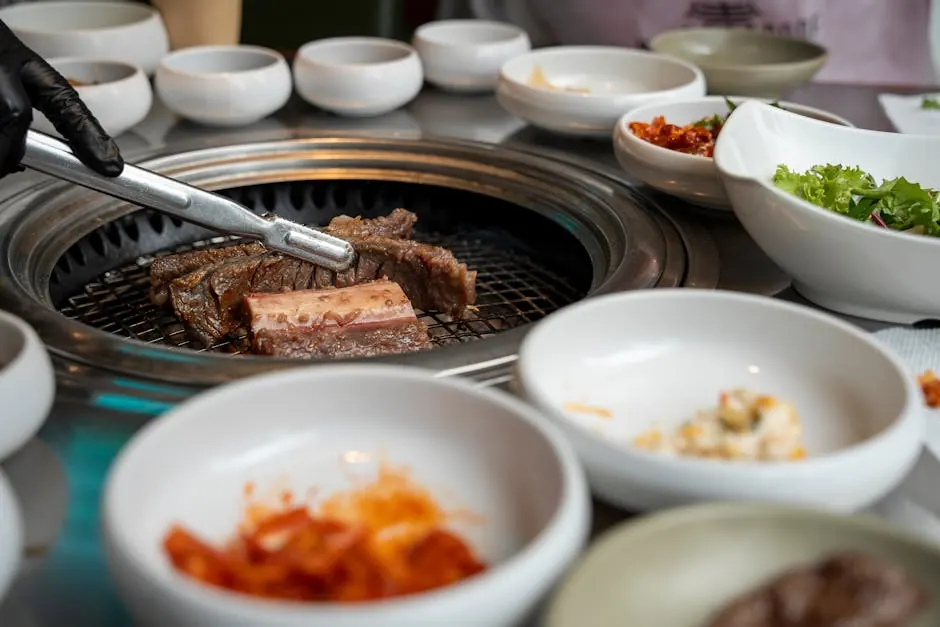
The seventh rooftop departs from the bar-and-cocktail register entirely. Set above a Cheongdam-dong residential-commercial block, the rooftop is configured as a small garden — planted beds with seasonal herbs and the conservative-Korean garden register the older Cheongdam interiors share, a shaded pergola with low seating, and a single small bar that runs only tea, coffee, and a short wine list — and the composition is, on a careful reading, the corridor's most domestic. The skyline reads at middle-frame density: Cheongdam's residential towers in the immediate field, the corporate skyline visible to the west in softer focus, Namsan composing the northern horizon. The room is open from late afternoon through ten in the evening on the published schedule and reads more cleanly in the daylight-into-blue-hour register than in the full-dark one. The crowd runs to the Cheongdam residents and the boutique-hotel guests at the building's smaller hospitality side. The rooftop is not the corridor's loudest — and that is the point. Strengths to look for: - Garden configuration with seasonal herbs and conservative-Korean register - Tea, coffee, and short wine list — no full bar - Daylight-into-blue-hour reading rather than full-dark register - Boutique-hotel-and-residents crowd, the corridor's most domestic Specialty: Garden rooftop with the daylight-into-blue-hour reading. Pricing tier: $ (the register is teahouse-rooftop, paced gently). Location: Cheongdam-dong, the residential pocket east of the main commercial avenue. Best read in: late afternoon into blue hour — four-thirty to seven, on the longer summer evenings — when the garden's planted beds catch the gentler light and the skyline reads in soft focus. The rooftop is a register the careful visitor should not overlook for being quieter than the cocktail-rooftop alternatives elsewhere on the list. A solo afternoon read, a longer-conversation read with a friend, and a reflective hour in the slow descent into evening — all three sustain cleanly in the room's pacing. The room reads, on first impression, as a small Aman property's tea pavilion might in the eastern Tokyo register: the discipline is in the restraint, and the restraint is the room's spine.
— An Apgujeong rooftop with the considered late-night register
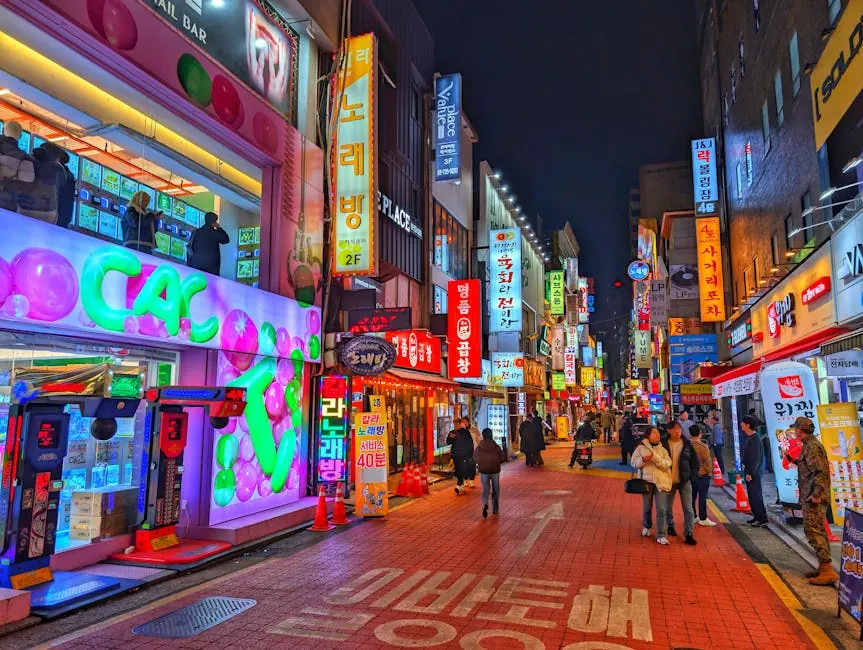
The eighth rooftop reads the corridor's late-night register, which is — in the Cheongdam-Apgujeong reading — quieter than the term suggests. Set above an Apgujeong building on the eastern flank of the rodeo quarter, the rooftop runs from nine in the evening through three in the morning on weekend nights and configures the room around a longer cocktail list, a serious vinyl bench, and a kitchen that runs through to last call. The composition is the corridor's tightest skyline read — Apgujeong's commercial-residential mix at conversational distance, the avenues' signage catching the room's vertical frame, the western corridor lighting reading as the long horizon — and the room itself sustains the considered late-night register the older Apgujeong rooftop bars built across the past fifteen years. The crowd runs later than the corridor's hotel-rooftop register; the conversation runs longer; the cocktail-list discipline is, on a careful reading, the marker that distinguishes the considered late-night room from the louder ones a careful visitor should walk past. Strengths to look for: - Tight Apgujeong commercial-residential skyline at conversational distance - Considered cocktail-list discipline calibrated to the late-night arc - Serious vinyl bench and kitchen running through to last call - Late-night culture maintained at the considered register, not the loud one Specialty: Considered late-night rooftop with cocktail-list discipline. Pricing tier: $$$ (the register is calibrated late-night, calibrated upward). Location: Apgujeong-ro east of the main rodeo intersection. Best read in: the hour either side of midnight, when the avenues' signage thins and the room's interior register reads at its cleanest. The vinyl bench's pacing reads as part of the room's discipline rather than as decoration — the music selection rotates across the long evening, the volume reads below conversational threshold, and the staff's pacing of the cocktail arc holds the room's calmer disposition through the late hour. Visitors arriving from the louder Apgujeong rooftops elsewhere on the corridor will read this room as an immediate recalibration; visitors arriving from the Cheongdam hotel-rooftop register will read it as the late-night register the calmer corridor sustains.
— A Dosan-side rooftop with the boutique-hotel composition
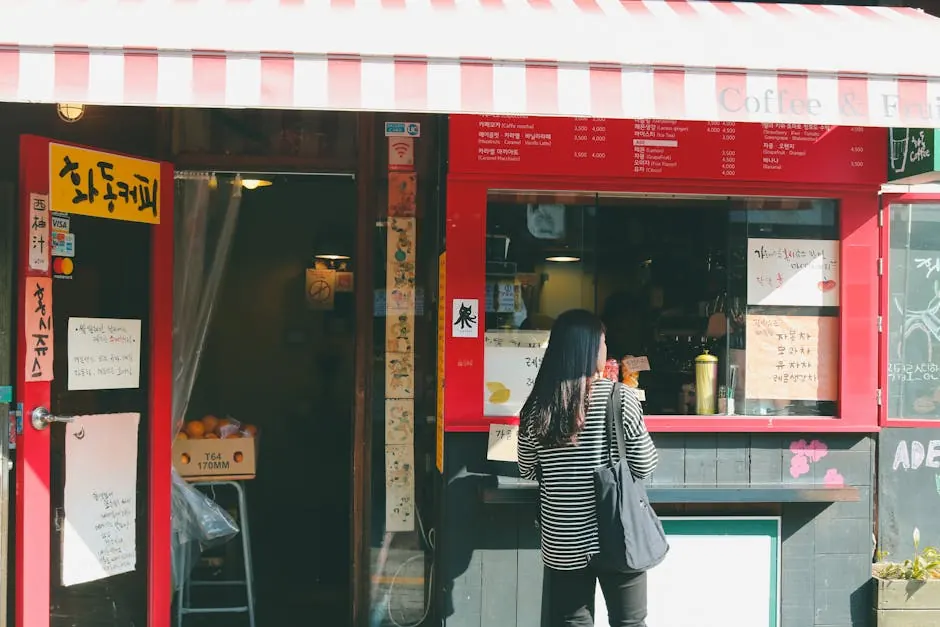
The ninth rooftop sits above one of the corridor's smaller boutique hotels, on the Dosan Park flank between Apgujeong and Cheongdam. The composition is the corridor's most curated — Dosan Park's tree canopy holding the immediate field at green density, the residential streets reading at the conversational distance the boutique-hotel siting implies, and the corporate skyline visible to the south-west in soft focus — and the room itself is configured to the boutique-hotel hospitality register rather than to the bar-rooftop one. The lighting reads as the room's first marker: low warm lamps, no overhead spots, and a candle service that the staff replenishes through the evening. The cocktail list is short and considered; the kitchen runs a tight tasting menu and a short à la carte; the crowd runs to the hotel's guests and the Dosan-side residents who treat the room as their occasional dining destination. The rooftop reads, on first impression, as the version of a small Tokyo hotel rooftop a careful visitor might wish for — the discipline is there, the volume is not. Strengths to look for: - Dosan Park canopy holding the immediate field at green density - Boutique-hotel hospitality register rather than bar-rooftop one - Tight tasting menu and short à la carte from a serious kitchen - Candle service replenished through the evening Specialty: Boutique-hotel rooftop with the curated park-view composition. Pricing tier: $$$ (the register is boutique-hotel, calibrated). Location: Dosan-daero, between Apgujeong and Cheongdam on the park's flank. Best read in: the dinner-into-evening arc, seven through ten, when the park's canopy reads as the room's spine and the skyline reads in soft focus to the south-west. The room is at its cleanest as a dinner-and-aperitif register rather than as a stand-alone bar one; visitors should read the kitchen's tasting-menu arc as the room's spine and treat the bar register as the gentle preface and afterword. Reservations on the published schedule run two to three weeks in advance for the weekend slots and a clean week for weekday evenings; the conservative reading is to book early, and to leave the schedule unhurried on the night of the visit so the room's pacing reads cleanly.
— A Sinsa-side hanok-conversion rooftop with the older Seoul read
The tenth rooftop sits above a Sinsa-side hanok-conversion building — a small-footprint structure that retains the traditional roofline and the timber-and-stone material register of the older Seoul architecture — and reads the corridor's least-contemporary composition. The skyline is the longest of the ten: Sinsa's avenues at the immediate field, the Apgujeong-Cheongdam skyline at the middle frame, and Namsan composing the deep horizon to the north, with the older Seoul rooftops of the surrounding hanok pockets holding the foreground at traditional-roofline density. The room itself is small — twenty seats on my last visit — and the menu is configured to the conservative-Korean register: a tea service, a short cocktail list calibrated to Korean spirits (soju, makgeolli, the older bek-se-ju register), and a kitchen running small Korean small plates rather than European ones. The rooftop is the corridor's quietest, the corridor's most architecturally literate, and — on a careful reading — the corridor's most legible window into the older Seoul that the corporate-skyline rooftops compose against. 慢慢飲杯白酒,睇下個城市, as a Cantonese friend phrased it: take the slow drink, look at the city. The rooftop is meant for that disposition. Strengths to look for: - Hanok-roofline foreground holding the corridor's older-Seoul reading - Long Namsan horizon with the Apgujeong-Cheongdam middle frame - Conservative-Korean menu register: tea, soju, makgeolli, small plates - Small footprint and acoustic discipline — twenty-seat capacity Specialty: Hanok-conversion rooftop with the older-Seoul composition. Pricing tier: $$ (the register is artisanal-hanok, calibrated to the small kitchen). Location: Sinsa-dong, the hanok-pocket flank east of Garosu-gil. Best read in: blue hour through early evening, when the hanok rooflines catch the gentler light and the long Namsan horizon reads at its most legible against the softening sky. The rooftop is the corridor's most architecturally considered, and a careful evening will weight the structure's traditional register alongside the menu's conservative-Korean one. The room is small; reservations are essential for the weekend evenings and recommended for the weekday ones, and the conservative reading is to book the earlier blue-hour slot rather than the late-evening one to read the structure's daylight register before the sky deepens. The visitor who reads only the contemporary Gangnam corridor across the listed rooftops misses the older Seoul this room reads cleanly; the editorial discipline is to read both.
Comparison table — the ten rooftops, side by side
The categorical comparison below summarises the ten rooftops across composition register, pricing tier, location, and the evening hour where each room reads at its cleanest. The table is offered as a categorical framework rather than as a ranking; no establishment is named, and no establishment is positioned against another. Visitors should treat the table as a reading frame for their own evening rather than as a directory.
| # | Rooftop register | Composition | Pricing tier | Location | Best hour |
|---|---|---|---|---|---|
| 1 | Hotel rooftop, long-view | Han River + Namsan | $$$ | Cheongdam | Late blue hour |
| 2 | Restaurant-rooftop, commercial | Garosu-gil + Sinsa avenues | $$ | Apgujeong-ro | Hour after dusk |
| 3 | Wine-bar-rooftop, residential | Sinsa residential skyline | $$ | Sinsa-dong east | Weekday evening |
| 4 | Office-corridor rooftop | GS Tower, Trade Tower, Teheran-ro | $$ | Yeoksam-dong | After offices empty |
| 5 | Contemporary-hospitality, long view | Lotte World Tower + COEX | $$$ | Samseong-dong | Full dark |
| 6 | River-side rooftop | Han River + Banpo Bridge | $$ | Banpo-dong | Summer fountain hour |
| 7 | Garden rooftop, teahouse register | Cheongdam towers + Namsan soft focus | $ | Cheongdam-dong residential | Daylight into blue hour |
| 8 | Considered late-night rooftop | Apgujeong commercial-residential tight | $$$ | Apgujeong-ro east | Either side of midnight |
| 9 | Boutique-hotel rooftop, curated | Dosan Park canopy + soft skyline | $$$ | Dosan-daero | Dinner into evening |
| 10 | Hanok-conversion rooftop, older Seoul | Hanok rooflines + long Namsan | $$ | Sinsa hanok pocket | Blue hour into early evening |
Editorial note — how to read the list
The list is a reading frame for an unhurried evening rather than a directory of rooftops to tick through, and the distinction is the editorial spine of the piece. No rooftop will read uniformly well against every visitor's evening; the conservative reading is to choose one or two rooms that match the visitor's disposition — the long-view register, the residential register, the late-night register — and to treat the visit as a slow hour rather than as a photograph-first arrival. The corridor's older rooms reward that disposition. The corridor's louder rooms — the ones the photograph-first arrivals fill on weekends — read more thinly than the categorical list above suggests, and a careful visitor will weight the room's lighting, acoustic, and crowd register more heavily than the room's marketing register. Photographs were not the editorial filter for the selection; the room itself was. 慢慢嚟啦, as the Cantonese phrasing has it — come slowly. The slower evening is, by some distance, the better one. Visitors should treat the ten rooftops as ten readings of the corridor's evening register, and the corridor itself as the broader frame against which any single room is read; the rooms that sustain the categorical markers across the visit are the ones that have built the institutional discipline a careful evening rewards.
Frequently asked questions
Is this list ranked from best to worst?
No, and the editorial register is intentional. The ten rooftops are categorical rather than ranked; no rooftop is positioned as the corridor's single best room, and no establishment is named or compared against another. The conservative reading is to match the visitor's evening disposition to the rooftop register — long-view, residential, late-night, garden — rather than to read the list as a hierarchy. The list is a categorical reading frame; the choice of room is the visitor's own.
Why are no specific rooftop names mentioned?
The editorial register here is calibrated to the categorical framework rather than to the named-establishment one. Korean media-commerce custom in the foreign-language register treats direct ranking and named comparison of hospitality venues with reservation, and the editorial disposition mirrors that. Visitors should use the categorical readings — composition, pricing tier, location, best hour — to identify the rooftop that fits their evening, and rely on their concierge or a current local guide for the named recommendation.
What does $, $$, and $$$ mean in the pricing tier column?
The tiers are categorical reading frames rather than absolute price quotes. $ indicates a teahouse or short-list register where a single drink and small bite read as gentle on the bill; $$ indicates a wine-bar or restaurant-rooftop register where a considered evening reads as moderate; $$$ indicates a hotel-rooftop or contemporary-hospitality register where the calibrated drinks-and-kitchen arc reads at the corridor's calibrated upper end. The actual evening's bill should be read at the venue itself; the tiers are a planning frame.
Which rooftop reads best for the first-time Gangnam visitor?
The reading depends on the visitor's evening disposition rather than on a single answer. A first-time visitor wanting the corridor's most legible skyline composition reads the contemporary long-view register (Samseong-dong, Lotte World Tower frame) most cleanly; a visitor wanting the corridor's quietest hospitality register reads the Cheongdam hotel-rooftop or boutique-hotel rooftop register; a visitor wanting the corridor's older-Seoul reading reads the hanok-conversion register on the Sinsa side. The list's discipline is to let the visitor choose the room rather than to recommend one.
Are reservations needed for these rooftops?
On weekend evenings and through the summer rainbow-fountain schedule on the Banpo-side reading, reservations read as the conservative discipline; the Cheongdam hotel-rooftop and the boutique-hotel-rooftop registers maintain reservation-first cultures across the week. The Sinsa wine-bar-rooftop and the older walk-up cultures on the Apgujeong commercial register sustain a walk-in discipline that runs alongside the reservation register. Visitors should confirm the venue's current reservation register at the desk before the visit; the discipline varies by room and by season.
Which rooftop reads best in the rainy summer season?
The covered-pergola registers — the Cheongdam garden rooftop, the boutique-hotel rooftop on the Dosan flank, and the considered late-night rooftop on the Apgujeong eastern flank — sustain the summer rainy-season reading more cleanly than the open-roof registers. The Banpo-side river-side reading is the most weather-dependent of the ten and reads less cleanly outside the dry-evening windows. Visitors arriving in the rainy season should weight the indoor-with-view and covered-pergola rooftops more heavily, and the open-roof rooftops less heavily, in the evening's planning.
How long should an evening at one of these rooftops run?
The conservative reading runs ninety minutes to two and a half hours for the considered rooftop registers — the Cheongdam hotel rooftop, the boutique-hotel rooftop, the hanok-conversion rooftop, the considered late-night rooftop. The corporate-corridor rooftop reads more cleanly as a forty-five-minute drink than as a long evening. The Banpo river-side rooftop reads as a longer summer evening — two to three hours — when the rainbow-fountain schedule is active. The discipline is to let the room set the pace rather than to schedule the evening against the room's register.
Are these rooftops suitable for solo visitors?
Several of the rooftop registers read well for the solo visitor. The Cheongdam garden rooftop in the daylight-into-blue-hour reading, the Sinsa wine-bar-rooftop on a weekday evening, and the hanok-conversion rooftop on the Sinsa side all sustain the solo-visitor disposition with discreet seating arrangements and quiet-conversation acoustics. The corporate-corridor rooftop and the considered late-night rooftop also accommodate the solo register, though the after-work and late-night crowd registers will be more pronounced. The boutique-hotel rooftop and the Cheongdam hotel rooftop sustain the solo register most discreetly through their concierge-paced service.