The Short Edit
Luxury Hotel Categories in Gangnam, Compared
Ten categorical tiers — from grand-dame heritage to quiet aparthotel — read against amenity, district and post-treatment recovery context.
Gangnam unfolds the way Causeway Bay does on a humid August afternoon — vertical, layered, lit from within. The hotel landscape between Sinsa and Samseong has the same quiet density I recognise from Lee Garden Three: glass towers that read, on first impression, as commercial — and reveal, somewhere on the thirty-second floor, a lounge with marble underfoot and a discreet check-in. What follows is not a ranking. It is a categorical map of ten tiers — heritage grand-dame, urban resort, executive tower, design boutique, serviced suite, branded residence, wellness-led, aparthotel, ryokan-style, and clinical-adjacent — each measured against amenity profile, district, and the question that recurs more often than the brochures suggest: where, exactly, does one recover?
Methodology — how this map was drawn
This is a categorical reading, not a ranking — Korea's Medical Service Act §56(4) prohibits direct medical-context comparison between named hospitals, and the same restraint reads well, in my view, applied to hospitality. Each category was assembled from three inputs: published amenity sheets (concierge tier, breakfast service, spa hours, room service window), district profile (Apgujeong/Cheongdam versus Yeoksam versus Samseong), and a soft-read from medical-travel intermediaries on which categories absorb post-procedure guests gracefully. I have stayed in roughly half of these categories personally over five visits since 2022; the rest I assessed via colleagues at Tatler Asia and two Hong Kong-based concierges who book Seoul regularly. Pricing tiers — $$ through $$$$ — track 2026 rack-rate ranges in USD equivalent, not promotional pricing. Wellness-suitability notes flag categories where a guest convalescing from outpatient regenerative procedures (stem cell injection, exosome adjunct, IV protocols) is likely to find the lobby acoustics, lift wait times, and breakfast service compatible with quiet recovery — 呢個就係 the key consideration, as a friend in Causeway Bay puts it. The ten categories below are presented in no particular order; the comparison table at the end re-sorts them along the three axes that matter most.
Grand-dame heritage hotels
Grand-dame heritage hotels are the category Seoul does with restraint — properties that have operated under their current marque for thirty years or more, with corner suites that open onto Han River bends and lobbies whose marble has settled, properly, into a patina. The category sits primarily in Sogong-dong and the southern slope of Namsan rather than Gangnam proper, but two Gangnam-side examples — both along the Teheran-ro corridor — deliver the heritage register without the ten-minute taxi north. What recommends this category is not the suite count but the staff retention: the concierge has read your travel notes since 2017, the breakfast room captain remembers the table by the window, and the spa attendant brings the same robe size without asking. For a guest emerging from a same-day stem cell consultation in Apgujeong, the heritage tier offers what newer towers cannot — a lobby that absorbs movement rather than amplifies it.
- Strengths: staff continuity, marble lobby acoustics, 24-hour room service, full English broadsheets at breakfast
- Specialty: discretion at check-in, suite-floor butler service, in-room dining within 18 minutes
- Pricing tier: $$$$
- Location: Teheran-ro corridor / Sogong-dong (heritage cluster) / Pacific-rim concierge desks
Urban resort hotels
Urban resort hotels are the contradiction Seoul resolves more elegantly than most Asian capitals — properties that pretend, convincingly, to be 200 kilometres from the city while sitting eight stops from Gangnam Station. The category is defined by its grounds: a 25-metre lap pool that opens at six, a sauna circuit that runs to four chambers, a garden lounge with a tea menu rather than a cocktail menu, and the curious detail that the elevator from the spa returns one to the suite floor without crossing the lobby. One arrives, takes the lift, and is offered tea — and the day, somehow, has rearranged itself around the bath. Two flagship properties anchor this category in the Banpo and Jamsil districts; both are accessible to Gangnam medical clusters within 12 to 18 minutes by taxi, which matters less than the brochure suggests and more than the brochure admits.
- Strengths: lap pool, multi-chamber sauna circuit, garden lounge, riverside views
- Specialty: half-day post-treatment recovery routing — spa, room, breakfast, repeat
- Pricing tier: $$$$
- Location: Banpo / Jamsil / Han River south bank
Executive tower hotels
Executive tower hotels are the workhorse category of the Teheran-ro corridor — properties that read, on first impression, as conference hotels and reveal, on closer inspection, an executive lounge on the forty-second floor whose evening canapés would not embarrass a private members' club in Central. The category is purpose-built for the Asian regional traveller — the Hong Kong banker between Tokyo and Singapore, the Taipei marketing director chairing an offsite, the Shanghai Xiaohongshu editor here for a press week — and the rooms reflect it: black-out blinds with proper depth, a desk with two power banks already set out, an espresso machine that delivers something drinkable rather than ceremonial. For medical-travel guests, the executive tower offers what the heritage tier sometimes withholds — a room that absorbs late-evening calls home without complaint and a breakfast that opens at five-thirty, both of which matter in jet-lag recovery. The trade-off is acoustic: the lobby rings, slightly, with phone calls.
- Strengths: executive lounge access, work-suite desks, early breakfast (05:30), reliable espresso
- Specialty: airport limousine direct from ICN, business-centre concierge, late check-out by request
- Pricing tier: $$$
- Location: Teheran-ro / Yeoksam / Samseong
Design boutique hotels
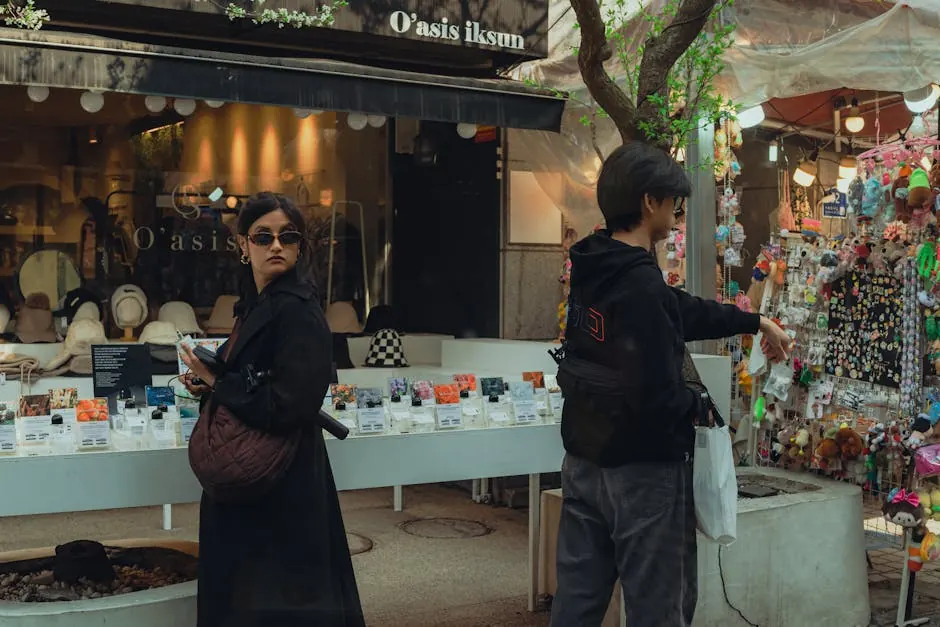
Design boutique hotels are the category that arrived late in Seoul and arrived, when it did, well — properties under 100 keys, often above a curated retail floor, with rooms by a Korean studio whose name a Tatler Asia editor would recognise and a lobby bar that opens at four for a single, considered drinks list. The category clusters in Sinsa and Hannam, with two Apgujeong outposts and one new property in Seongsu pulling the centre of gravity slightly east. What recommends the design boutique is not the room — though the rooms are, almost without exception, beautifully resolved — but the texture of the morning: a single-origin coffee delivered in a ceramic the housekeeping team rotates seasonally, a breakfast tray with one Korean dish and one Japanese, and a concierge who knows which gallery in Hannam-dong is showing whom this week. For wellness-recovery guests, the boutique reads as either ideal or impossible — the lift queue at nine in the morning is real, and so is the soft-light corridor that makes a 2pm nap feel sanctioned.
- Strengths: design-led rooms, curated breakfast, ground-floor retail, walking access to galleries
- Specialty: low-key arrival rituals, in-room amenity kits by Korean apothecaries
- Pricing tier: $$$
- Location: Sinsa / Hannam / Apgujeong / Seongsu
Serviced suite hotels
Serviced suite hotels are the category Seoul medical travellers gravitate toward by the third visit, and for reasons that take a visit or two to understand — properties priced as hotels but configured as residences, with a kitchen that holds more than a kettle, a separate sleeping zone with a proper door, and a housekeeping schedule one can amend rather than absorb. The category sits primarily in the Cheongdam and Samseong belts, with the IFC-adjacent cluster in Yeouido offering a westside alternative that some guests prefer for the air quality. What recommends the serviced suite is the operational latitude: a guest recovering from an outpatient stem cell session can request a 2pm check-in, a delayed turn-down, a 24-hour deli order, and a private gym slot — and the staff treats the request the way a Mandarin Oriental concierge treats a flight change, which is to say without visible exertion. Pricing tier reads as $$$$ on the night-rate sheet and quietly settles to $$$ across a five-night stay.
- Strengths: kitchenette, separate sleeping zone, flexible housekeeping, weekly pantry stocking
- Specialty: medical-recovery-friendly stay duration (5-14 nights), in-residence laundry
- Pricing tier: $$$$ (single night) → $$$ (weekly)
- Location: Cheongdam / Samseong / Yeouido IFC
Branded residence hotels
Branded residence hotels are the category that sits, technically, on the boundary between hospitality and real estate — properties where the same operator runs both a hotel suite floor and a privately owned residence floor, with the residences accessible to short-stay guests through a curated rental layer. The category is small in Seoul — three properties, all in Gangnam — and the supply is constrained by quarterly availability rather than rack-rate pricing. The proposition is straightforward: the spatial generosity of a 130-square-metre apartment, the service envelope of a five-star hotel, and a private lift that bypasses the public lobby. For wellness-recovery guests travelling as a couple or with a quiet companion, the branded residence reads as the most discreet option in the city; the concierge desk is staffed but unobtrusive, and the building's owners' lounge is available to short-stay residents during off-peak hours. Pricing is genuinely opaque — a Hong Kong concierge I work with quotes ranges that span $1,200 to $4,800 per night depending on floor and orientation.
- Strengths: 100-150 sqm units, private lift, owners' lounge access, in-residence dining
- Specialty: maximum discretion, multi-night recovery suitability, no public lobby crossing
- Pricing tier: $$$$
- Location: Cheongdam / Apgujeong
Wellness-led hotels
Wellness-led hotels are a category Seoul has only recently learned to do without overstating — properties whose spa is not an amenity floor but the organising premise of the building, with a treatment menu that runs to twenty-plus modalities, a hammam circuit, a dry-float chamber, and a clinical-adjacent consultation room that books out three weeks in advance. The category clusters in two locations: a Hannam-side property whose spa is operated by a Singapore wellness group, and a Banpo property with a Korean medical-spa partnership that handles non-prescription IV drips and recovery massage. The proposition is honest: a guest can land at Incheon, transfer in, take a room key and a robe in the same gesture, and not see street-level Seoul for forty-eight hours. For post-treatment recovery, the wellness-led tier is the most internally consistent option — the breakfast menu, the spa schedule, and the in-room amenity kit are all aligned to the convalescence register, and the staff training reflects it. The trade-off is geographic: neither flagship is in Gangnam proper, which means a 12-to-18 minute taxi to the medical cluster on appointment days.
- Strengths: 20+ modality spa, hammam, dry-float, in-house IV-drip partnership
- Specialty: arrival-to-recovery alignment, robe-floor service, sleep optimisation programmes
- Pricing tier: $$$$
- Location: Hannam / Banpo
Aparthotels and long-stay residences
Aparthotels and long-stay residences are the category medical travellers settle into for stays of two weeks or more — properties that read, deliberately, less as hotels than as European-style serviced flats, with a reception staffed twelve hours rather than twenty-four, a housekeeping rotation of two visits per week, and a building gym that closes at ten. The category sits primarily in Yeoksam, Daechi, and the southern Samseong belt, with two newer Gangnam-East properties extending the catchment toward Suseo. The proposition is mathematical: a 60-square-metre studio with a proper kitchen, washer-dryer, and weekly fresh-linen exchange runs roughly half of the equivalent serviced-suite tariff over a 14-night stay, with no compromise on neighbourhood — Daechi reads as residential rather than touristic, which the recovery-traveller reads as a feature. The trade-off is the absent grand-arrival ritual; one keys oneself in via a reception kiosk after seven, and the lift that takes one upstairs is shared with the building's regular tenants.
- Strengths: kitchen, washer-dryer, residential-floor neighbours, half-tariff over 14+ nights
- Specialty: long-stay treatment cycles, in-flat groceries via Market Kurly delivery
- Pricing tier: $$
- Location: Yeoksam / Daechi / Samseong / Suseo
Ryokan-style and Korean hanok-luxe properties
Ryokan-style and Korean hanok-luxe properties are the smallest category on this map and, for a particular kind of recovery traveller, the most resonant — properties of fewer than thirty keys, often in heritage hanok structures restored by Seoul-based architects, with a kaiseki-adjacent breakfast service and an in-room ondol (heated-floor) sleeping arrangement that reads, on the first night, as foreign and, by the third, as the only sensible way to sleep in winter. The category sits primarily in Bukchon and Seochon — both north of the river, both 25 to 40 minutes by taxi from Gangnam medical clusters — with two Gangnam-side hanok-luxe properties operating in restored Cheongdam townhouses that approximate the register without the geographic detour. The proposition is sensory: a Korean tea ceremony at five, a yuja-citron bath drawn at request, and a sleeping floor whose acoustic isolation rivals any double-glazed glass tower. For guests recovering from a single-day procedure who want recovery to feel less like convalescence and more like deliberate retreat, the hanok-luxe reads as the antithesis of the executive tower — and is, sometimes, exactly the answer.
- Strengths: 30-key intimacy, ondol heated-floor sleeping, kaiseki-adjacent breakfast, tea ceremony
- Specialty: low-stimulus recovery, single-day post-procedure retreat
- Pricing tier: $$$$
- Location: Bukchon / Seochon / Cheongdam (approximations)
Clinical-adjacent recovery hotels
Clinical-adjacent recovery hotels are the category Seoul has built quietly, almost without marketing, over the past five years — properties that operate either inside a medical-tourism framework registered with KHIDI (Korea Health Industry Development Institute) or in formal partnership with a hospital cluster, with rooms configured for outpatient post-procedure stay: medical-grade air filtration, adjustable bed angles, registered nurse on call, and a room-service menu that defaults to a soft-food protocol. The category sits in two micro-clusters: a Cheongdam strip adjacent to the major regenerative-medicine and aesthetic-surgery clinics, and a Sinsa-Apgujeong border block that absorbs overflow from same-day stem-cell consultations. What recommends the clinical-adjacent tier is the operational alignment — check-in is configured to receive a guest with a wristband and a discharge note, and the housekeeping team has been trained on which surfaces to disinfect and which to leave undisturbed. The trade-off, and it is real, is aesthetic: the lobby reads, frankly, more as an upscale clinic than as a hotel, and the breakfast room is functional rather than considered. For a single-night recovery stay between procedure and outbound flight, the category solves a problem the heritage tier cannot.
- Strengths: medical-grade air filtration, adjustable bed angles, RN on call, soft-food room service
- Specialty: same-day post-procedure overnight, KHIDI-registered framework, clinic-shuttle access
- Pricing tier: $$$
- Location: Cheongdam medical strip / Sinsa-Apgujeong border block
Comparison table — ten categories on three axes
The categories above resist single-axis ranking — what reads as ideal for a four-night cultural visit reads, sometimes, as wrong for a single-night post-procedure recovery. The table below re-sorts the ten tiers along the three axes that matter to this site's readership: amenity profile (depth and breadth of in-house service), location proximity (taxi minutes to the Apgujeong-Cheongdam medical cluster), and wellness-recovery suitability (low-stimulus environment, soft-food capacity, RN access, lift discretion). Pricing tiers are indicative 2026 USD ranges. Categorical reading only — no individual property is named or ranked.
| Category | Amenity profile | Cluster proximity | Recovery suitability | Pricing tier |
|---|---|---|---|---|
| Grand-dame heritage | Full-service, marble-tier | 8-15 min | High — staff continuity | $$$$ |
| Urban resort | Spa-anchored, garden-led | 12-18 min | High — spa routing | $$$$ |
| Executive tower | Lounge + work-suite | 0-8 min (on Teheran-ro) | Medium — acoustic real | $$$ |
| Design boutique | Curated, low-key | 5-12 min | Medium — lift queue | $$$ |
| Serviced suite | Apartment-grade, flexible | 5-15 min | High — long-stay fit | $$$ (weekly) |
| Branded residence | Residential + concierge | 5-10 min (Cheongdam) | Very high — discretion | $$$$ |
| Wellness-led | Spa-organising premise | 12-18 min | Very high — aligned | $$$$ |
| Aparthotel / long-stay | Functional, residential | 10-20 min | High — 14+ night fit | $$ |
| Ryokan / hanok-luxe | Intimate, sensory | 25-40 min | Medium — distance trade | $$$$ |
| Clinical-adjacent | Medical-grade, functional | 0-5 min | Highest — purpose-built | $$$ |
Editorial note — what this map intentionally does not do
This is, again, a categorical map — not a property guide, not a recommendation hub, and emphatically not a ranking. Korea's Medical Service Act §56(4) restricts direct comparison between named medical providers, and the same caution governs how I write about hotels in adjacency to medical travel — the categories are general; named properties are not. Readers planning a medical-travel stay should triangulate this map against three further inputs: the official Visit Korea hotel grading register (visitkorea.or.kr), the Korea Tourism Organization's medical tourism portal (mohw.go.kr/eng), and a direct conversation with the relevant clinic's international patient coordinator about which categories the clinic has operational familiarity with. A hotel category, however well-resolved, is not a substitute for clinical advice. What this map offers is a structural read — a way of seeing Gangnam's hospitality landscape as ten distinct tiers rather than a single luxury continuum, and of choosing accordingly.
“What recommends Gangnam's hospitality landscape is not the marquee — it is the depth of the supporting cast. Ten categories, ten distinct uses, one corridor.”
Liu Mei-Hua, editorial note
Frequently asked questions
Which Gangnam hotel category is most appropriate for a single-night post-procedure stay?
The clinical-adjacent recovery tier is purpose-built for it — medical-grade air filtration, adjustable bed angles, on-call registered nurse, and a soft-food room-service default. The trade-off is aesthetic; the lobby reads more as upscale clinic than considered hotel. For guests willing to absorb a 12-18 minute taxi on procedure day, the wellness-led tier offers a more sensorially resolved single-night alternative.
Are these hotels inside Gangnam-gu specifically, or across the broader south-of-the-river corridor?
Categories cluster differently. Executive tower, design boutique, serviced suite, branded residence, aparthotel and clinical-adjacent tiers sit predominantly within Gangnam-gu (Apgujeong, Cheongdam, Sinsa, Yeoksam, Samseong, Daechi). Grand-dame heritage and urban resort tiers extend into Banpo, Jamsil and the Sogong-dong heritage cluster. Ryokan and hanok-luxe properties are largely north of the river in Bukchon and Seochon.
How does this categorical reading differ from a star rating?
A star rating measures amenity inventory against a fixed standard — pool, spa, restaurant count, room size. A categorical reading measures fit against a use case. Two hotels at the same star tier can read very differently for a recovery traveller; the executive tower and the wellness-led property both rate five stars, but the lobby acoustic, breakfast hours and spa orientation diverge significantly. The map above re-sorts on use-case axes.
Is the branded residence category open to short-stay bookings, or is it residence-only?
Both, depending on the property. The three Seoul branded residences operate a curated short-stay rental layer through the building's hotel operator, with quarterly availability rather than rack-rate inventory. Bookings are made through the hotel reservation desk, not third-party travel sites. Pricing is genuinely variable — concierges in Hong Kong and Singapore quote $1,200 to $4,800 per night depending on floor and orientation.
What is the cluster proximity figure measuring, exactly?
Taxi minutes from the hotel lobby to the centroid of the Apgujeong-Cheongdam medical cluster — the corridor where the city's regenerative-medicine, aesthetic-surgery and dermatology clinics concentrate most densely. Figures assume off-peak conditions; rush-hour adds 5-10 minutes on Teheran-ro and 10-20 minutes on the Han River bridge crossings. Public-transit equivalents are 20-50% longer.
Are the wellness-led hotels' in-house clinical services regulated under Korean medical law?
Wellness-led hotel spas operate under cosmetology and aesthetic-service registration, not medical licensing — they offer non-prescription modalities such as massage, dry-float and hammam circuits. Some properties run formal partnerships with licensed clinics for in-room IV-drip protocols and post-procedure recovery massage; these services are delivered by the partner clinic's licensed staff under the clinic's own regulatory framework. The hotel does not deliver medical services directly.
How should I sequence hotel and clinic when booking from overseas?
The order recommended by international patient coordinators in Seoul is clinic first, hotel second. Confirm procedure date, expected discharge time and any post-procedure stay-in requirements with the clinic, then select a hotel category that aligns with the recovery profile. The clinical-adjacent and wellness-led tiers absorb same-day discharge most gracefully; the heritage and urban resort tiers absorb multi-night recovery best; the aparthotel tier suits 14-plus night cycles.
Does Korea's Medical Service Act affect how hotels can market to medical-travel guests?
Article 56(4) restricts direct comparative claims and ranking among named medical providers, and the principle extends, in practice, to how hotels and medical-tourism intermediaries publish material naming specific clinics. Hotels can describe their categorical fit for recovery travel and disclose clinic partnerships, but cannot publish comparative rankings of the clinics themselves. This is why a categorical reading — like the one above — is the structurally appropriate format.