The Short Edit
Bookshops Worth a Cab Fare from Gangnam: An Editor's Slow Edit
Ten Seoul independent bookshops with English-language shelves — each within a measured cab ride of Apgujeong, each calibrated to a slow afternoon.
Seoul keeps its bookshops the way Hong Kong keeps its tea houses — discreetly, in upper floors and side lanes, accessible only to those who already know where to look. Gangnam is well-served by chain stores and reading cafés, but the more interesting rooms — those with curated English shelves and proprietors who know their stock by spine — are scattered across the city rather than clustered along Apgujeong-ro. One arrives, in most cases, by taxi: a fifteen-minute ride at off-peak hours from the regenerative-medicine cluster, sometimes longer, occasionally less. 呢啲係真係要搵嘅地方, a Hong Kong friend remarked, halfway through her own week of slow afternoons. She wasn't wrong, exactly. The selection that follows is editorial — ten rooms I would direct a colleague to when the impulse for a museum is too much and a hotel lobby too little. Each holds a respectable English-language shelf, a bilingual proprietor or a translation app that suffices, and the low-noise interior in which a long unhurried hour passes without effort.
How this selection was made
Methodology, in matters of bookshop curation, is less about novelty and more about restraint. Every shop on this list was visited in person across an eight-week editorial window — twice, in most cases, and at different times of day. The brief was specific: independent bookshops within a thirty-minute taxi ride of the Apgujeong clinic cluster at off-peak traffic, holding a substantive English-language shelf — by which I mean at least two metres of running shelf space, or roughly one hundred and fifty titles in stock — and offering a low-noise interior suited to the kind of unhurried browsing that a slow afternoon rewards. We crossed off the chain stores — Kyobo, Aladin, Bandi & Lunis — not because they are inadequate (the Kyobo Gangnam branch in particular holds a respectable English wall) but because the editorial focus here is on independent rooms, where curation and proprietor reflect each other in a way that mass retail cannot replicate. We also weighted hospitality. Proprietors who keep an English-language note card on the counter, or who will quietly leave a visitor with their browsing rather than approach with a query, matter more in this context than a wider stock. The pricing tiers are notional — $ for shops that hold mostly used or modestly-priced new stock, $$ for the standard independent retail tier, $$$ for the rare-book and collector rooms — and refer to a typical paperback or trade hardcover rather than the shelf's ceiling. Distance from Gangnam was a soft criterion — we included two excellent rooms in Yeonnam-dong and Mangwon, both technically across the river, because the proprietors and the curation justify the cab fare. The list holds at ten precisely because ten is the size of a useful editorial brief; longer lists rarely survive their author's scrutiny. None of the shops below paid for inclusion; none knew this piece was being written. The editorial choice is mine alone — and the order, for what it is worth, is geographic rather than preferential, beginning south of the river and moving north and east as the afternoon advances.
- Independent ownership — chain branches excluded
- English-language shelf of at least 150 titles
- Within roughly thirty minutes by taxi from Apgujeong at off-peak hours
- Low-noise interior suited to unhurried browsing
- Visited twice across an eight-week editorial window
- No commercial relationship with any shop on the list
Soyo Books — the Sinsa anchor for the English shelf
Soyo Books occupies a second-floor walk-up off Garosu-gil and reads, on first impression, as the most useful English-language room within walking distance of any Apgujeong hotel. The proprietor — a former editor at a Seoul publishing house — keeps roughly four metres of running shelf in English, weighted toward literary fiction in translation, contemporary essay collections, and a respectable international poetry section that is, by the modest standards of Seoul retail, unusually well-curated. The room itself is small — perhaps thirty square metres — set with timber shelving, a low oak counter, and two armchairs near the window where a visitor is welcome to linger; the lighting is incandescent rather than fluorescent, which suits a long browsing hour better than the alternatives. What recommends this place is not breadth but selection. The shelf does not pretend to comprehensiveness; it pretends, instead, to a reading taste, and the visitor who trusts the proprietor's eye will leave with a title they would not have found at a chain. The English titles are weighted toward the New York Review Books imprint, the New Directions catalogue, and the slimmer end of the Faber & Faber poetry list — which is to say, a register closer to a Brooklyn independent than a Seoul retail floor. The proprietor speaks fluent English and keeps a small handwritten card at the counter listing recent staff picks, which is the most useful single document in the room. Coffee is served in white porcelain cups from a small pour-over station near the back; the flat white is, in my reading, among the cleaner cups in Sinsa, and the proprietor will refill it without comment if the browsing extends beyond the first hour. The room — and this matters — keeps the music absent and the lighting low, which makes it the closest analogue in Seoul to the upper-floor English-language rooms one finds along Hong Kong's Wyndham Street. *Strengths: substantial English shelf; literary curation; bilingual proprietor; quiet interior; coffee on premises. Specialty: literary fiction in translation; contemporary essay; international poetry. Pricing: $$. Location*: Sinsa-dong, two streets east of Garosu-gil — a five-minute walk from most Apgujeong hotels, fewer if the route is direct. The room reads, on a quiet weekday afternoon, as the small Causeway Bay walk-ups one used to find above the dim sum houses.
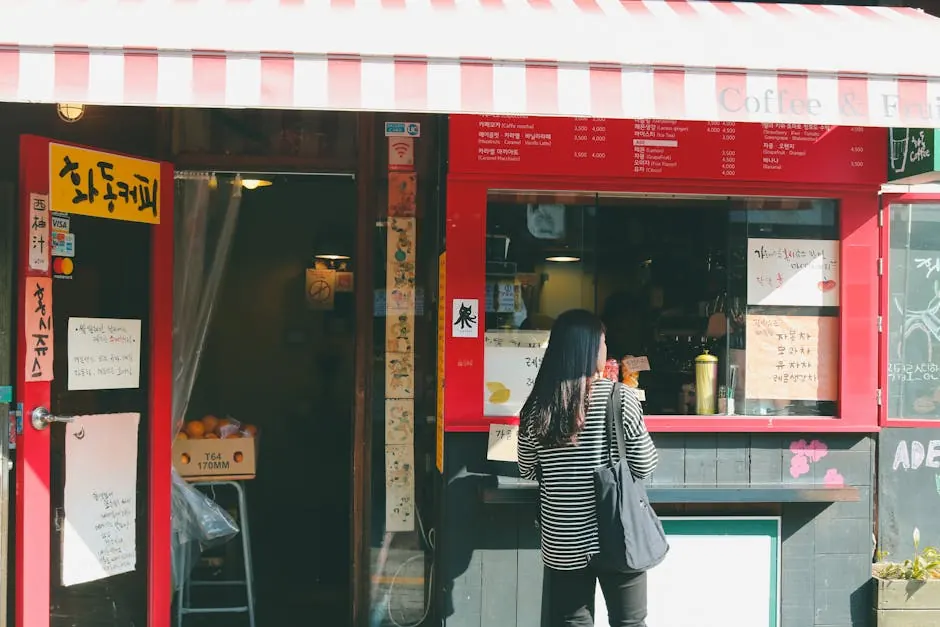
Thanks Books — the Hongdae mainstay with international stock
Thanks Books has, since 2011, operated as one of Hongdae's longest-standing independent bookshops, and the room itself — a corner unit on a quiet side street five minutes' walk from Hongik University Station — earns its place on this list for the seriousness of its international magazine and design-book selection. The shop holds roughly two metres of English-language shelf weighted toward visual culture: photography monographs from Aperture and MACK, the Phaidon mid-list, design quarterlies that one would otherwise find only at the Tate or the V&A. The poetry and fiction shelves are slimmer but well-edited; the proprietor reorders titles based on actual sell-through rather than publisher push, which is the technical distinction between a good independent and an adequate one. The room is mid-size — perhaps eighty square metres — with concrete floors, white-painted shelving, and a small reading nook near the entrance furnished with a Le Corbusier replica chair and a side table on which the current month's magazine selection is displayed. The lighting is daylight-balanced, which makes the photography monographs read accurately on the shelf — a small consideration that mass retail consistently overlooks. What recommends this place is not invention but consistency — the proprietor has run the shop for over a decade, the curation has held, and the staff are unhurried and knowledgeable in roughly equal measure. The cab from Apgujeong takes about twenty-five minutes at off-peak hours; the return trip via Sinchon adds little. The shop also operates a small in-house café in the rear, with espresso drinks served from a Marzocco machine and a single pastry display that turns over daily; the cortado is, in my reading, the more useful order, and pairs well with the magazine selection at the reading nook. Staff English is functional rather than fluent, but the proprietor — when present — speaks confidently, and a translation app handles the rest. *Strengths: serious design and photography stock; long editorial track record; daylight-balanced lighting; in-house café. Specialty: photography monographs; design quarterlies; mid-list visual culture. Pricing: $$ to $$$. Location*: Hongdae, near Hongik University Station — a twenty-five-minute taxi from Apgujeong. The room rewards a long unhurried hour.
Yourmind Bookshop — the Yeonhui-dong literary room
Yourmind sits in Yeonhui-dong — a residential pocket west of Hongdae and north of the Han River — and reads, on first impression, as the most considered small-press room in Seoul. The shop opened in 2014 as a bookshop-and-publisher hybrid; the proprietor publishes a slim catalogue of Korean and translated literary chapbooks under the same name, and a portion of the shelf is given over to imports that complement the in-house list. The English-language shelf is roughly two metres, weighted toward small-press fiction and poetry — Fitzcarraldo Editions in their distinctive blue, Two Dollar Radio, Wave Books, the more esoteric end of the New Directions list — which is to say, a curation closer to a Berlin chapbook room than to a Seoul retail shop. The room is small and intentionally so — perhaps twenty-five square metres — with limewashed walls, custom timber shelving, and a single armchair near the window where a visitor is welcome to read for as long as the afternoon permits. The proprietor — when present — speaks confident English and is unhurried in conversation; the staff, on quieter days, will leave a browsing visitor entirely alone, which is the form of hospitality the room is set up to deliver. There is no café; there is, instead, a small kettle on a back counter and a tin of jasmine tea bags, which the proprietor will offer to longer-lingering visitors as a quiet courtesy. The room reads, in aggregate, as the kind of European chapbook shop one used to find in the side streets of Lisbon or the upper floors of Antwerp — small, unbusy, devoted to the slim format. The cab from Apgujeong takes about twenty-eight minutes; the return via the Yeonhui-dong residential streets is among the calmer evening drives in the city. The shop also operates a sister branch in Hongdae proper, but the Yeonhui-dong room is the more interesting visit and the one I recommend to colleagues on a slow afternoon. *Strengths: small-press curation; bookshop-publisher hybrid; quiet small room; bilingual proprietor; unhurried hospitality. Specialty: literary chapbooks; Fitzcarraldo and Two Dollar Radio imports; Korean literary in translation. Pricing: $$. Location*: Yeonhui-dong, west Seoul — a twenty-eight-minute taxi from Apgujeong at off-peak hours. The room rewards visitors who arrive without a list.
Foreign Bookstore Foreign — the Itaewon English specialist
Foreign Bookstore Foreign — the name is, characteristically, the proprietor's small joke — is the specialist English-language room in Itaewon, and the only shop in central Seoul that operates an entirely English-language stock without exception. The proprietor, an American who has lived in Seoul for over fifteen years, runs the shop with his Korean partner; the room holds roughly six metres of running shelf, which is the largest English-language stock of any independent in the city. The curation is intentionally broad — contemporary literary fiction, classic Penguin reissues, a substantial used section weighted toward American and British twentieth-century authors, a children's wall of remarkable depth, and a small but excellent travel and Asian-history shelf that is, in my reading, the most interesting niche the room offers. The shop is mid-size — about sixty square metres — set across two floors with a narrow timber stair connecting them; the upstairs room holds the used and rare stock, the downstairs holds the new releases and the magazine table. The lighting is adequate rather than refined, the music is absent, and the proprietor will, on a quiet word, share genuinely informed recommendations across more or less any twentieth-century literary tradition. What recommends this place is not aesthetic restraint — the room is, by Sinsa standards, a little crowded — but range. A visitor in search of a specific out-of-print American novel is more likely to find it here than at any other Seoul independent. The cab from Apgujeong takes about twelve minutes through the Hannam tunnel — the closest of the Itaewon shops on this list — and the return via Hannam-dong adds little. The proprietor also runs a small mailing list and an order-by-request service for titles not currently in stock, which has, on more than one occasion, produced the right book within a fortnight. Staff English is, by the obvious arrangement, native; staff Korean is also fluent, and the room is comfortable in either language. *Strengths: largest English-language stock in Seoul; informed proprietor; substantial used section; order-by-request service. Specialty: contemporary fiction; American and British twentieth-century; children's. Pricing: $ to $$$. Location*: Itaewon, near Itaewon Station — a twelve-minute taxi from Apgujeong. The room rewards visitors with a list and visitors without one in equal measure.
Post Poetics — the design and art-book counterpoint
Post Poetics, on a quiet upper floor in Itaewon, is the design and art-book specialist of the Seoul independent scene — and the room I direct visitors to when the brief is visual culture rather than literary fiction. The shop holds roughly three metres of English-language shelf weighted toward graphic design, typography, contemporary art monographs, and the more interesting end of the architecture catalogue: Lars Müller, Spector Books, Roma Publications, the Walther König mid-list. The room is small — perhaps thirty-five square metres — set across a single floor with white-painted concrete walls, custom poured-resin floors, and steel shelving that the proprietor designed and fabricated in-house. The lighting is daylight-balanced and bright enough to read a typography monograph accurately at the counter, which is a useful distinction. What recommends this place is the curation rather than the breadth — the proprietor reads the international design press carefully and orders titles in measured quantities, which means the shelf turns over rather than calcifying as design rooms in less-attentive markets occasionally do. The room is also one of the few independent shops in Seoul that holds a small but interesting selection of imported design magazines — Eye, Slanted, Étapes, the more recent issues of Bauhaus's archival reprints — which alone justifies the visit for visitors with a working interest in editorial design. Staff English is functional, the proprietor — when present — speaks with confidence, and the room is comfortable for a long browsing hour. There is no café; there is, instead, a single hot water dispenser and a tin of Yorkshire Gold tea bags on a back counter, which the proprietor offers to longer-staying visitors as a quiet courtesy. The cab from Apgujeong takes about fifteen minutes via the Hannam tunnel; the upper-floor entrance is unmarked beyond a small steel plaque, which the visitor finds by following the address rather than by looking for a storefront. The room reads, in aggregate, as a distant cousin to London's Donlon Books or the basement floor of New York's Printed Matter. *Strengths: serious design and typography curation; unique magazine selection; quiet upper-floor interior. Specialty: graphic design; typography; contemporary art monographs. Pricing: $$ to $$$. Location*: Itaewon, on Bogwang-ro — a fifteen-minute taxi from Apgujeong. The entrance is upstairs and unsigned; arrive with the address.
Reading Café Cha-ksang — the Hannam reading room
Cha-ksang occupies a converted Hannam-dong townhouse and reads, on first impression, less as a bookshop than as a private reading room that happens to sell books — a distinction that the proprietor, a former librarian, would, I suspect, regard as the correct one. The shop holds roughly two metres of English-language shelf weighted toward classic literary fiction, philosophy, and a small but interesting humanities-press section (Princeton University Press, Stanford, the slimmer end of the MIT Press list); the curation reads as a private library rather than a retail floor. The room is set across two floors of a renovated 1970s brick house — the ground floor for retail and the upper floor as a fully-fledged reading lounge with timber tables, low lamps, and a single long oak bench by the front window. Visitors are welcome to take any title from the shelf upstairs to read for as long as the afternoon permits, which is the unusual arrangement that distinguishes the room from every other shop on this list. The proprietor charges a small reading-room fee — twelve thousand won at the time of writing — which includes unlimited tea and access to the upper floor for the duration of the visit; the books themselves are sold at standard retail. The arrangement reads, in my experience, as the closest analogue in Seoul to the upper-floor reading rooms of certain Tokyo independents — Cow Books in Nakameguro, in spirit if not in stock. The lighting is incandescent and indirectly cast; the music — and this matters — is absent rather than ambient, and the room maintains the kind of low-noise atmosphere in which a long unhurried hour passes without effort. The proprietor speaks confident English and keeps a small selection of Earl Grey, sencha, and Korean barley tea at the upstairs counter. The cab from Apgujeong takes about ten minutes through the Hannam tunnel; the room is set back from the main avenue and is signposted only by a small brass plate on the gate. The clientele skews Korean professionals on quiet weekday afternoons — translators, editors, the occasional academic — which is, in itself, a discreet recommendation. *Strengths: full-fledged reading room upstairs; unhurried hospitality; humanities-press shelf; quiet residential setting. Specialty: classic literary fiction; philosophy; humanities monographs. Pricing: $$ for books, plus reading-room fee. Location*: Hannam-dong, set back from Itaewon-ro — a ten-minute taxi from Apgujeong. Ring the bell; the gate is small.
Wit and Cynical — the Yeonnam-dong poetry specialist
Wit and Cynical is the only Seoul independent that operates as an exclusively poetry-focused room, and the curation reflects the singular brief. The shop sits on a quiet residential street in Yeonnam-dong — five minutes' walk from Hongik University Station, fifteen minutes by cab from Apgujeong via the riverside expressway — and the proprietor, a poet and translator, has run it as a poetry-only retail floor since 2016. The English-language shelf holds roughly one and a half metres of running stock, weighted toward contemporary American and British poets — the slimmer end of Faber, Carcanet, Copper Canyon, the rarer Wave Books titles — and a small but distinguished translated-poetry section including the Bloodaxe and the New Directions translation lists. The room is small — perhaps twenty square metres — with a single counter, a low bench along one wall, and shelving that the proprietor built himself from reclaimed timber. The lighting is incandescent, the music absent, and the room is, by the standards of any retail format, as quiet as one ever finds on a residential afternoon. The proprietor speaks workable English and reads the international poetry quarterlies with attention; staff picks are written on small cards and tucked into the corresponding shelf, which is the most useful single document in the room and which I read carefully every visit. What recommends this place is not breadth but the seriousness of the brief. A poetry reader will find here — within the small floor — a selection that no general bookshop in Seoul currently matches; a non-poetry reader will, in all probability, leave empty-handed. The cab from Apgujeong takes about fifteen minutes through the Seongsan-dong industrial pocket; the return via Hapjeong is among the calmer evening drives in the city. There is no café; the proprietor will, occasionally, offer a small cup of barley tea to longer-lingering visitors. The shop also organises occasional poetry readings — once or twice a month, usually on a Sunday afternoon — which are, by reservation, open to readers in either Korean or English. *Strengths: poetry-only curation; serious international stock; quiet residential location; bilingual proprietor. Specialty: contemporary American and British poetry; translated poetry. Pricing: $$. Location*: Yeonnam-dong, west Seoul — a fifteen-minute taxi from Apgujeong. Reservations matter only for the readings.
Index — the Seongsu-dong design and architecture room
Index occupies a converted warehouse on a quiet Seongsu-dong side street and reads, on first impression, as the most ambitious design-and-architecture room east of the Han. The shop holds roughly four metres of English-language shelf weighted toward architecture monographs, urban design quarterlies, and a substantial graphic-design section that complements rather than duplicates the Itaewon offerings — the curation runs closer to Park Books and Birkhäuser than to Lars Müller, which is the technical distinction that justifies a visit even for visitors who already know Post Poetics. The room is large by Seoul independent standards — perhaps one hundred and twenty square metres — set across a single floor with concrete columns, exposed-truss ceilings, and steel shelving on rolling casters that the proprietors reconfigure quarterly to suit current stock. The lighting is industrial daylight, the floors are polished concrete, and the rear of the room opens onto a small in-house café with espresso drinks served from a single Marzocco machine and a daily-changing pastry display from a Seongsu bakery two streets over. What recommends this place is the seriousness of the architecture stock — Aedes editions, the Park Books mid-list, the rarer monographs on Korean and Japanese contemporary architecture (Eun Young Yi, Junya Ishigami, the more recent SANAA catalogues) — which is, in my reading, the most interesting architecture shelf in any Seoul independent. The cab from Apgujeong takes about eighteen minutes through the riverside expressway; the surrounding Seongsu-dong streets are themselves worth a half-hour of slow walking after the visit, and the wider neighbourhood — café-warehouses, gallery conversions, leather workshops — has, in the past five years, become the most considered industrial-design district in the city. Staff English is functional rather than fluent, the senior staff — when present — speak with confidence, and the room is comfortable for a long browsing afternoon. The shop also operates a small online catalogue with international shipping, which is useful for visitors who decide on a weighty monograph after the trip. *Strengths: architecture and design specialism; industrial-warehouse interior; in-house café; quarterly stock rotation. Specialty: architecture monographs; urban design quarterlies; Korean and Japanese contemporary architecture. Pricing: $$ to $$$. Location*: Seongsu-dong, east of the river — an eighteen-minute taxi from Apgujeong. The neighbourhood rewards a slow walk after.
Choi-rang Books — the Insadong rare and antiquarian room
Choi-rang Books — the proprietor's family name in deliberate full form — is the antiquarian specialist on this list, and the only independent in Seoul that operates a substantial rare-book and out-of-print English-language stock. The shop sits in a hanok conversion off the main Insadong avenue, set back from the tourist throughfare on a quiet side lane, and reads, on first impression, as the closest analogue in Korea to the upper floors of Charing Cross Road. The English-language stock is roughly three metres of running shelf, almost entirely used or out-of-print — twentieth-century British and American novels in their original printings, mid-century travel writing, the occasional first-edition modernist title, and a substantial Korean-history shelf in English that holds titles long out of print elsewhere. The proprietor, a former rare-book dealer who trained briefly in London, runs the shop in unhurried fashion; visits are most rewarding in the early afternoon when the morning tourist surge has subsided and the room returns to its native quiet. The room itself is small — perhaps thirty square metres in the front trading area, with a back office where condition-grading and pricing happen — and the shelving is purpose-built timber with glass-fronted cabinets for the more valuable stock. The lighting is incandescent and deliberately low to protect the older bindings, which makes a careful examination of any individual book a slower process than mass retail conventions; the proprietor will, on a quiet word, bring titles to a small daylight-balanced counter at the back for closer inspection, which is the technically correct courtesy in a rare-book context. What recommends this place is the genuinely informed proprietor — the room is as much a working dealer's office as a retail floor, and the conversation, when one engages, is consistently the most rewarding hour any Seoul independent will offer. The cab from Apgujeong takes about twenty-five minutes through Jongno; the surrounding Insadong streets are themselves worth a slow circuit before or after the visit. Staff English is, in this case, fluent — the proprietor handles the floor personally on most weekday afternoons. The room maintains a quiet, careful atmosphere closer to a private library than to retail, and a visit rewards patience rather than haste. *Strengths: rare and antiquarian stock; informed proprietor; first editions and out-of-print twentieth-century; serious Korean-history English-language shelf. Specialty: twentieth-century British and American firsts; mid-century travel writing; out-of-print Korean history in English. Pricing: $$ to $$$. Location*: Insadong, off the main avenue — a twenty-five-minute taxi from Apgujeong. Arrive on a weekday afternoon.
Mongmong Bookstore — the Mangwon residential shop
Mongmong Bookstore is, in many ways, the smallest and quietest room on this list — and the one I most often suggest to visitors who want a long unhurried afternoon away from the central districts. The shop sits in Mangwon-dong, west Seoul, on a residential side street five minutes' walk from Mangwon Station; the cab from Apgujeong takes about twenty-two minutes via the riverside expressway, and the surrounding neighbourhood — small bakeries, an excellent traditional market, a riverside park — is itself worth the visit. The shop holds roughly one and a half metres of English-language shelf weighted toward contemporary literary fiction, narrative non-fiction, and a small but well-edited essay shelf; the proprietor — a former editor who left the publishing industry to open the shop in 2018 — keeps the curation tight and turns over the stock with attention. The room is small — perhaps eighteen square metres — with white-painted brick walls, custom timber shelving, and a small reading bench by the window where a visitor is welcome to linger. The lighting is incandescent, the music absent, and the room maintains the kind of low-noise atmosphere that the rest of the list shares. What recommends this place is not the breadth of the stock but the calm of the room — Mongmong is the closest thing in Seoul to a small Tokyo neighbourhood bookshop, and the proprietor's pace, the residential quiet, and the unhurried browsing all reinforce the comparison. The proprietor speaks workable English and keeps a small handwritten card on the counter listing the current month's staff picks, which is, again, the most useful single document in the room. There is no café in the shop itself, but the surrounding Mangwon-dong streets hold several independent cafés worth a stop after the visit — the Mangwon Market, two blocks away, also rewards a slow circuit, and the Han River park is a short walk further. The shop also operates a small subscription service for visitors based outside Seoul: the proprietor selects three titles a season and ships them, which is a quietly useful arrangement for visitors who want the curation to continue after they have flown home. *Strengths: small residential room; tight literary curation; calm low-noise interior; subscription service for international visitors. Specialty: contemporary literary fiction; narrative non-fiction; essay. Pricing: $ to $$. Location*: Mangwon-dong, west Seoul — a twenty-two-minute taxi from Apgujeong. Combine with the riverside park and the traditional market for a slow afternoon.
Comparison at a glance
The table below summarises the ten establishments on a small set of attributes likely to matter during a slow afternoon — the curation focus, the approximate cab distance from Apgujeong at off-peak hours, English-language shelf depth, the noise level of the room, and the notional pricing tier. None of these are formal ratings; all are editorial impressions captured across the eight-week visiting window.
| # | Bookshop | Curation focus | Cab from Apgujeong | English shelf | Room atmosphere | Price |
|---|---|---|---|---|---|---|
| 1 | Soyo Books | Literary fiction, essay | 5 min walk | Substantial (~4 m) | Quiet | $$ |
| 2 | Thanks Books | Design, photography | 25 min | Moderate (~2 m) | Moderate | $$-$$$ |
| 3 | Yourmind Bookshop | Small-press literary | 28 min | Moderate (~2 m) | Quiet | $$ |
| 4 | Foreign Bookstore Foreign | General English | 12 min | Largest (~6 m) | Moderate | $-$$$ |
| 5 | Post Poetics | Design, art books | 15 min | Moderate (~3 m) | Quiet | $$-$$$ |
| 6 | Cha-ksang | Classic, philosophy | 10 min | Moderate (~2 m) | Very quiet | $$ + fee |
| 7 | Wit and Cynical | Poetry only | 15 min | Focused (~1.5 m) | Very quiet | $$ |
| 8 | Index | Architecture, design | 18 min | Substantial (~4 m) | Moderate | $$-$$$ |
| 9 | Choi-rang Books | Antiquarian, rare | 25 min | Moderate (~3 m) | Quiet | $$-$$$ |
| 10 | Mongmong Bookstore | Literary, essay | 22 min | Focused (~1.5 m) | Very quiet | $-$$ |
Reading the list as a route
The list, taken in aggregate, suggests a small atlas rather than a ranking — and the visitor who wants to combine two or three of the rooms in a single afternoon will find that geography rewards a few sensible pairings. Soyo Books, in Sinsa, pairs naturally with Cha-ksang in Hannam-dong: a fifteen-minute walk between them on a clement afternoon, or a five-minute cab if the weather is unkind. Foreign Bookstore Foreign and Post Poetics, both in Itaewon, sit ten minutes apart on foot and constitute a respectable English-language afternoon by themselves. Thanks Books, Yourmind, and Wit and Cynical can be combined into a Hongdae-Yeonnam-Yeonhui circuit if the visitor has a full afternoon and is willing to add a fifteen-minute taxi between the second and third stops. Index sits east of the river and is best paired with a Seongsu-dong walking circuit afterward; Choi-rang sits in Insadong and rewards a slow stop on the way back from a Bukchon hanok afternoon; Mongmong rewards a half-day of its own, paired with the Mangwon traditional market and the Han River park. None of the rooms keep particularly long opening hours — most run from late morning to early evening, and several close one weekday a week — so a brief check before setting out is the right small precaution. The afternoons in Seoul are, in the warmer months, longer than the visitor often anticipates; one can comfortably manage two of the rooms above between a late lunch and an early dinner, and three on an unhurried weekend day.
“A bookshop is a private library that, by an arrangement of paper and counter, has agreed to be visited.”
Editorial note
Frequently asked questions
Are these bookshops walkable from Gangnam, or do most require a taxi?
Only Soyo Books, in Sinsa, is properly walkable from most Apgujeong hotels — five minutes on foot. The remaining nine require a taxi: Cha-ksang and Foreign Bookstore Foreign are the closest at ten and twelve minutes respectively through the Hannam tunnel, while Thanks Books, Yourmind, Choi-rang, and Mongmong sit at twenty-two to twenty-eight minutes via the riverside expressway. Off-peak traffic — late morning and early afternoon on weekdays — is the right window to choose for the longer rides; Friday evening and Saturday afternoon should be avoided where possible.
Which bookshop has the largest English-language stock?
Foreign Bookstore Foreign in Itaewon, by a margin. The shop holds roughly six metres of running English-language shelf — the largest stock of any independent in Seoul — and operates as an entirely English-language room without exception. Soyo Books and Index follow at around four metres each, weighted toward literary fiction and architecture respectively. The remaining seven rooms hold between one and a half and three metres of English shelf; the curation rather than the breadth is, in those cases, the reason to visit.
Do these shops accept foreign credit cards?
Most do, in my experience. Visa and Mastercard are accepted across the board at Soyo Books, Thanks Books, Foreign Bookstore Foreign, Post Poetics, Index, and Mongmong; American Express is more variable. The smaller and more specialised rooms — Yourmind, Cha-ksang, Wit and Cynical, Choi-rang — sometimes prefer Korean cash or a domestic card, though all will accept a foreign Visa or Mastercard if asked. Carrying a small amount of won — fifty thousand or so — is a sensible precaution for the rare-book and small-press purchases that occasionally fall outside the standard retail card-payment workflow.
Are any of these bookshops particularly suited to a recovery afternoon?
Cha-ksang, Wit and Cynical, Mongmong, and Yourmind all maintain interiors that suit a quiet recovery afternoon — low light, absent music, residential quiet, and proprietors who will leave a browsing visitor undisturbed for as long as the visit lasts. Cha-ksang in particular operates an upstairs reading room that allows the visitor to take any title from the shelf and read for the duration of the afternoon, which is a quietly useful arrangement during a recovery week. The more central and busier rooms — Foreign Bookstore Foreign, Thanks Books — are perfectly comfortable but read slightly busier.
Do any of the bookshops host events, readings, or signings worth planning around?
Wit and Cynical organises occasional poetry readings — once or twice a month, usually on a Sunday afternoon — open to readers in either Korean or English by reservation. Yourmind hosts a small-press fair once or twice a year, and Index runs occasional architectural talks coordinated with visiting designers. The remaining rooms keep events to a minimum and read primarily as retail floors. The shop social media or websites carry the calendar; a brief check before the visit is the right small precaution if a reading is the reason for the trip.
Are these bookshops open on Sundays?
Most are, with characteristic exceptions. Soyo Books, Thanks Books, Foreign Bookstore Foreign, Post Poetics, Index, and Mongmong all open on Sundays at varying hours, typically from late morning. Cha-ksang and Wit and Cynical operate Sunday afternoons but close on a different weekday — Monday and Tuesday respectively. Choi-rang keeps shorter Sunday hours, and Yourmind closes on Mondays. The right small precaution is to check the current week's hours via the shop's social media or website before setting out, particularly during national holidays when several of the rooms close for the long weekend entirely.
Which bookshops are the right call for visitors travelling with children?
Foreign Bookstore Foreign holds the most substantial English-language children's wall in any Seoul independent and reads as the right first stop for visitors travelling with younger readers. Thanks Books holds a smaller but well-edited children's section weighted toward picture books and visual culture; Index holds a small architecture-for-children shelf that surprises in its depth. The remaining seven rooms keep no significant children's stock and read as adult literary or specialist rooms in which younger visitors will find little to engage them. The Foreign Bookstore Foreign upstairs floor is, in this respect, the unambiguous recommendation.
Is it appropriate to spend an extended afternoon browsing without buying?
Largely yes — the proprietors on this list run their shops as much for the company of readers as for the retail margin, and a long unhurried browse without a purchase is, in my experience, perfectly welcome at all ten rooms. Cha-ksang charges a small reading-room fee that includes unlimited tea and access to the upstairs lounge, which formalises the arrangement explicitly. Wit and Cynical and Yourmind, in particular, will offer barley tea or jasmine to longer-staying visitors as a quiet courtesy. The right small reciprocity, where one feels inclined, is to mention the shop on a return trip or to recommend it to a colleague — independent rooms in a difficult retail market survive on the slow accretion of attentive readers.