Travel & Culture
An Evening at the Banpo Rainbow Fountain: A Curated Plan
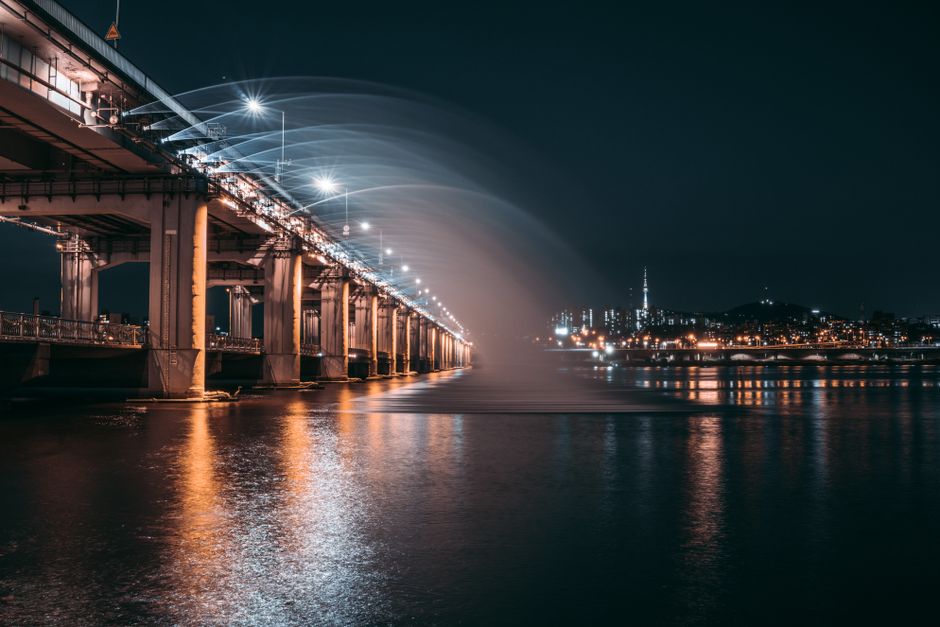
The Han River, after dusk, behaves like a long marble lobby — and the fountain is its centrepiece.
Seoul has its showpieces, and most of them announce themselves. The Banpo Bridge Rainbow Fountain — 盤浦大橋彩虹噴泉, as the older Hong Kong guidebooks still print it — does the opposite. One arrives by riverside path rather than by lift, sets out a thin picnic blanket the way one might in Victoria Park on a August evening, and waits. The fountain begins on a quarter-hour. The Han River, behind it, behaves like a long marble lobby — undramatic, evenly lit, and surprisingly easy to read once you know the cadence.
Why the fountain still recommends itself
The Banpo Bridge Rainbow Fountain is a 1,140-metre installation on the lower deck of the bridge that connects Seocho-gu and Yongsan-gu — the longest such bridge fountain on official record, and the one piece of Han River infrastructure that visiting friends from Causeway Bay always ask about by name. What recommends it now, two decades after its 2009 debut, is not novelty but the way it composes an evening. The performance lasts roughly twenty minutes; the lighting cycles through an unhurried gradient; the river crowd reorganises itself between sets — couples, retired neighbours, the occasional school group from outside Seoul. It reads, on first impression, as municipal theatre done with an editor's discipline. The schedule is published. The choreography rarely surprises. The point — and this matters — is the rhythm of the surrounding hour, not the fountain alone.
The schedule, and how to read it
Seoul Metropolitan Facilities Management Corporation runs the fountain on a seasonal calendar published each spring, and the published times — not the unofficial ones — are the only ones worth planning around. Through the warm months the performances cluster in the late afternoon and after dusk; in shoulder season they thin to two or three evening slots; in winter the system rests entirely. A Hong Kong reader used to Symphony of Lights will find the cadence familiar — twenty-minute blocks, posted to the minute — though the Banpo schedule moves earlier than ours and ends earlier too. One does not arrive at 9pm and improvise. One arrives at 7.40 for the 8pm set, secures a spot on the south bank near Banpo Hangang Park's central plaza, and treats the first performance as the rehearsal it effectively is. The 8.40 or 9pm slot, depending on month, is the one I would write home about.
- April to June and September to October — typically four to five performances daily, last set around 9pm
- July and August — extended schedule, last set sometimes 9.30pm
- November to March — fountain on seasonal pause; check the official calendar
- Weekends and public holidays — additional sets added without notice; arrive early
The picnic, done quietly
Banpo Hangang Park has been engineered for the Korean picnic in a way Hong Kong's harbourfront has not, and one feels the difference within minutes. Convenience-store branches — GS25 and CU sit closest to the fountain plaza — function as a kind of riverside concierge: cold beer, sparkling water, small wine bottles, fried chicken in cardboard, kimbap, the occasional bottle of soju for the table next door. The mat-rental kiosks (around 4,000 won, returnable) hand over a small folded square that opens to a tidy two-person seat. The convention is to claim a patch of grass thirty to fifty metres back from the railing, set out the food in the order one would on a low table, and resist the urge to crowd the front line. The fountain reads better from the second row. The first row reads the fountain.
What to bring, what to buy on site
Cash is rarely necessary; the convenience stores accept contactless, including most foreign cards. A power bank — the riverside benches have no outlets — and a thin cardigan after sundown are the only items I would carry in. Everything else, including the mat, can be sourced within a short walk. A friend who edits for Tatler Asia arrived once with a full Bulgari hamper and looked, by the second set, mildly overdressed for the occasion. The Banpo register is convenience-store luxury; one leans into it.
Han River ramyun — the meal worth the walk
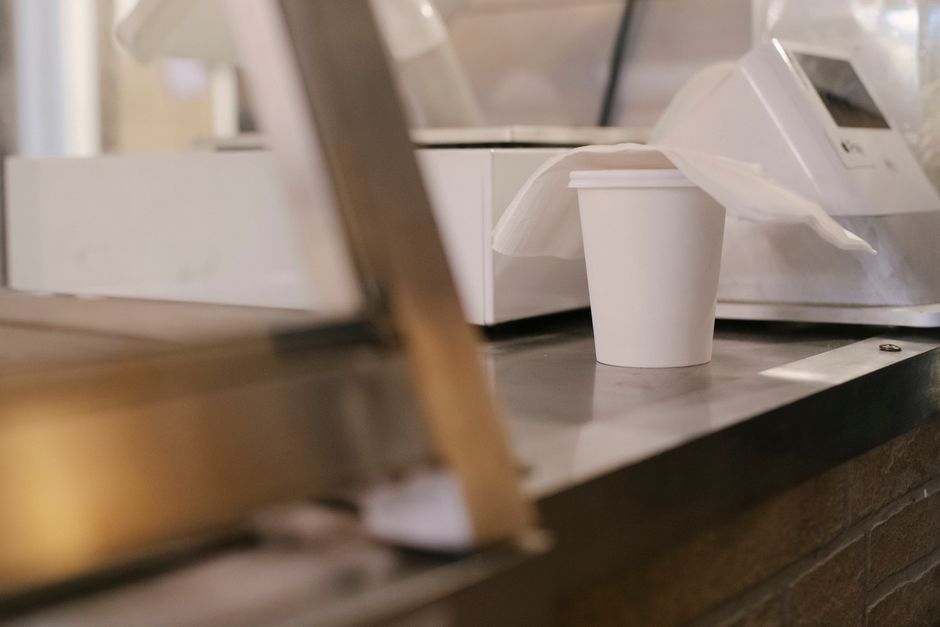
Twenty paces from the fountain plaza, in the corner of every major Hangang Park GS25 and CU, sits the small institution Seoul calls 한강 라면 — Han River ramyun. The format is unfussy: a coin-operated kettle, a paper cup, a packet of instant noodles, a folded plastic lid that holds the steam for the prescribed three minutes. The ritual costs about 4,500 won per cup including egg. 好食呀, the Hong Kong friends always text afterwards, which is the local Cantonese way of admitting they had not expected a convenience-store noodle to land this well. It does because the format is honest. The riverside, the cold air, the residual hum of the fountain set just finished — these do most of the work. The noodle is supporting cast; the bowl, in some unspoken sense, is the evening.
- Buy noodle, egg, kimbap and a bottle of soda inside; pay at the counter
- Use the instant kettle station near the door — three minutes, no longer
- Eat at a riverside bench, not a plaza table
- Return the cup and lid to the recycling bin marked separately

Photo spots locals quietly reserve
The most-shared frame of Banpo — the wide arc of the fountain caught from the south bank's central plaza — is also the most crowded, and rarely the strongest composition. Three quieter vantages reward a short walk. The first is Sebitseom, the floating-island complex moored slightly upstream, whose terrace catches the fountain in three-quarter profile against the south skyline; reservations at one of its restaurants are not difficult on a weekday. The second is Dongjak Bridge's pedestrian deck, ten minutes east, which delivers the fountain head-on with the bridge framed as a horizon line. The third — and the one I would mention only at lower volume — is the small grass rise just east of the central plaza, fifty metres back, where a tripod sits steady and the crowd thins after the second set. None of these are secrets, exactly. They are simply the frames the people who live near Banpo prefer when the visiting cousin asks where to point the phone.
A note on the camera
A modern phone, stabilised against a bench or a low wall, will produce the image most readers actually want; the long exposure that flattens the fountain into ribbons is a tripod-only effect and rarely worth the bag. The fountain reads better as movement than as still life. One learns to leave the rendering to memory and the soundtrack.
Getting there, and the small logistics that matter
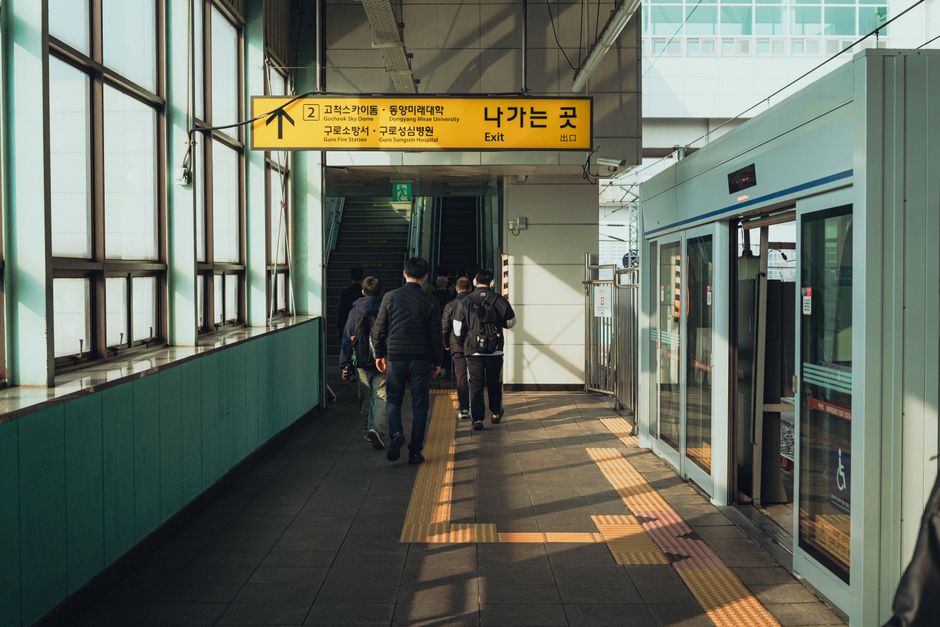
Banpo Hangang Park is reachable in roughly twelve minutes by taxi from most of southern Gangnam — Sinsa, Apgujeong, Gangnam-gu Office — and in twenty by Seoul Metro line 9 to Express Bus Terminal, exit 8-1, followed by a short walk through the underpass to the riverside. The MTR-trained reader will adjust quickly; the Seoul system runs cleaner than ours and slightly less frequent at night. From central Gangnam I would budget thirty minutes door-to-mat on a Friday and slightly less on Sunday. The riverside path closes nothing, but the convenience stores adjust hours seasonally; arriving an hour before the chosen performance allows for the queue at the kettle without the queue becoming the evening. Toilets are clustered near the central plaza and the bridge underpass — both clean, both well-lit, neither memorable, which is the standard one wants.
When not to come, and what to do instead
Three conditions deflate the Banpo evening, and I list them with some affection. Heavy rain cancels the fountain outright; the lights remain on, and a small crowd gathers regardless, but the spectacle is a damp shadow of itself. Late November through early March, the system rests entirely; one substitutes a riverside walk and a long dinner inside Sebitseom or in nearby Banpo-dong. Major K-pop events at Olympic Park or Jamsil — and a Hong Kong friend who plans her Seoul trips around them learned this the hard way — congest the south-bank line 9 stations after 9pm and turn the return taxi into a forty-minute negotiation. On those nights the Banpo evening becomes a Banpo afternoon, and the fountain — if one is patient and reads the schedule — still performs at four.
“The Banpo register is convenience-store luxury; one leans into it.”
From the picnic notes.
Frequently asked questions
What time does the Banpo Rainbow Fountain perform?
The fountain runs on a seasonal schedule published by Seoul Metropolitan Facilities Management Corporation, with the longest calendar through the warm months — typically four to five performances daily, the last around 9pm, and an extended slot in midsummer. The system pauses entirely from late November through early March. The official site posts updates each spring; treat any third-party schedule as approximate.
Is Banpo Hangang Park free to enter?
The park and the fountain viewing areas are entirely free, twenty-four hours, with no reservation required. Mat rental near the central plaza runs about 4,000 won and is returnable. The only paid components are food, drink and any premium seating one chooses to take inside Sebitseom — and even those are modest by Causeway Bay standards.
Where exactly should one sit for the best fountain view?
The south-bank central plaza of Banpo Hangang Park, thirty to fifty metres back from the railing, gives the most balanced composition. The front line offers spectacle but blocks the framing for everyone behind. The small grass rise to the east of the plaza, slightly elevated, reads particularly well after the second set when the front-line crowd thins.
Can one really cook ramyun at the convenience store?
Yes — every major Hangang Park GS25 and CU runs an instant-kettle station beside the door. One purchases noodle, egg and a bottle of water inside, pays at the counter, and returns to the kettle for a three-minute cook. The format costs about 4,500 won per cup and is the closest thing the Han River has to a signature dish.
How does one get to Banpo from Gangnam?
By taxi, twelve minutes from Sinsa or Apgujeong on a clear evening — a comfortable option for a small group. By Seoul Metro line 9 to Express Bus Terminal, exit 8-1, then a short walk through the underpass to the riverside, around twenty minutes door to door. Both work; the metro is slightly more reliable on a Friday.
Is the fountain worth visiting in winter?
The fountain itself rests from late November through early March, so the principal attraction is unavailable. The riverside, however, remains open and the Sebitseom complex operates year-round; an evening visit in cold months is best framed as a long dinner with a river walk rather than a fountain trip. Plan accordingly.
Are there toilets and seating near the fountain?
Yes — both. Public toilets cluster near the central plaza and the bridge underpass, clean and well-lit. Seating is informal: rented mats on the grass, low concrete benches along the railing and the small terrace tables outside each convenience store. Most visitors choose the grass.